“Light dispels darkness; wisdom dispels ignorance” – seen at a Buddhist temple
We have a confession and not one we take lightly. 18 years ago, we unknowingly contributed to animal abuse. When we were last in Thailand, we visited an elephant “sanctuary” where the elephants did tricks, painted pictures, and even played soccer. At the time, we thought it was amazing that such magnificent creatures could be so intelligent and dextrous; we even bought a painting made by an elephant. We thought we were supporting elephants who had retired from the logging industry, but we didn’t realize we were part of another problem.
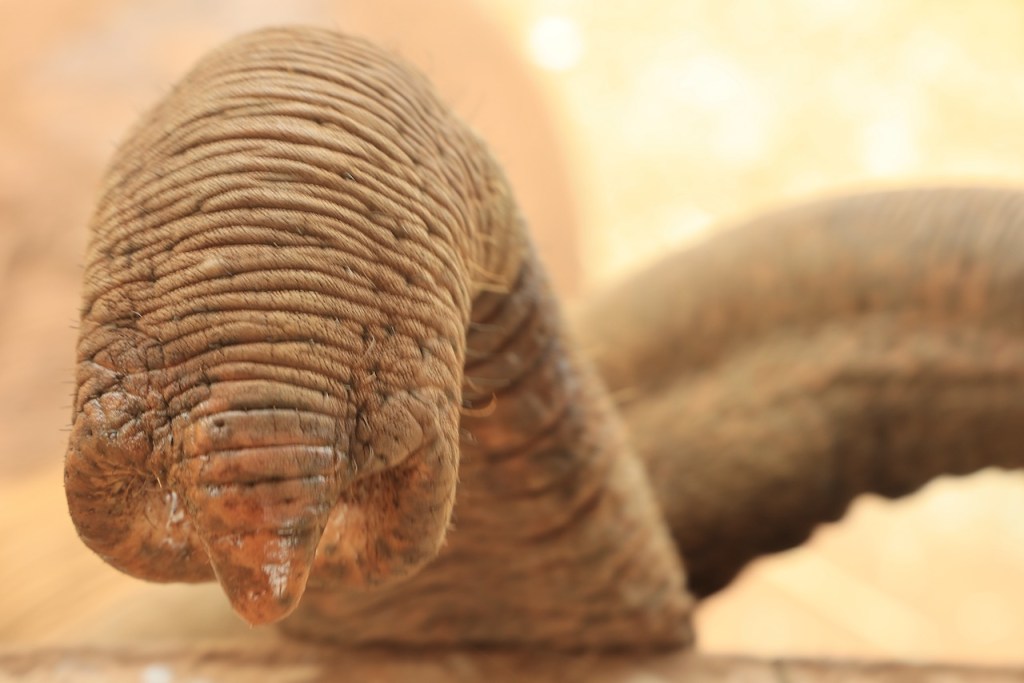
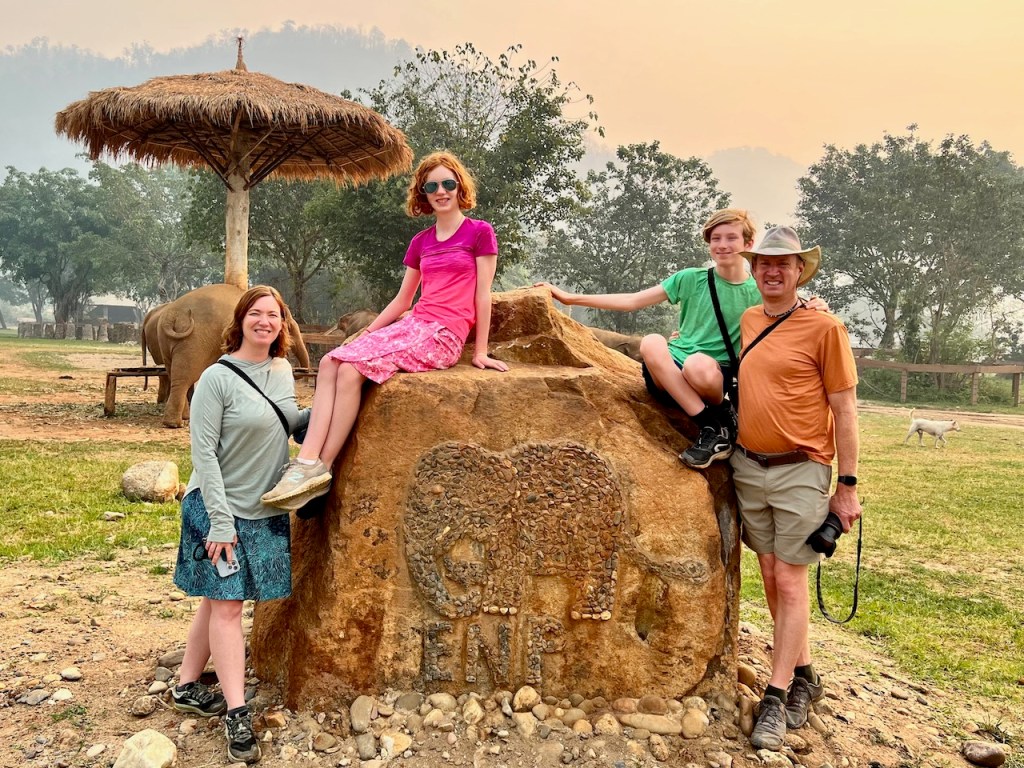
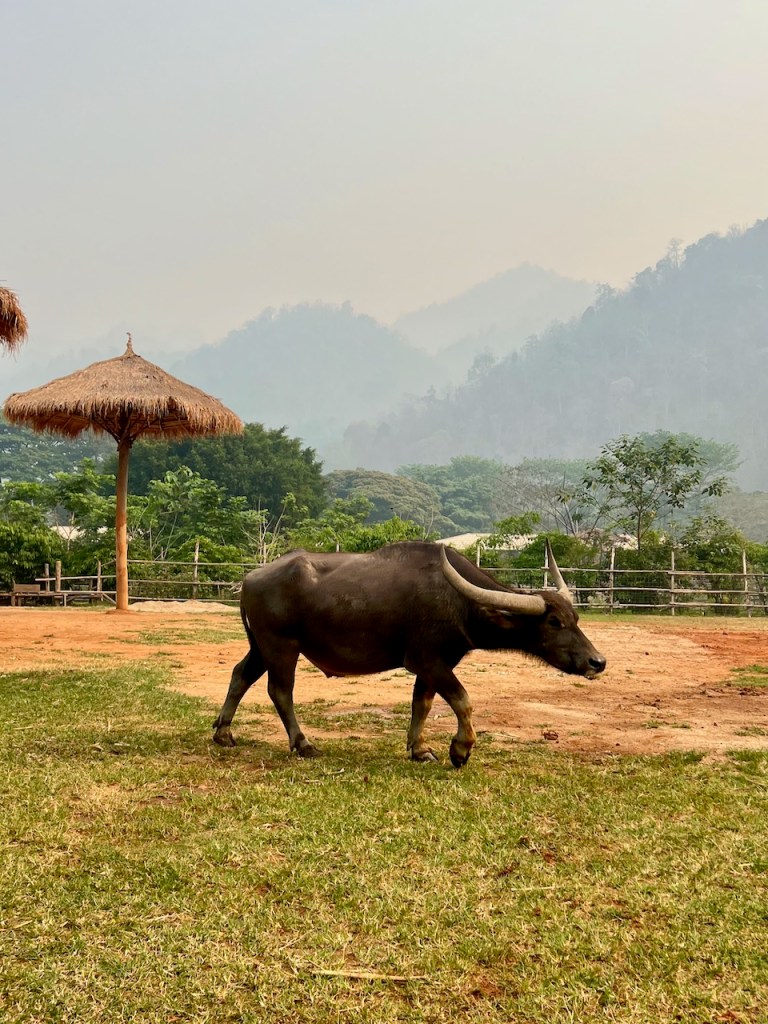
Too long later we became educated, and a small part of the solution, during our week-long volunteer experience at Elephant Nature Park. ENP is Thailand’s first and largest true elephant sanctuary and home to 120 elephants who have been rescued from abuse in the lodging and performance industries. These rescues are made through careful research and negotiated purchases funded by donations. Elephant Nature Park is also home to 1000 dogs, 2000 cats, hundreds of cows and buffalo, numerous horses and hundreds of other animals. These lucky animals were rescued from slaughterhouses, neglect, abandonment and abuse. They are all now able to live their lives with safety, respect and as much freedom and comfort as possible.

About Elephants
Elephants are wild animals. They are not meant to interact with humans, let alone work for us. With the exception of the great apes (including us), they are the smartest and most emotional land animals. They use tools, have a language, are very emotional, show empathy, have very long memories, and are highly communal with complex social groups. They bury their dead, rescue animals from other species who are injured, cover water springs to prevent evaporation, problem solve as a team, and even recognize themselves in a mirror. (Read more here) They are more like us than we have been taught.
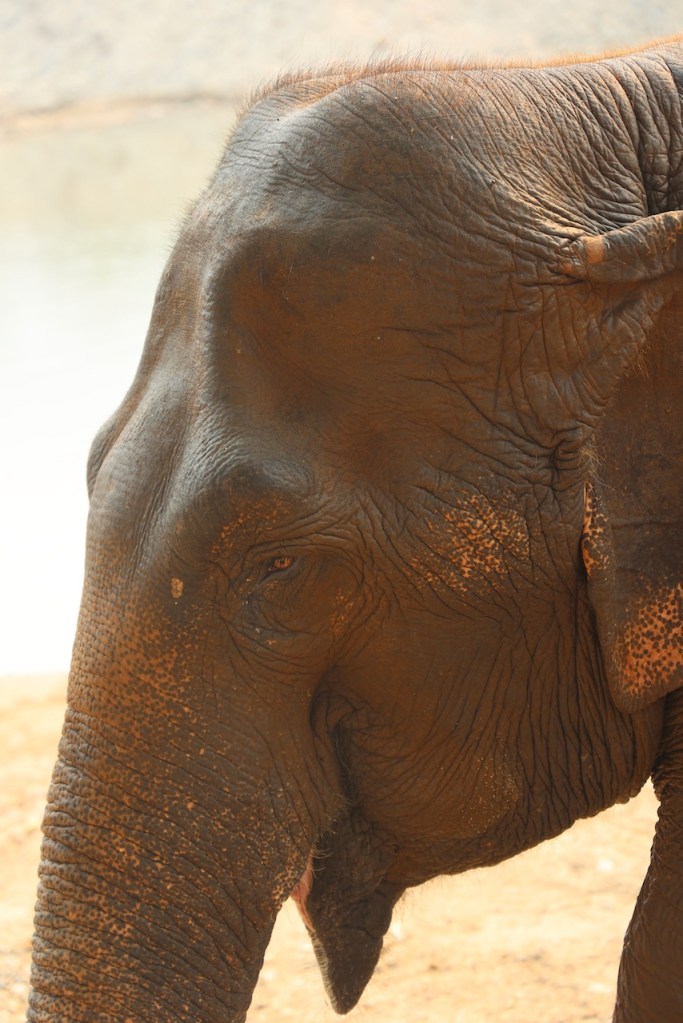

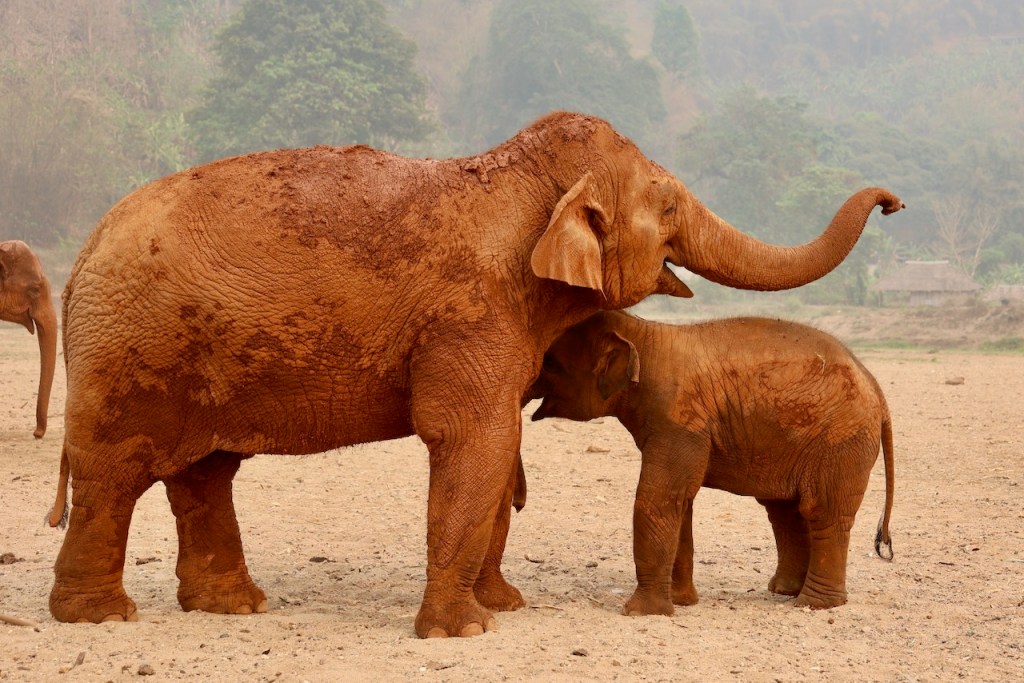
Their social structure in the wild is highly organized. As infants they rely on their mother for their every need for the first few years of their lives, as their brain is only 35% developed when they are born (ours in 27%, most other species the brain is nearly completely developed when born). They go through their adolescence around age 8-10, and they aren’t fully mature until their late teens. When ready to have young, a female elephant will choose the male suitor. They only have one young at a time, and there is a very tight bond between mother and baby that lasts the better part of a decade. In addition, the whole herd helps raise the baby, and the mother will choose one or two other adults to be nannies. The elderly females become the matriarchs, who lead the herd and pass their wisdom on to younger generations until they pass away in their 80s-90s. If you think about it, they are very much like us.
The Problem
Caution, what you are about to read is upsetting but true. Please read it, because without knowledge, you can’t be part of the solution.
None of this social structure is allowed in working captivity. When a baby elephant is around the age of 2 (when they are still nursing), they are separated from their mother and their spirit is broken. It’s a process called the Phajaan. The elephant is dragged away from her mother and is placed in a cage or chained between trees, where she will be tortured for days. She is beaten, whipped, cut, and even has nails driven into her feet, all while depriving her of water and food, until she submits to humans’ commands. All of this is done in close enough proximity to her mother who is unable to rescue her, thus breaking the bond between mother and child. After days or weeks of torture, the “mahout” or trainer will release the baby elephant and give her food and water, creating a perverse bond where she regards this mahout as her “savior”.
After the Phajaan, the abuse continues as the mahout uses a sharpened hook to train the elephant, causing them immense pain by placing the sharp hook in the most sensitive spot behind the ear. As elephants have tremendous memories, this instantly causes them to flash back to their Phajaan and the pain they have suffered, forcing the elephant to always submit to the mahout’s commands out of fear of the past abuse. Elephants are trained by fear and pain to haul heavy logs, perform tricks, and beg on the streets.
Logging is officially illegal in Thailand, but elephants are still used in small operations and the harm of the industry continues. While hauling massive logs, often the load shifts, ramming the elephant and causing broken limbs. For those lucky enough to escape major trauma, there is the day to day suffering of working in the blistering heat without food and water, while wearing a poor fitting harness which causes skin breakdown, with a mahout constantly poking a sharpened hook into the skin. Those elephants who dare to disobey have a nail driven into their scalp by the mahout sitting on their head, or they are shot with rocks from slingshots, frequently causing eye injuries. At night, exhausted from their daily labors, they are chained by the ankle, unable to stretch their legs or lay down, and standing in their own excrement.
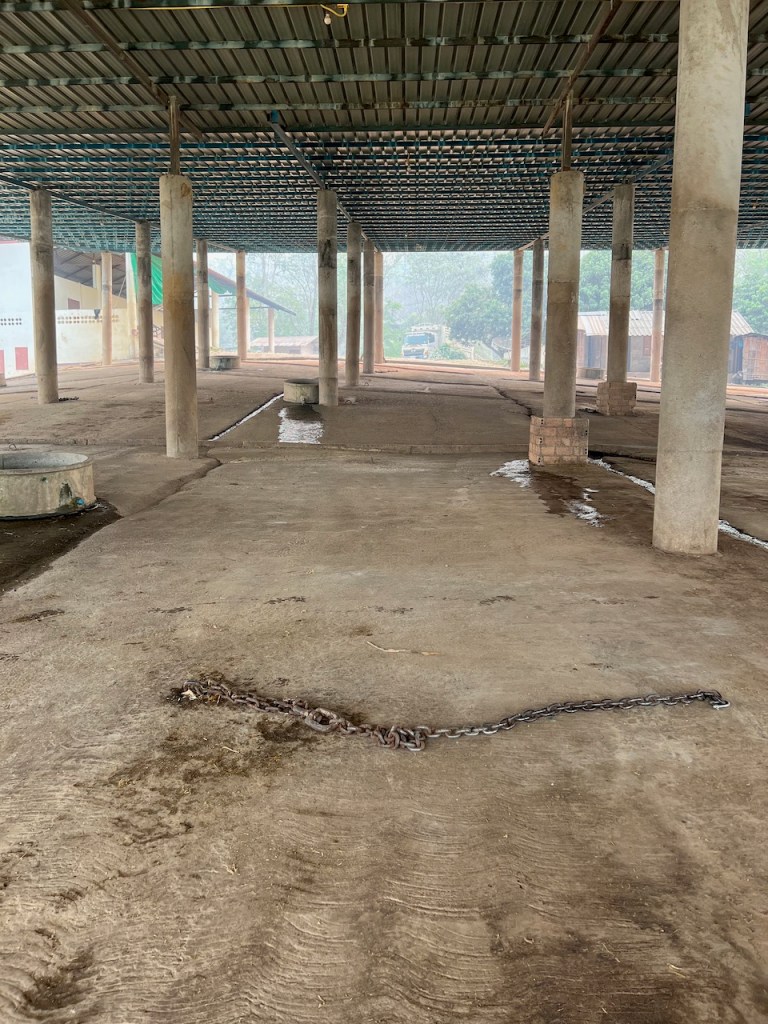
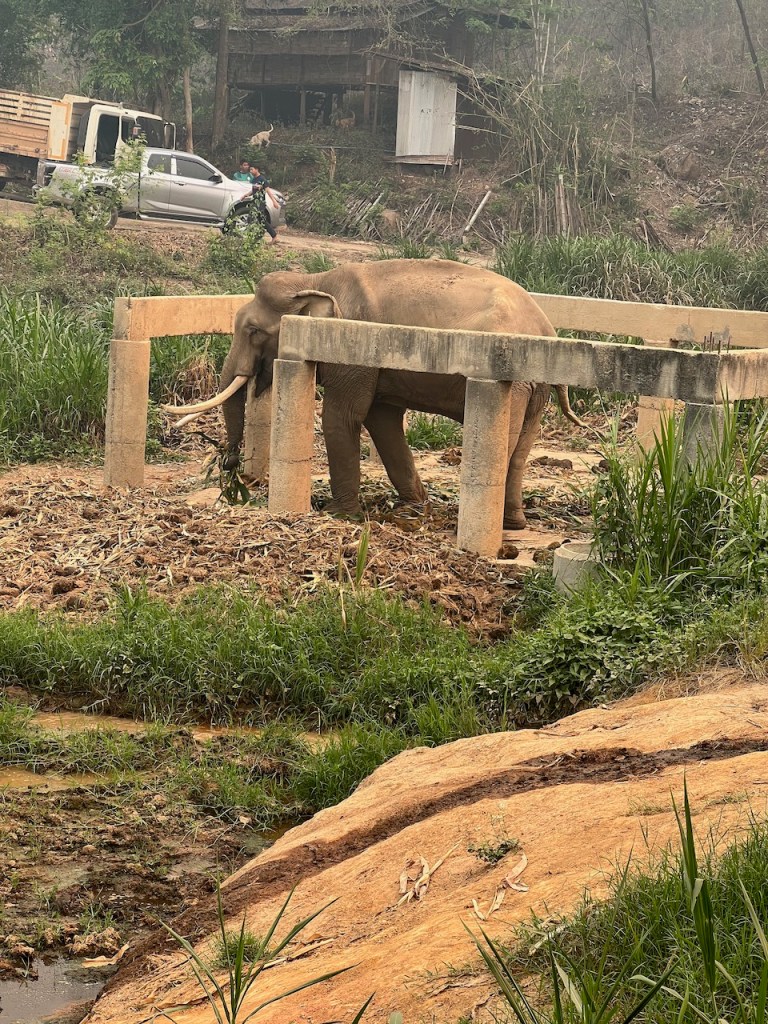
Performing elephants aren’t any more lucky. Elephant entertainment and street begging are less obvious problems because the animals seem well cared for. Out of sight of the public eye however, they are chained much of the day with no more than a few feet to walk, once again standing in their own waste. They also start with the Phajaan. Then they are trained to do tasks that are as unnatural to them as having a trunk is to us. Using the threat of pain and violence, they are forced to ride bikes, play soccer, and stand on one foot. While they paint in front of the public eye, the mahout has a sharpened nail in their hand, jabbing it into the elephant’s ear to guide them where to place the brush. As in logging, the natural herd dynamics are constantly interrupted as members are sold to other camps, mothers are separated from their children, and the elderly are disposed of with no respect to the individual.
Trekking camps are no better for the elephants. While the weight of a human seems infinitesimally small compared to a 3 ton animal, when you add up the weight of 3 guests, a mahout, and the 500lb trekking saddle, the elephant is carrying 1000 pounds on its back for most of the day, 7 days a week, 365 days a year. When not hauling their load, they too are chained and confined, unable to move freely. It’s the equivalent to asking a human to carry a 40 pound pack over 10 miles of rough terrain every day of their life while being deprived of food, water, and shelter. These elephants are often “broken” by mid life, with spines that sag instead of arching as they would in a healthy being.

“How did it get so bad?”, you may be asking. To begin with, for centuries we failed to understand the intelligence of these brilliant creatures. (We even have a movie called “Dumbo”.) Just looking at them they appear slow and mindless, but looks are very deceiving as previously discussed. In addition, logging was mostly outlawed in Thailand about 50 years ago, causing many elephants to be “unemployed”. The elephants’ owners needed money to feed their elephants, so many elephants were forced to switch to performing and trekking when logging was outlawed. It’s a no win situation – how do you afford to feed a creature that eats 300-600lbs of food daily if they aren’t “earning their keep” in one way or another? With little government protection or oversight, elephants and their offspring are at the mercy of their private owner and their heirs.
How could someone torture such a beautiful creature? As we look around Cambodia and Thailand, there are statues and paintings of elephants everywhere. There is even an elephant god in the Hindu religion. How could such a revered creature be so badly treated? These are questions we as a family have discussed, and there are no good answers. But before we judge, we have to look at our own hard truths. In America we revere our pets as members of our families. We buy them their own beds, organic pet food, health insurance, toys, treats, and so much more. Yet at the same time, we must face the difficult fact that each year 1.5 million cats and dogs are euthanized in shelters across the US. How is it that we as a society can on one hand spoil and adore our own cats and dogs, yet at the same time kill 1.5 million of their brethren? There are many examples of cruelty, both past and present, in our own culture. Something to ponder before we cast judgment on the people of Southeast Asia.
The good news:
The situation is slowly getting better and this change is in large part due to the founder of Save Elephant Foundation and Elephant Nature Park, Saengduean Lek Chailert. Almost 30 years ago, Lek was working in the tourist industry and saw the daily mistreatment of elephants. Her eyes were truly opened when she witnessed the “breaking” of a baby elephant. From that moment on, she committed to changing the plight of the working elephant in Thailand. Starting with one elephant and a generous donation by a stranger, she started an elephant sanctuary.
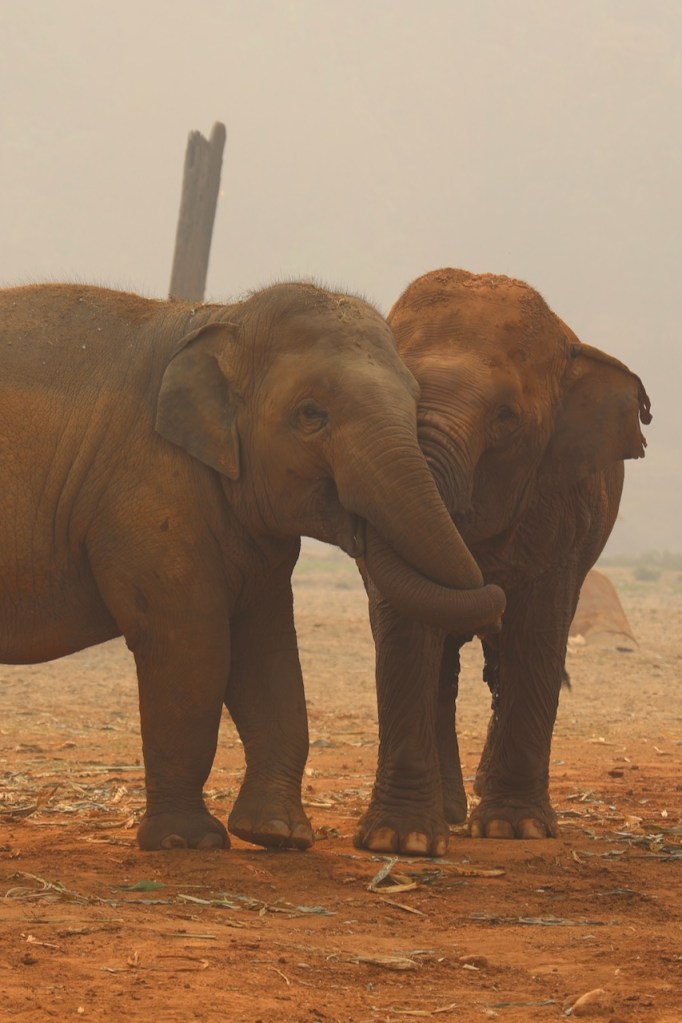
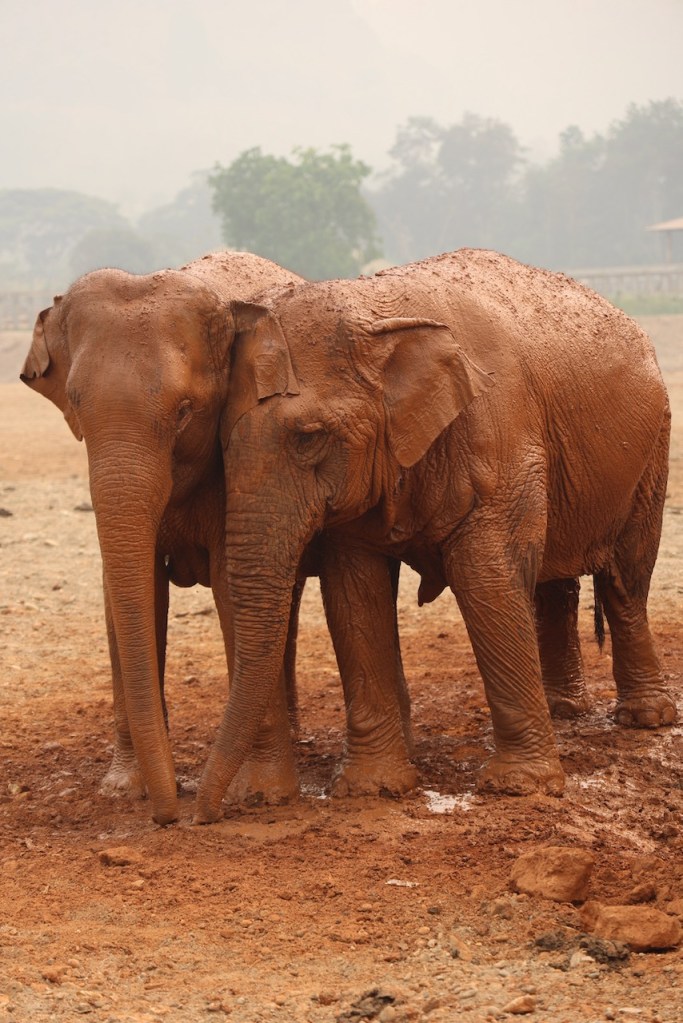
With an exceptional amount of hard work, selfless dedication, and unrelenting persistence, that one elephant has grown to hundreds of elephants saved, multiple sanctuaries across southeast Asia and a significant cultural change in the tourist elephant trade. Lek and Darrick (her husband) are not only talented at working with animals, but they also have a passion for education, political change, and fundraising. These skills have enabled them to do so much starting with very little. In my opinion, maybe the most impressive thing about them is they realize they can’t save every elephant. Because of this, they work with many other elephant camps to teach them to be more humane to the elephants, while at the same time sharing their successful business model for long term sustainability. To do what they do is not only selfless, but also brilliant.

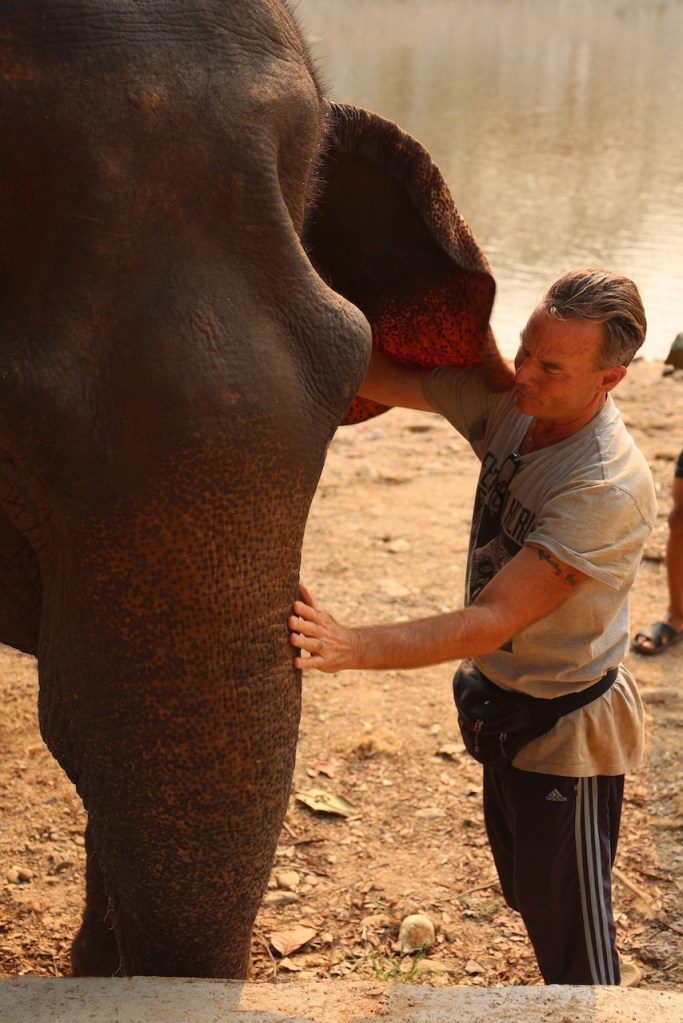

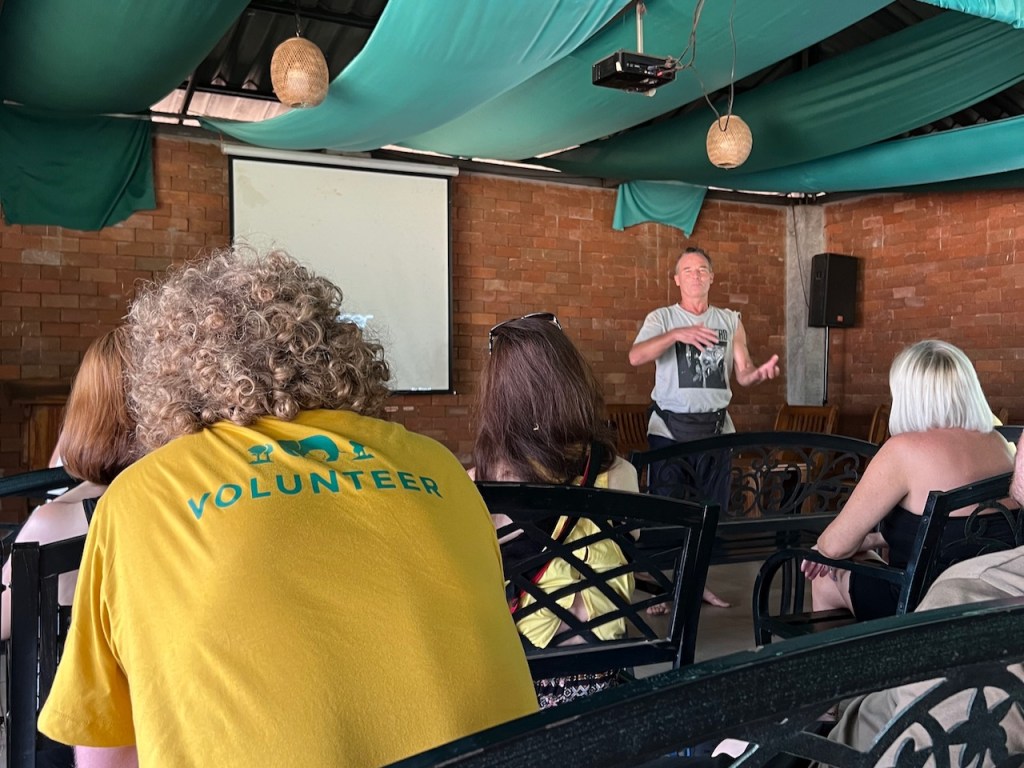
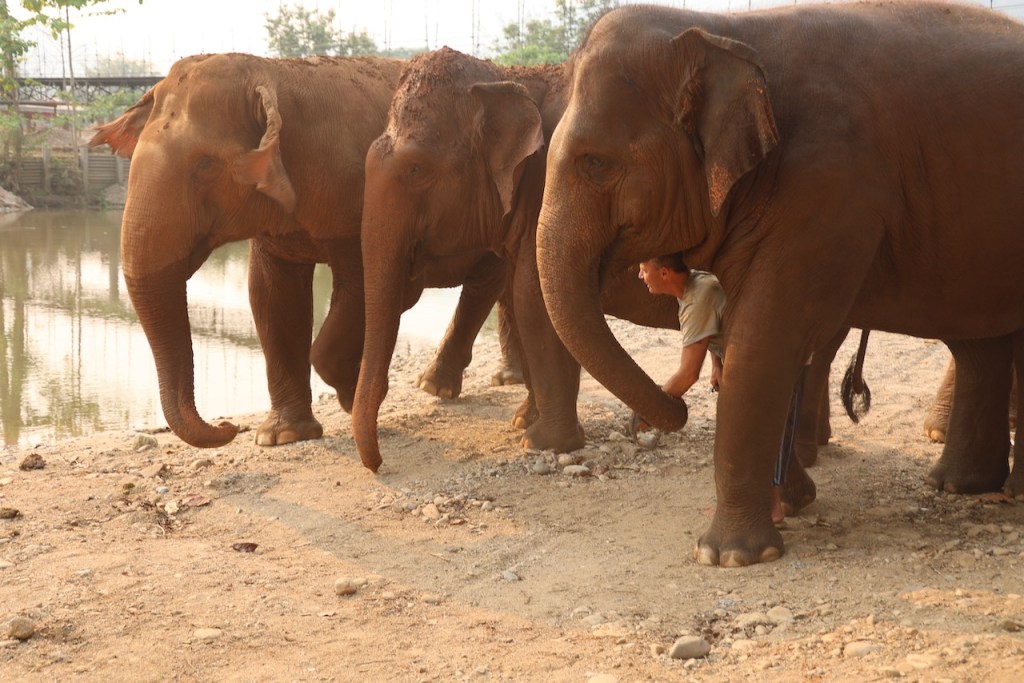
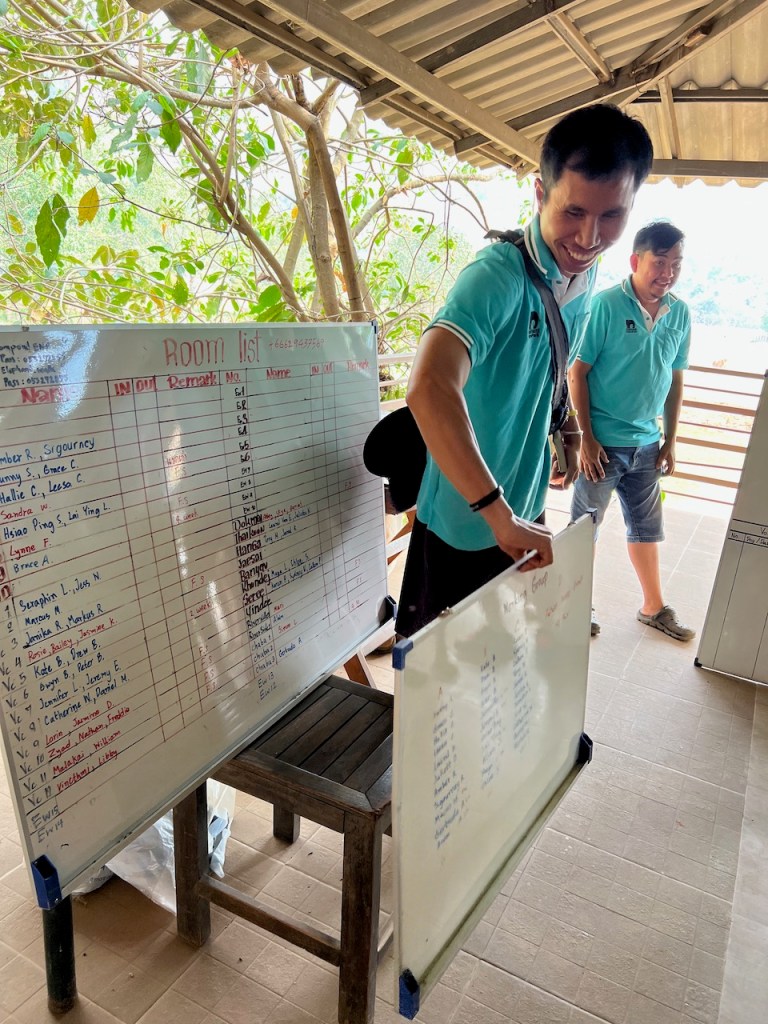
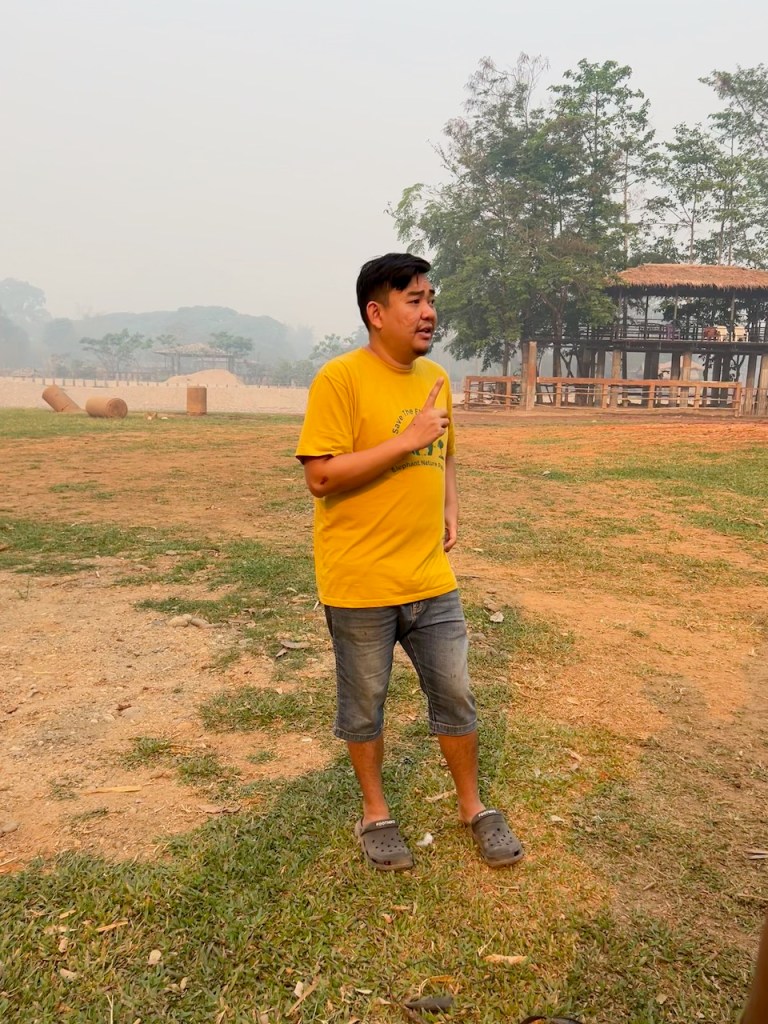
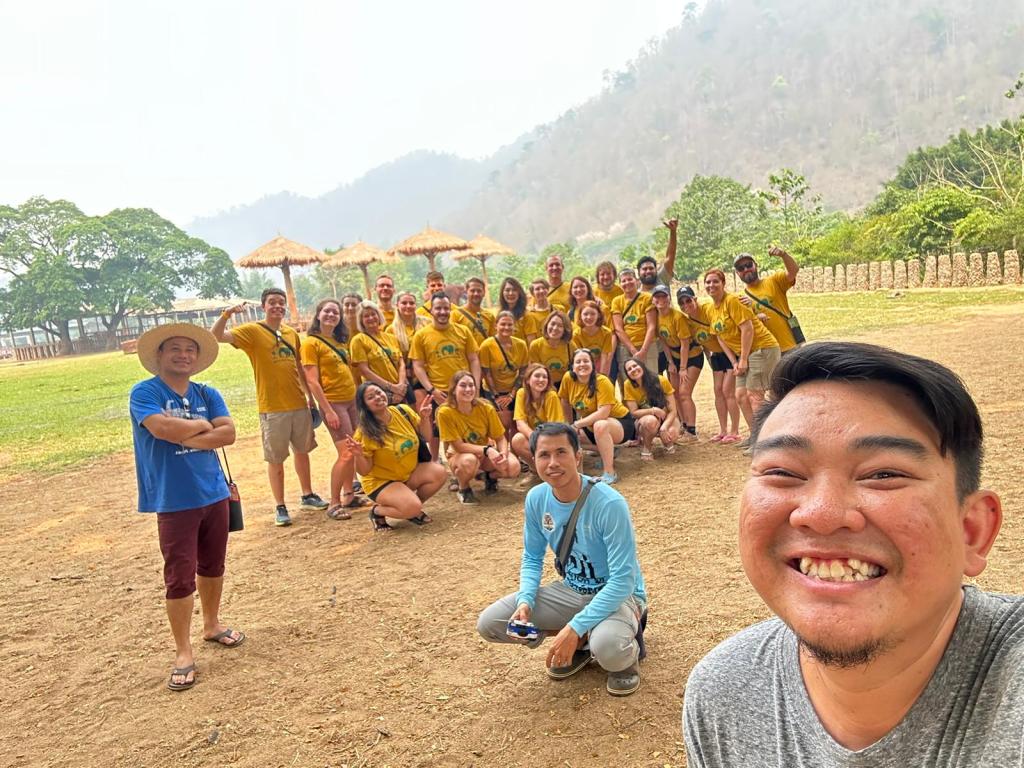
Let’s bring it back to our week as volunteers at Elephant Nature Park. We spent much of our time on the important work of learning about elephants, the elephant industries, and the plight of the elephant. Lek and Darrick rightfully believe that the best way to improve conditions for elephants and save the species from extinction is knowledge and spreading the message. Tourists can change the industry by choosing to spend their money and time helping the elephants live their best lives, not being entertained by them. There were over 30 paying weekly volunteers, another 15 students, and over a hundred daily visitors to ENP in one week. That is a model that works, especially since the major goal is education.
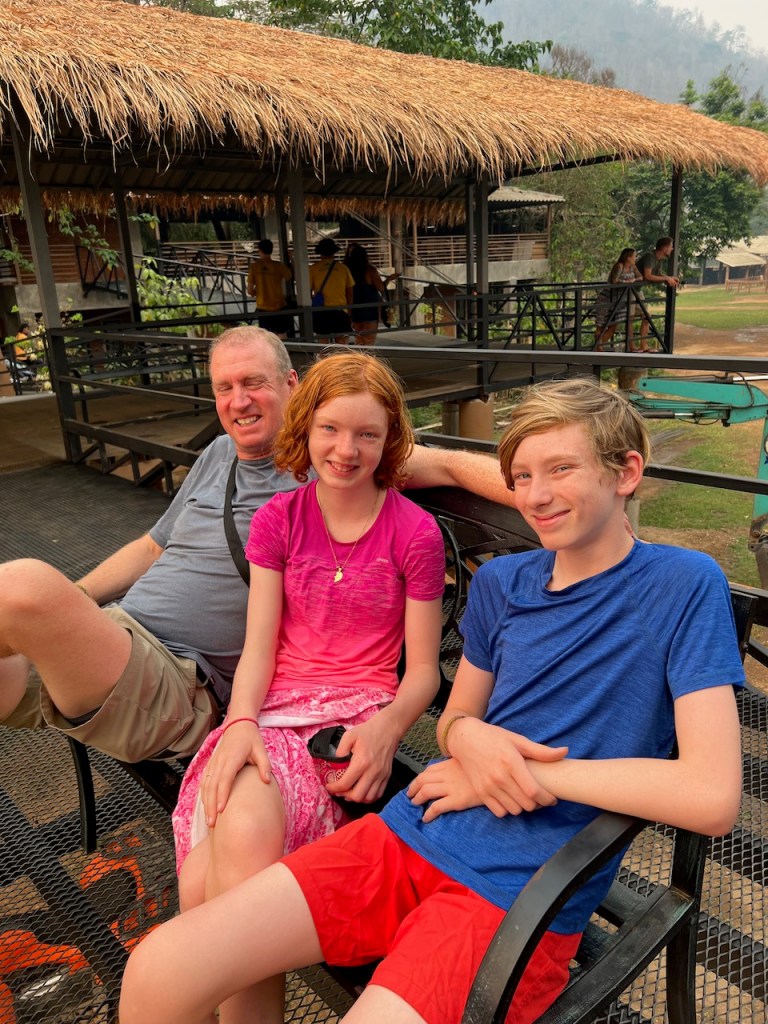
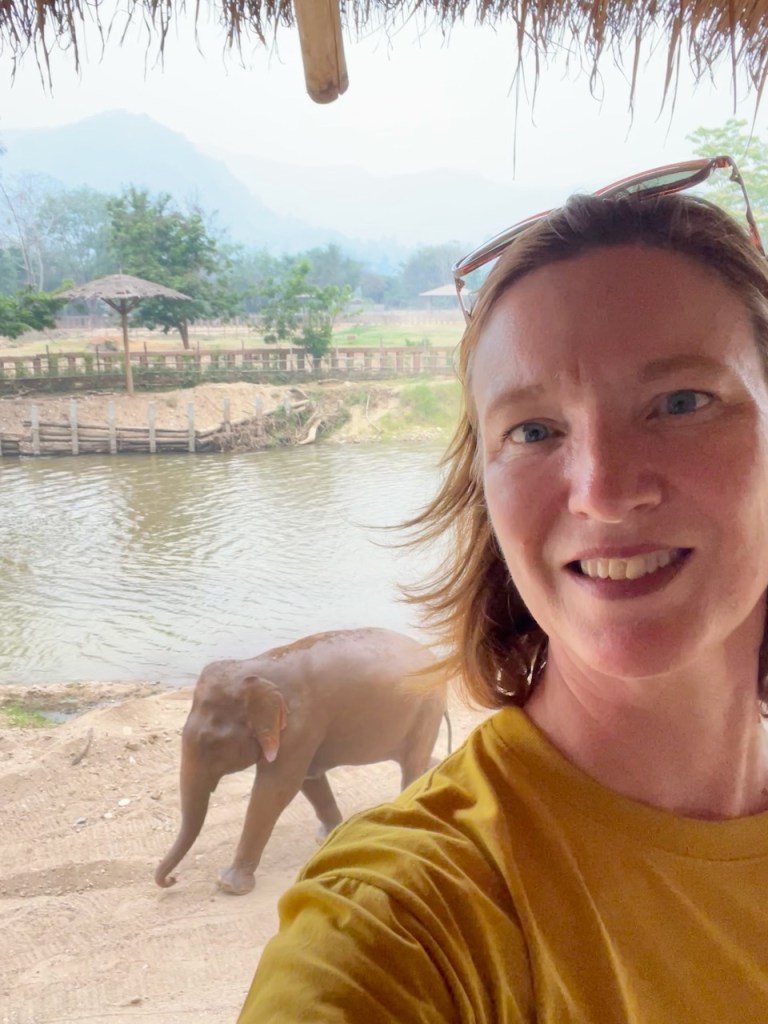

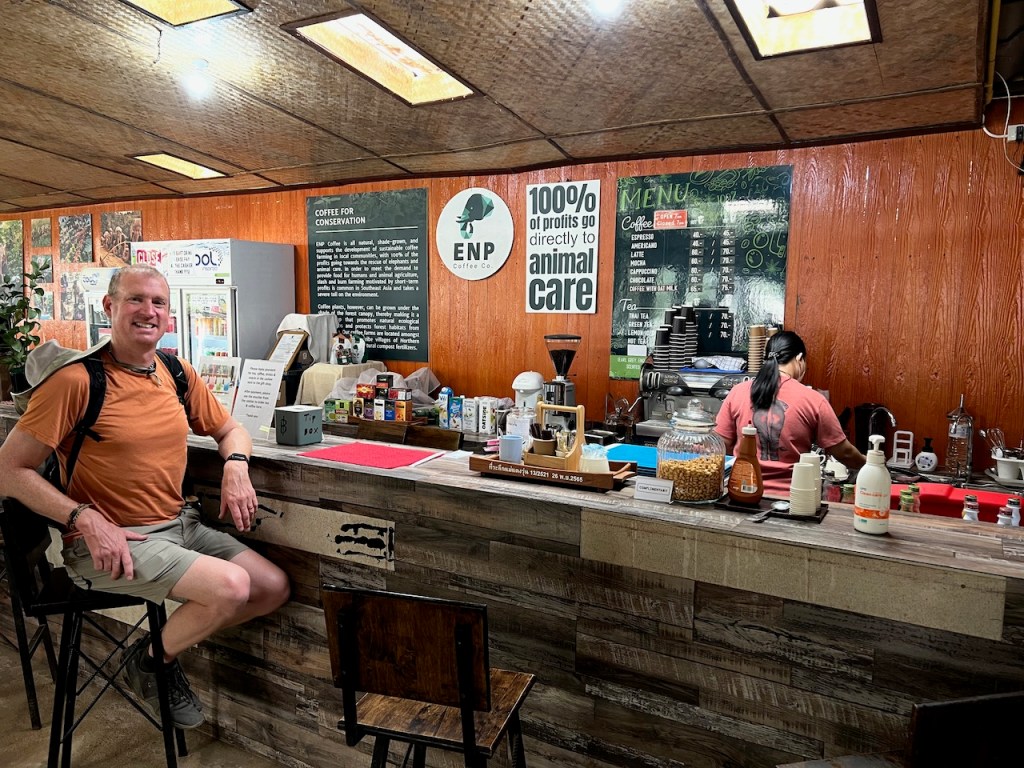
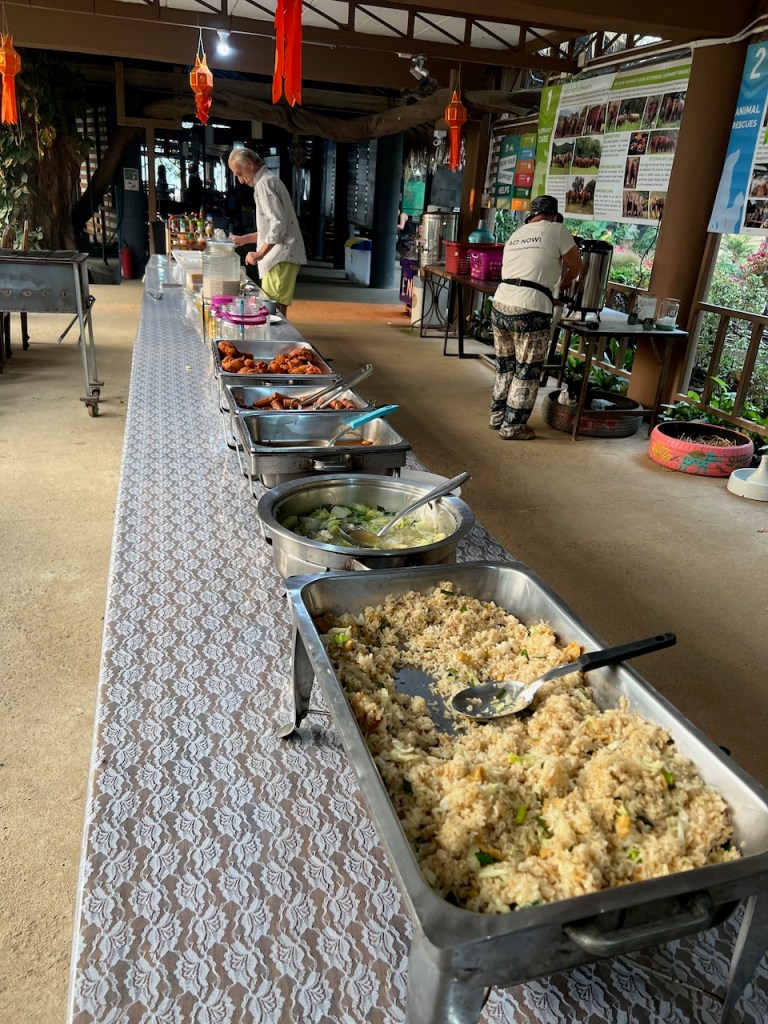
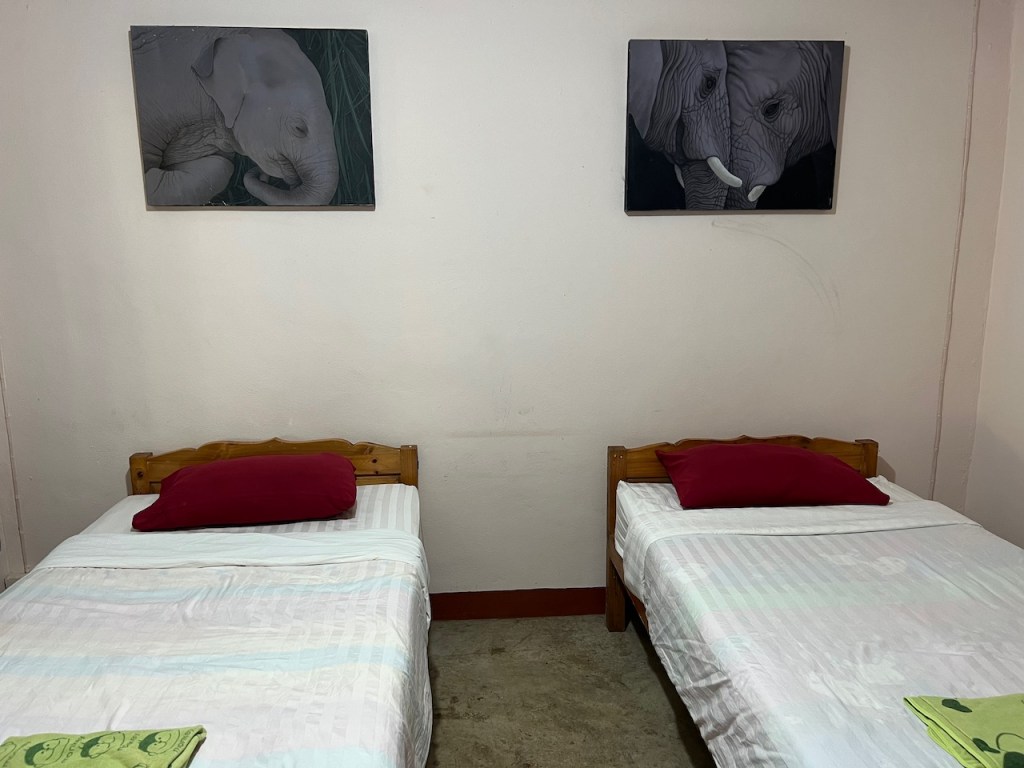
The food was fresh, abundant, and delicious!
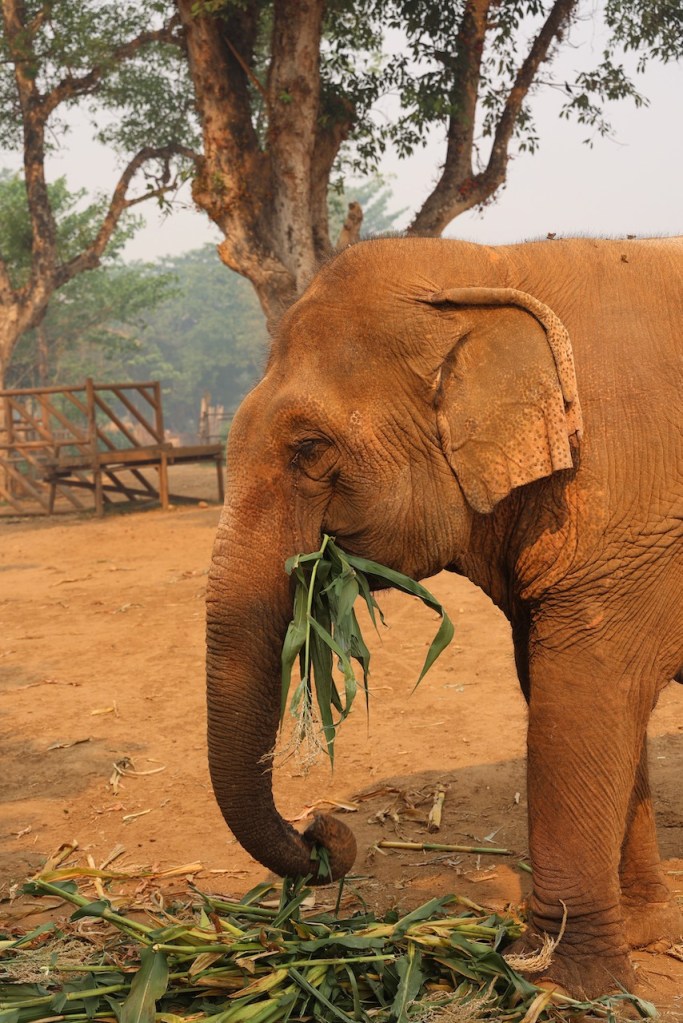
We also did practical work around the huge property, especially in the elephant kitchen. As these magnificent creatures eat tons of food daily, we helped with food prep and waste management. After all, what goes in must come out. The kids learned the joys(🤣) of shoveling poop, cutting corn stalks in 100 degree heat, unloading thousands of pounds of fruit from delivery trucks, and prepping food. I’m really proud of the kids; there was no whining or fussing despite smelly jobs and unrelenting heat. They worked as hard as the adults around them. They are rock stars!!!


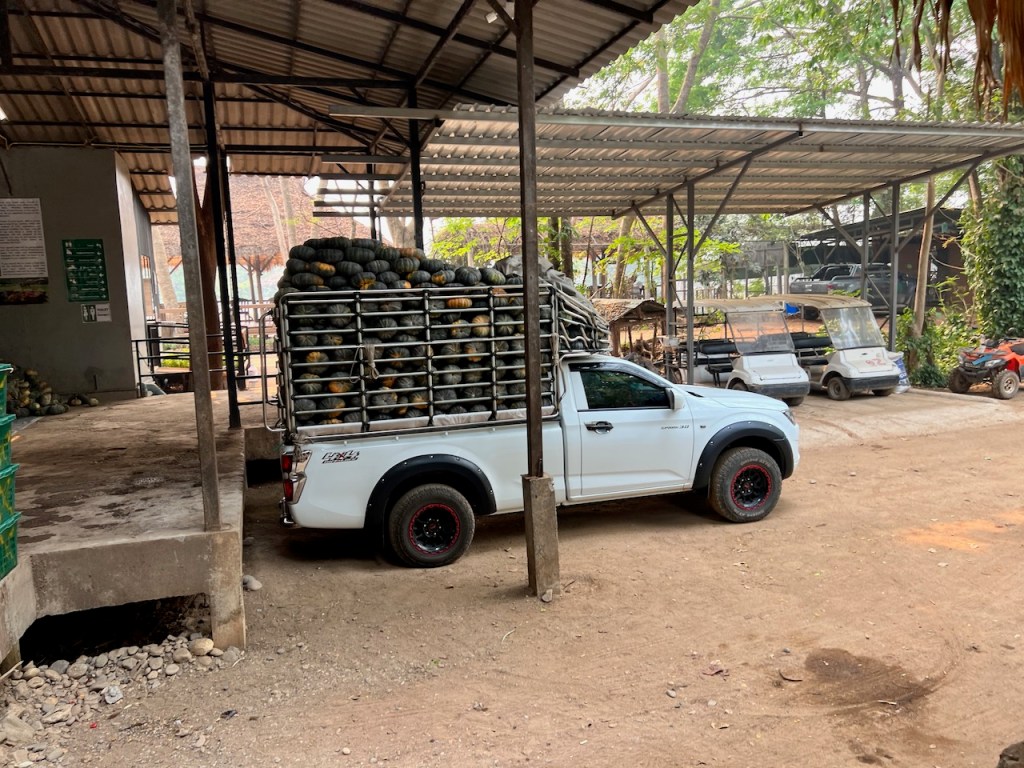
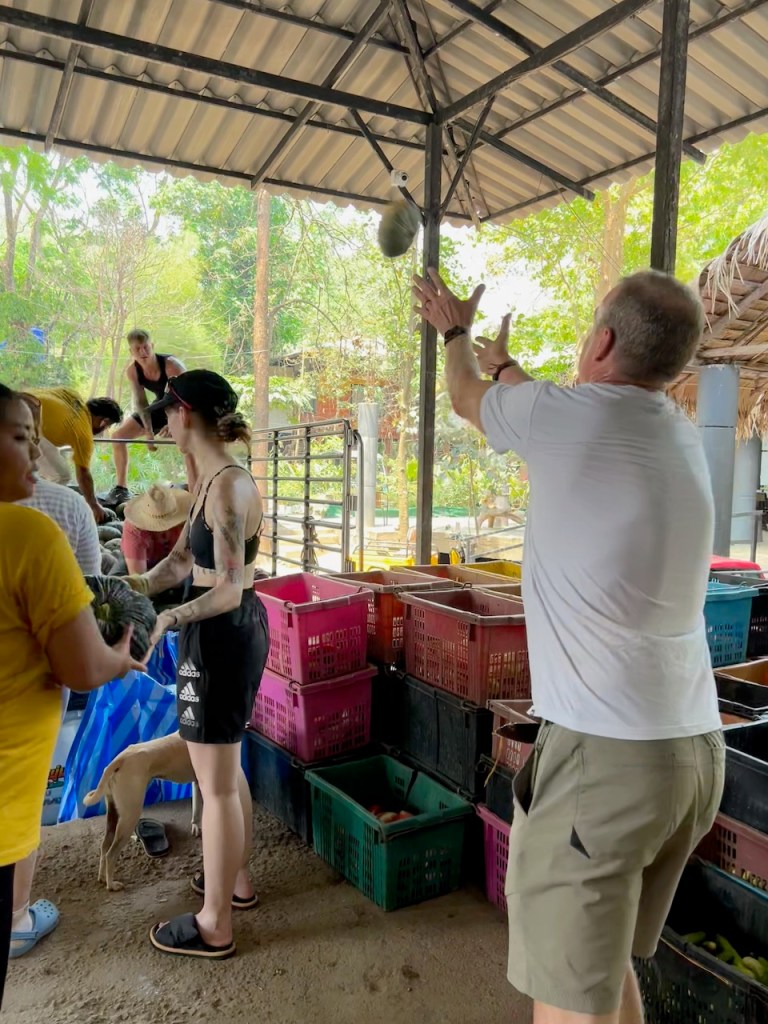

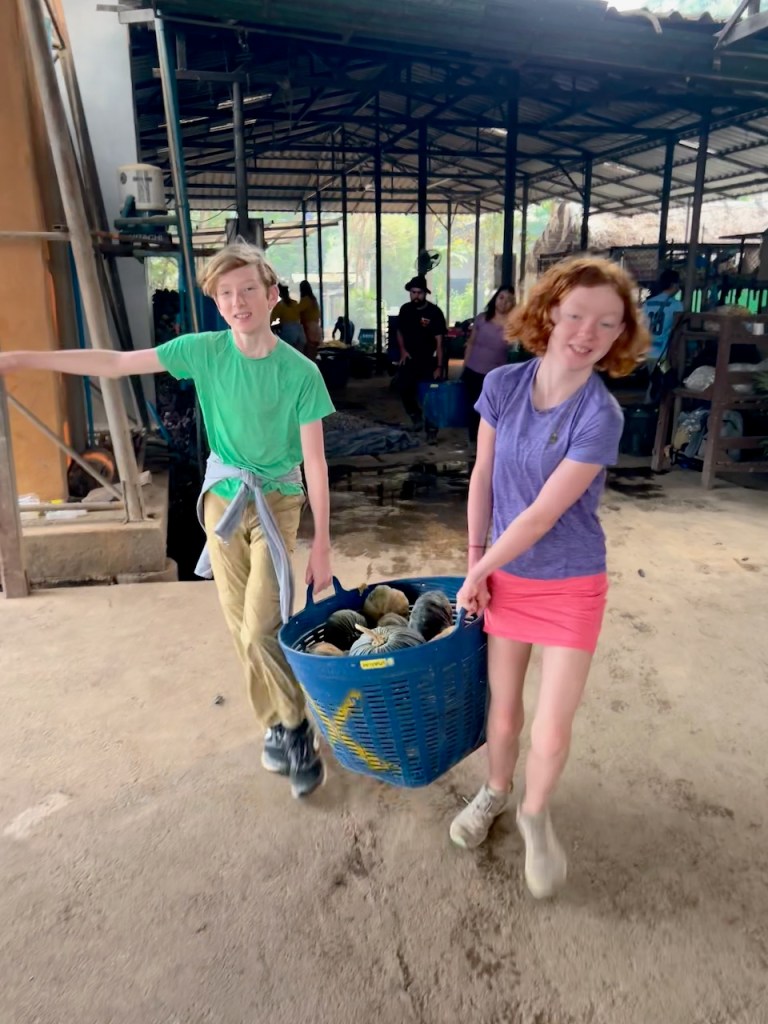
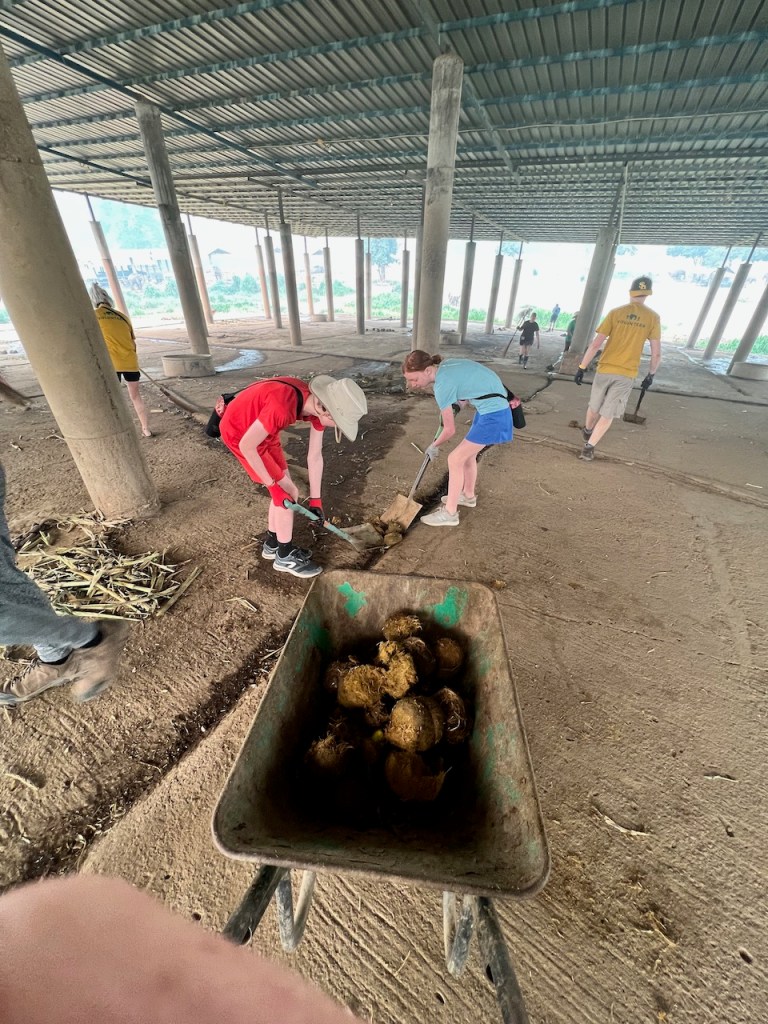
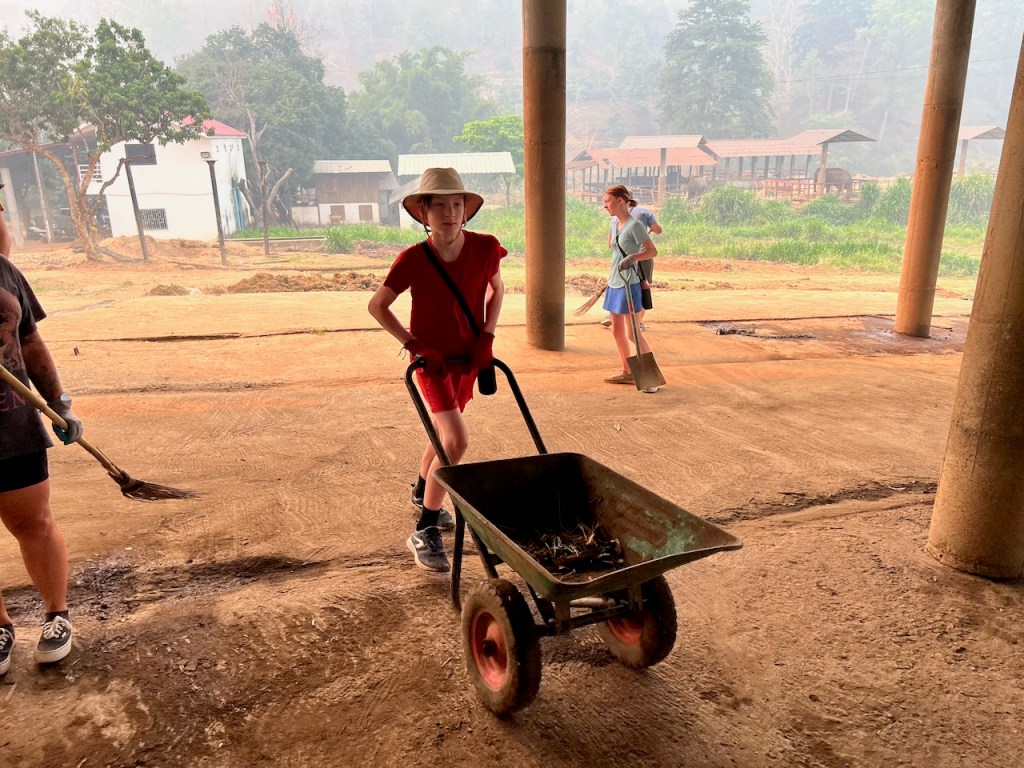

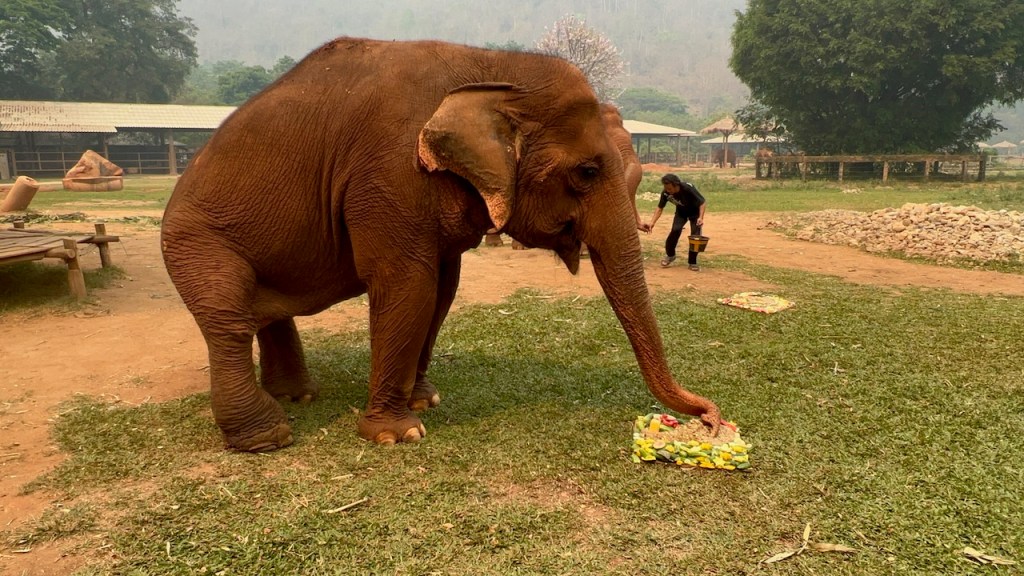

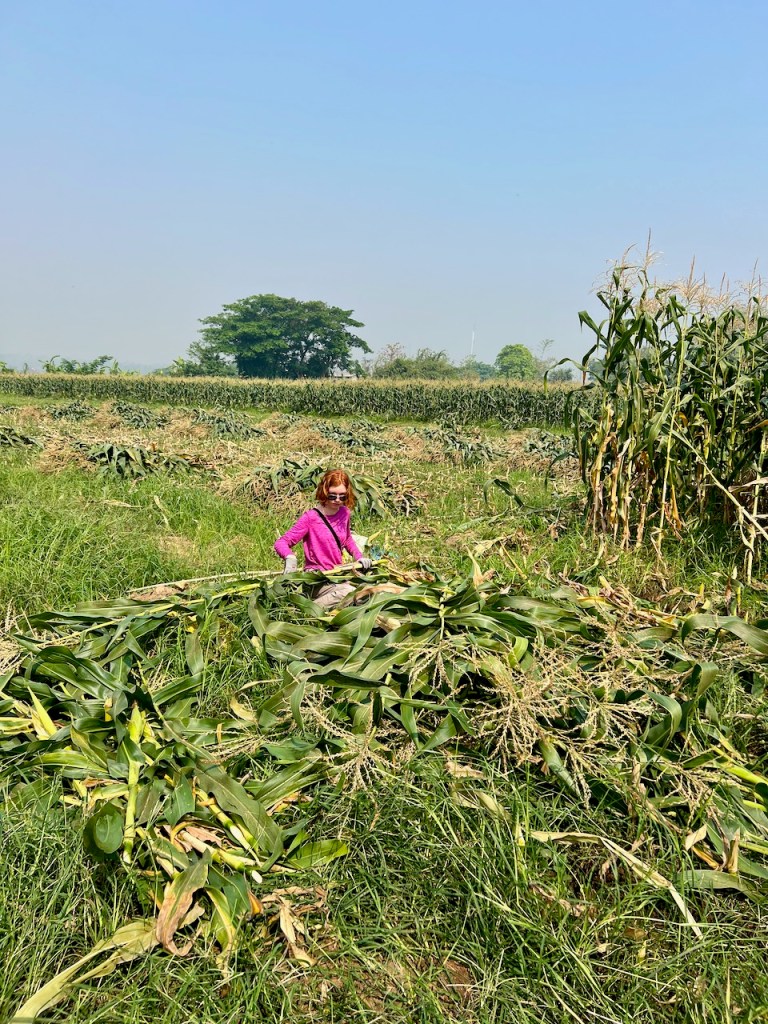
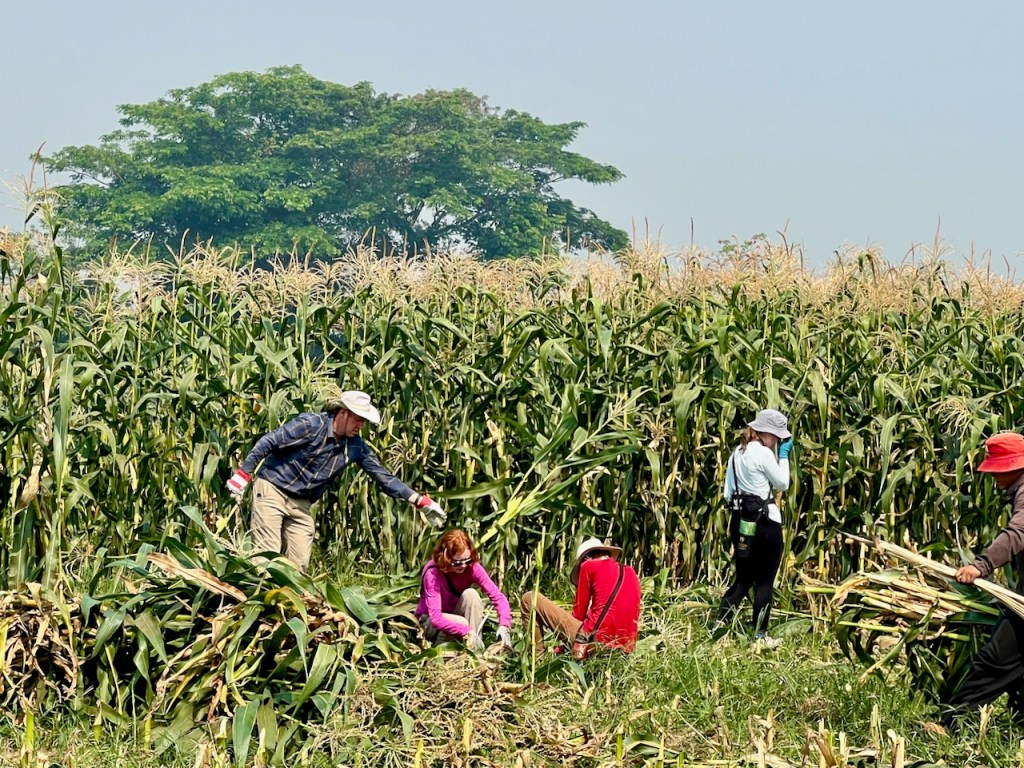
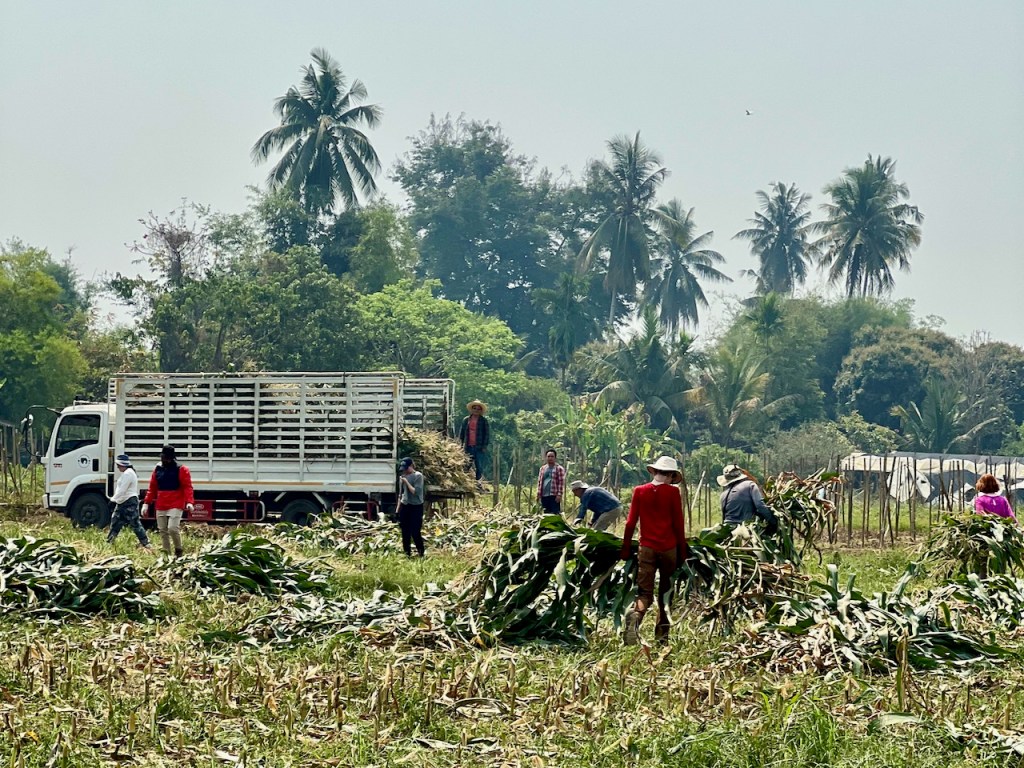
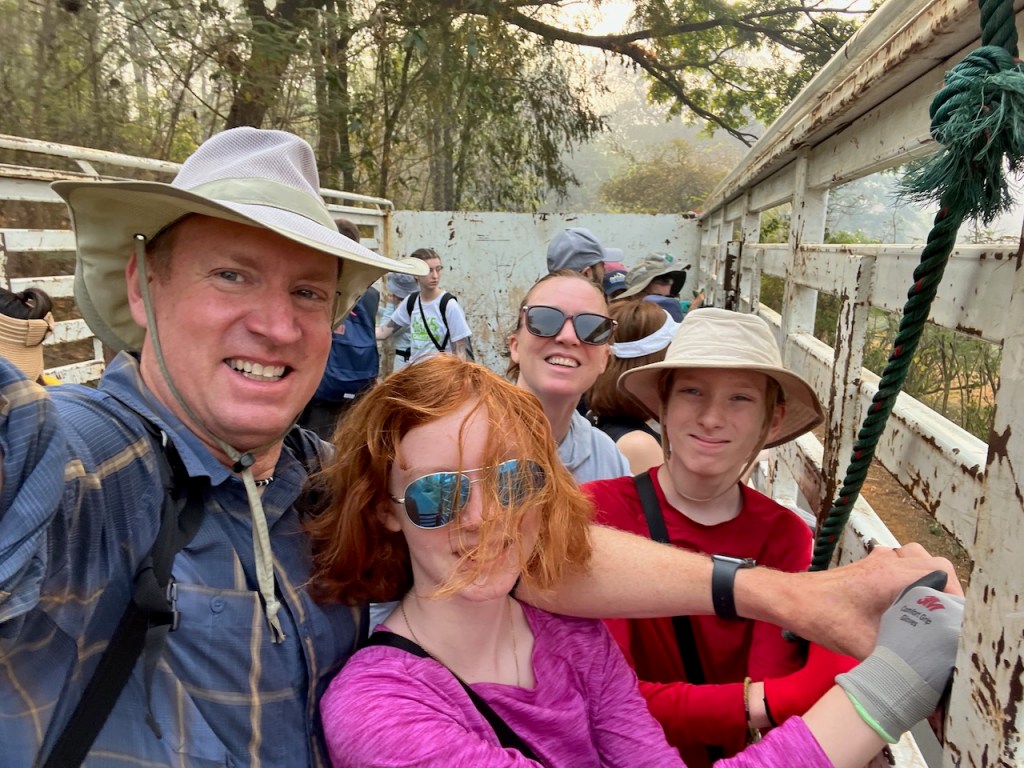
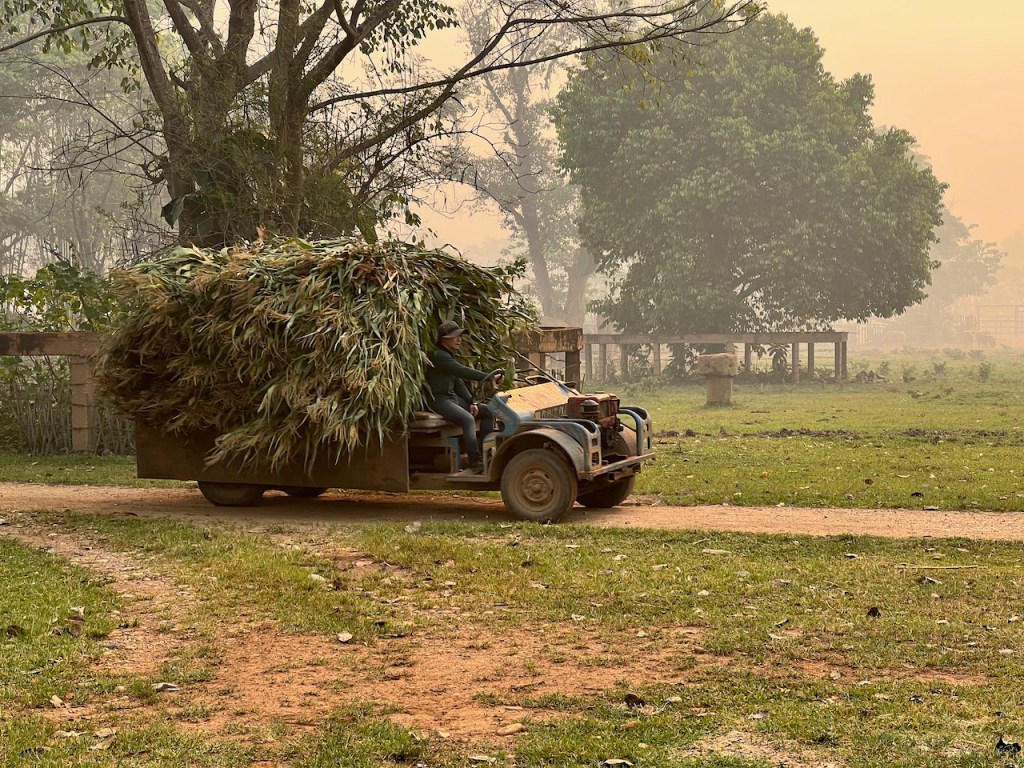
but necessary for our elephant friends…and only the first step!
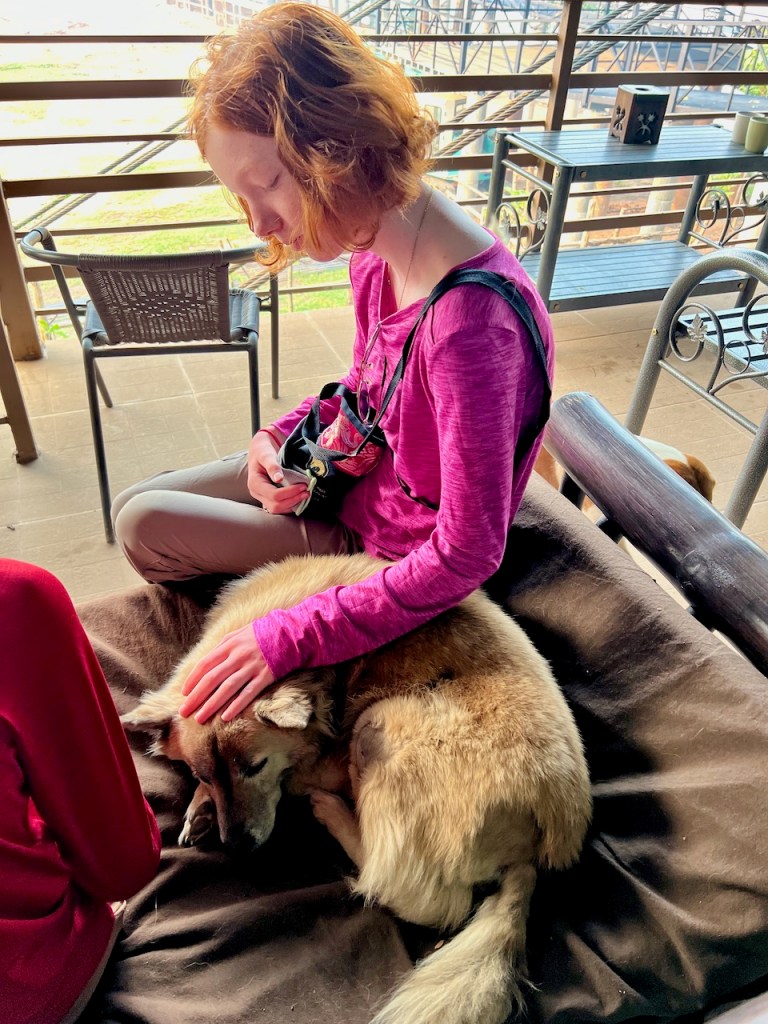
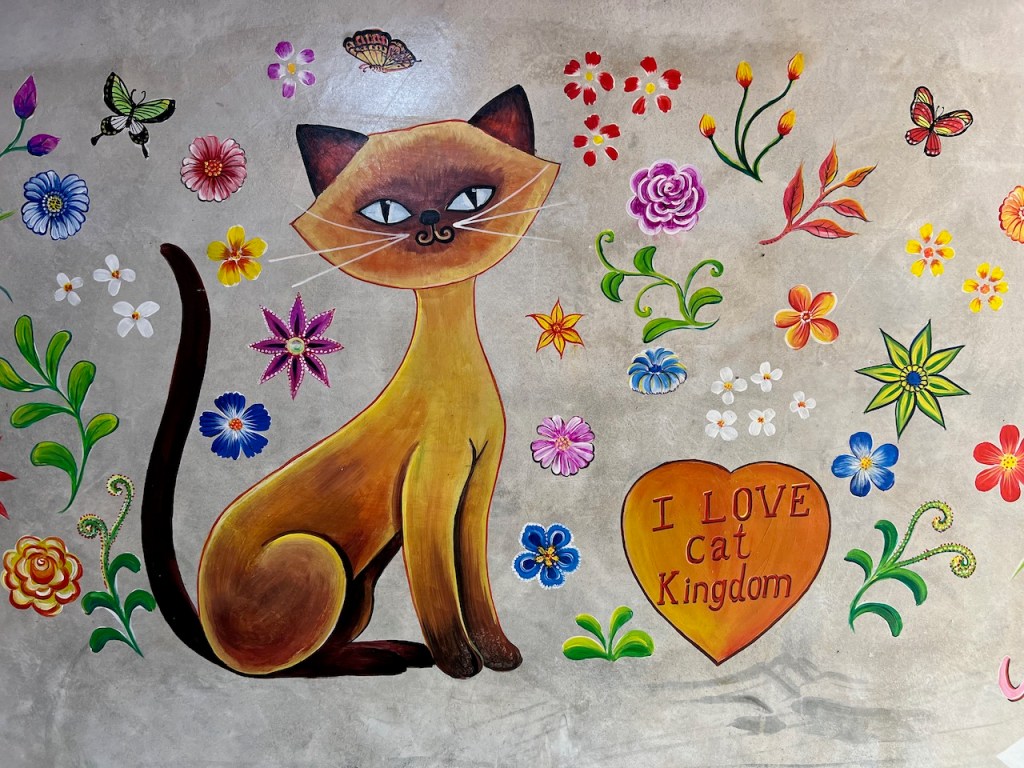
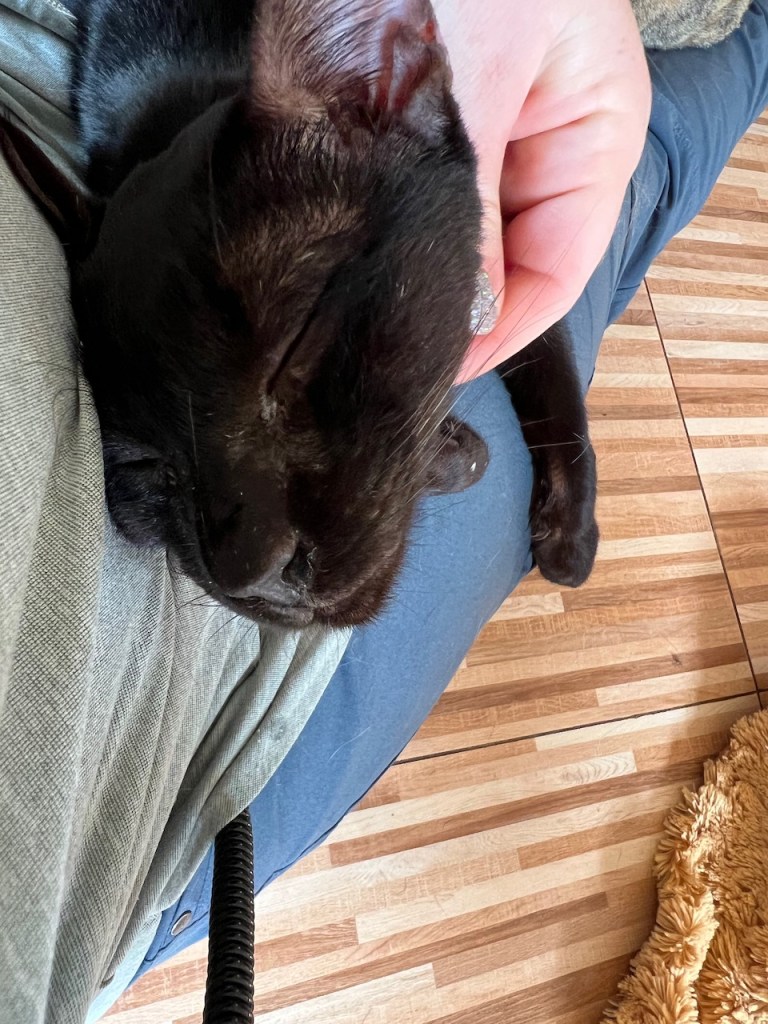
In our downtime, we walked disabled dogs, most of whom had trolleys due to spinal cord injuries. Gwyn was also enamored with the Cat Kingdom, where the 2000 cats reside, living in luxury with gardens, grass yards, tree houses, and their own beds. American shelters could learn something, the several yards and structures we visited didn’t smell, waste was quickly disposed of, and the property was beautiful for all the living creatures, humans included. Kate and the kids spent extra time there, both giving and receiving love.
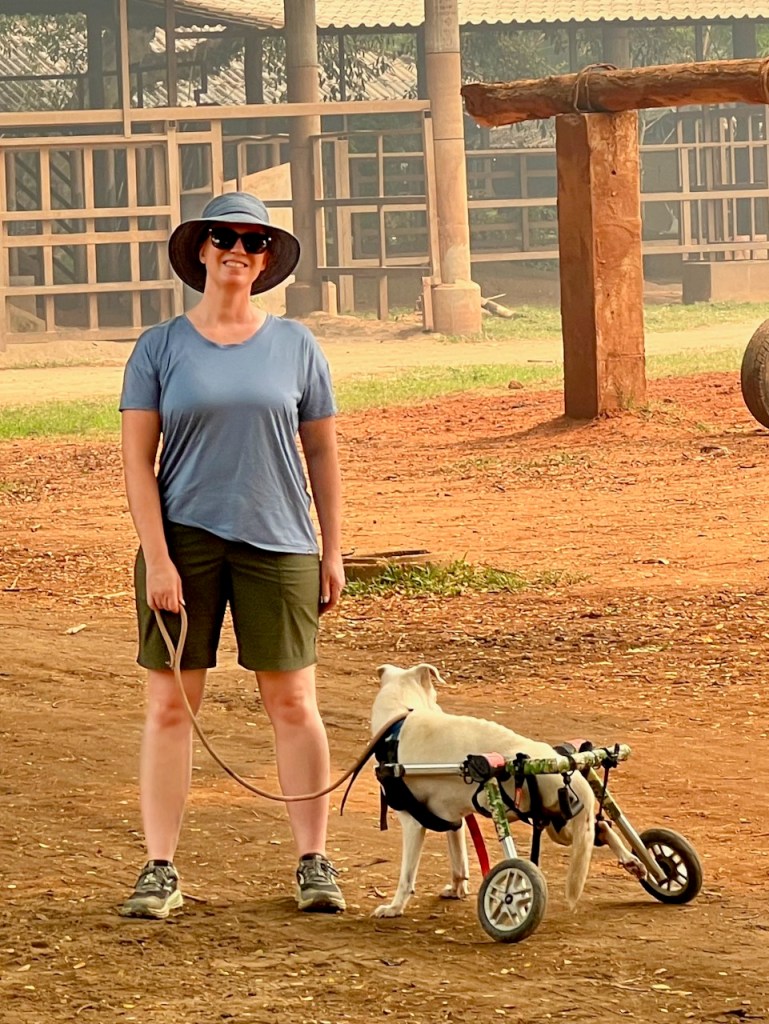
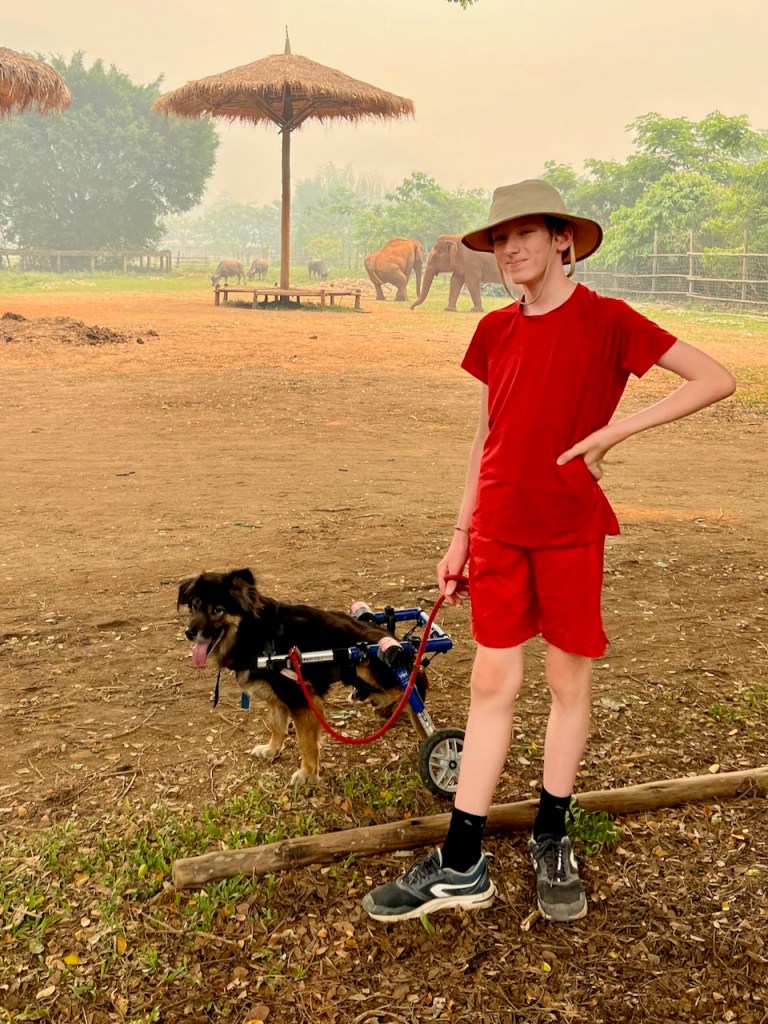

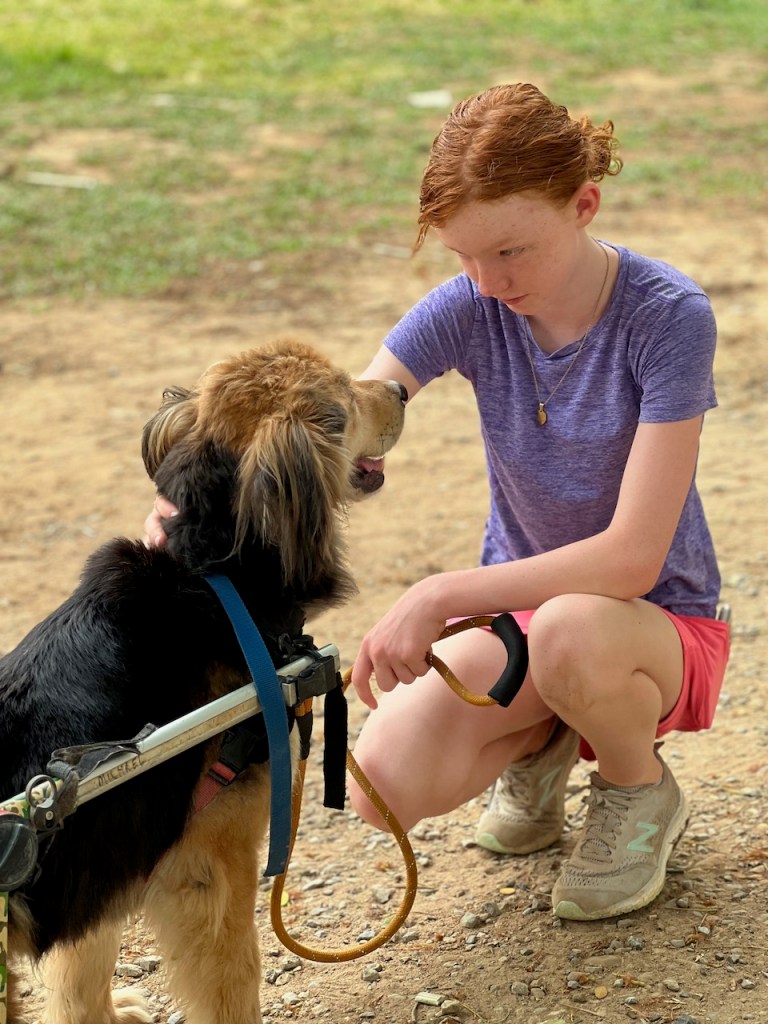
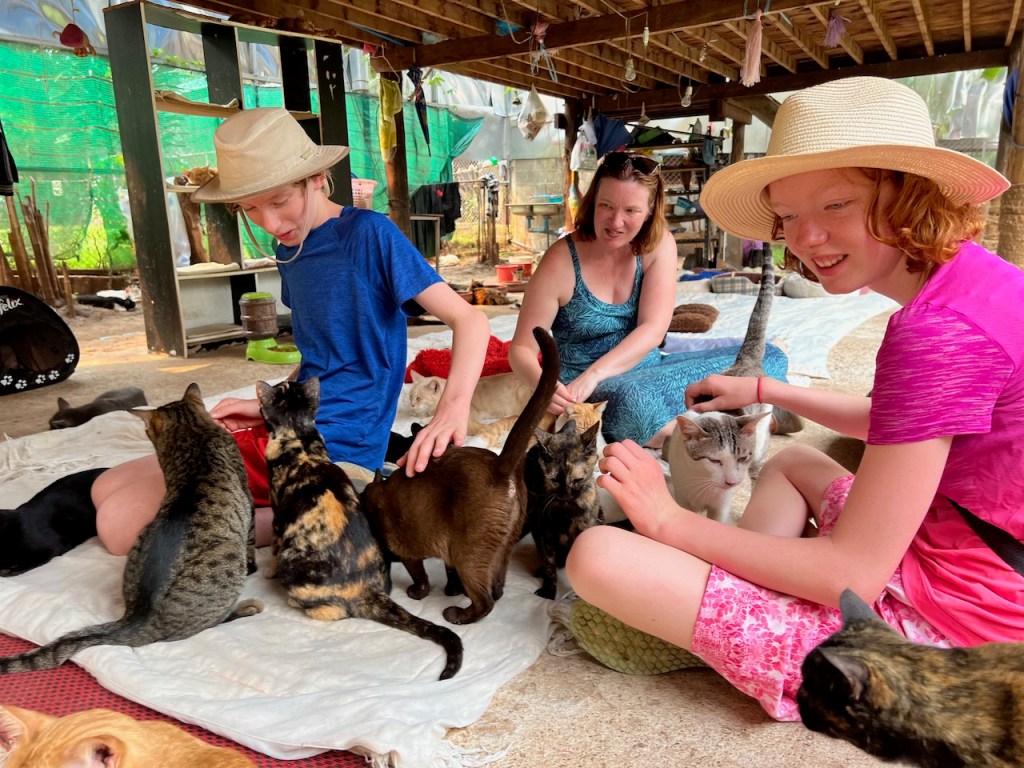
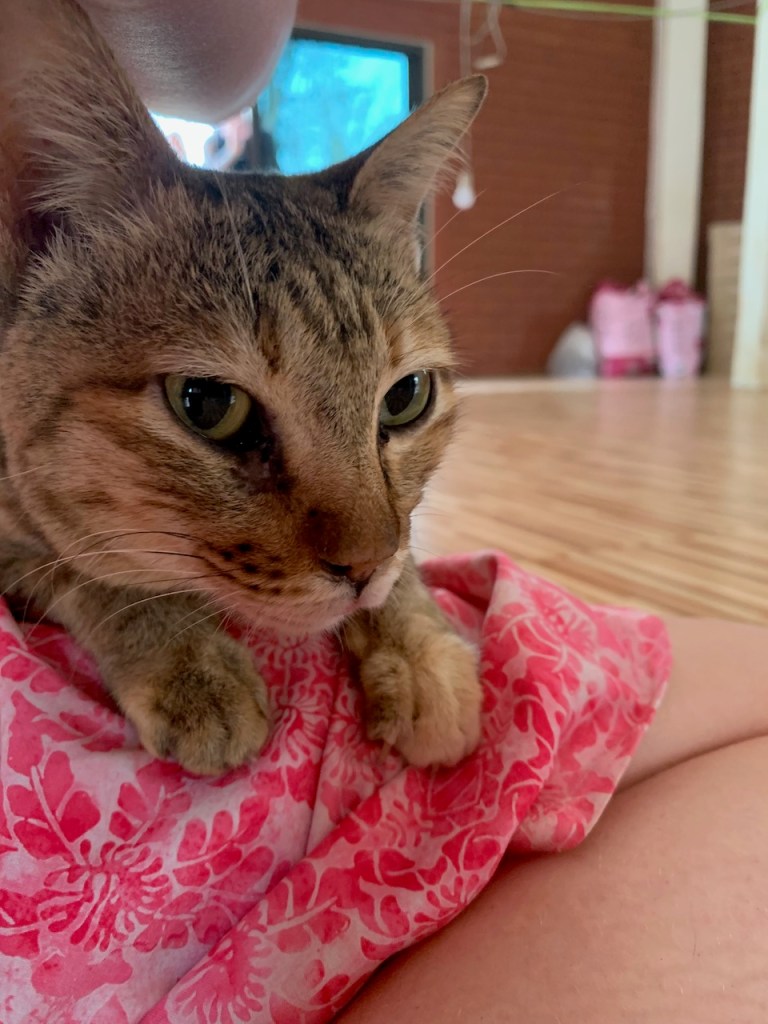
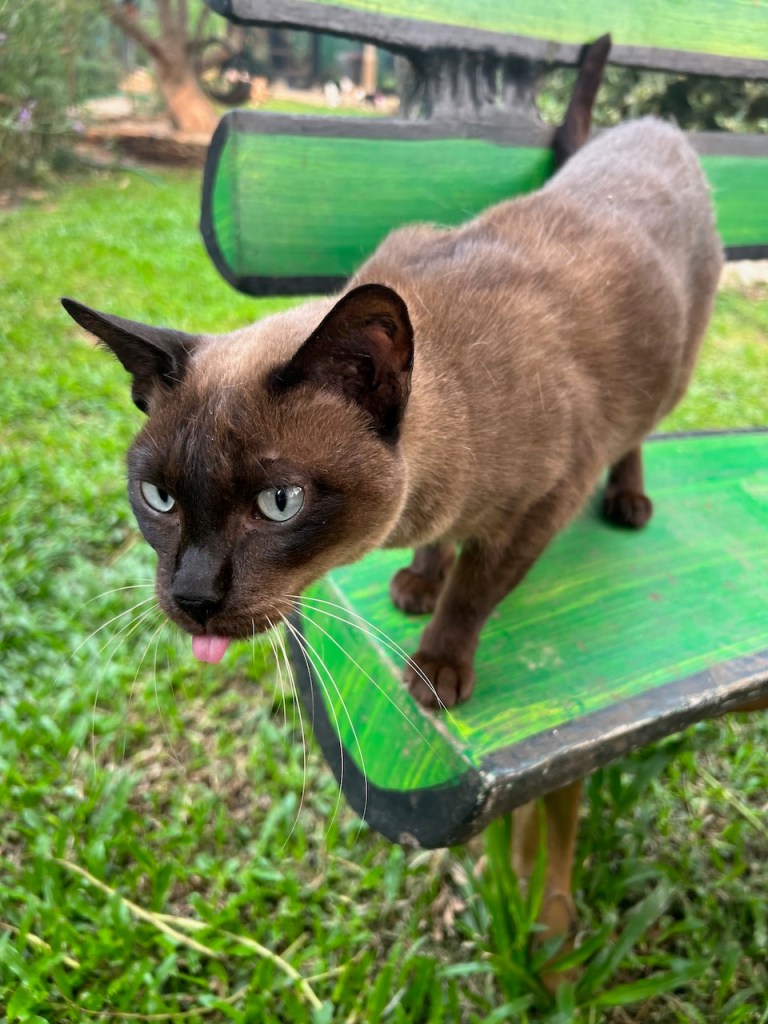
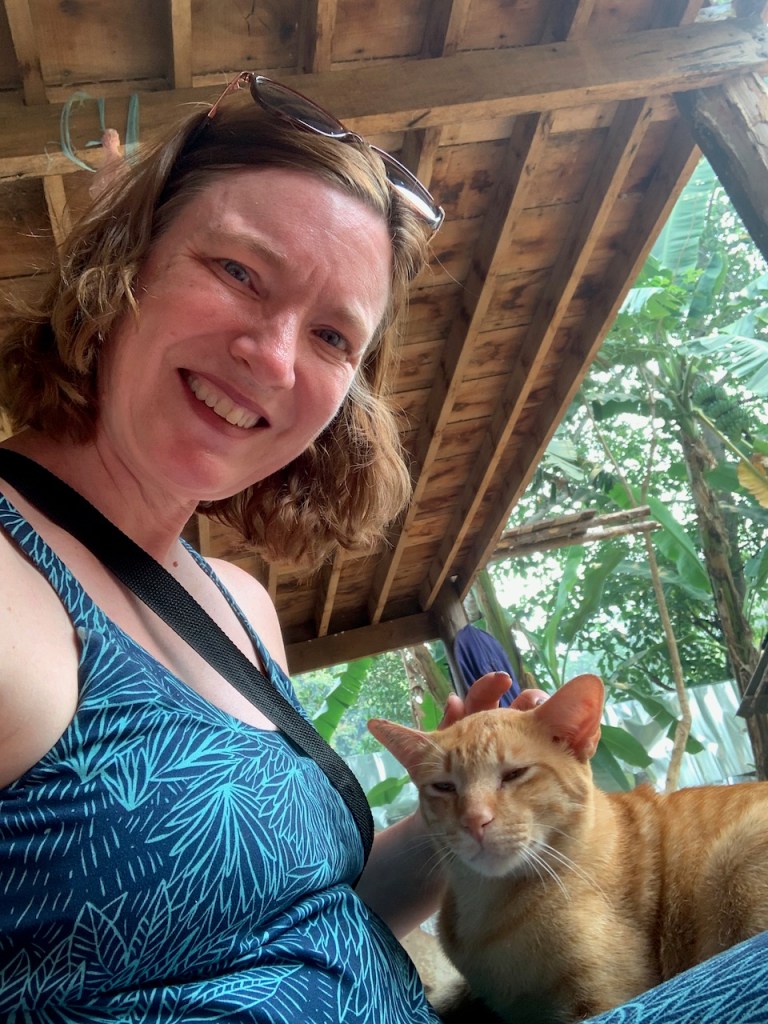



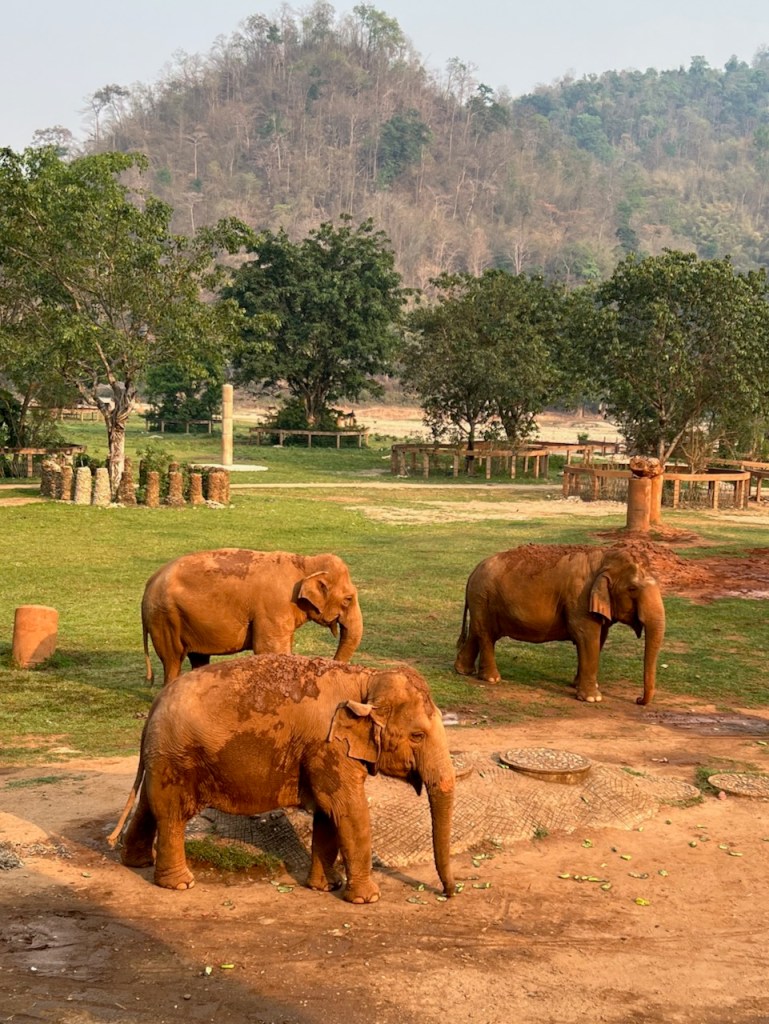
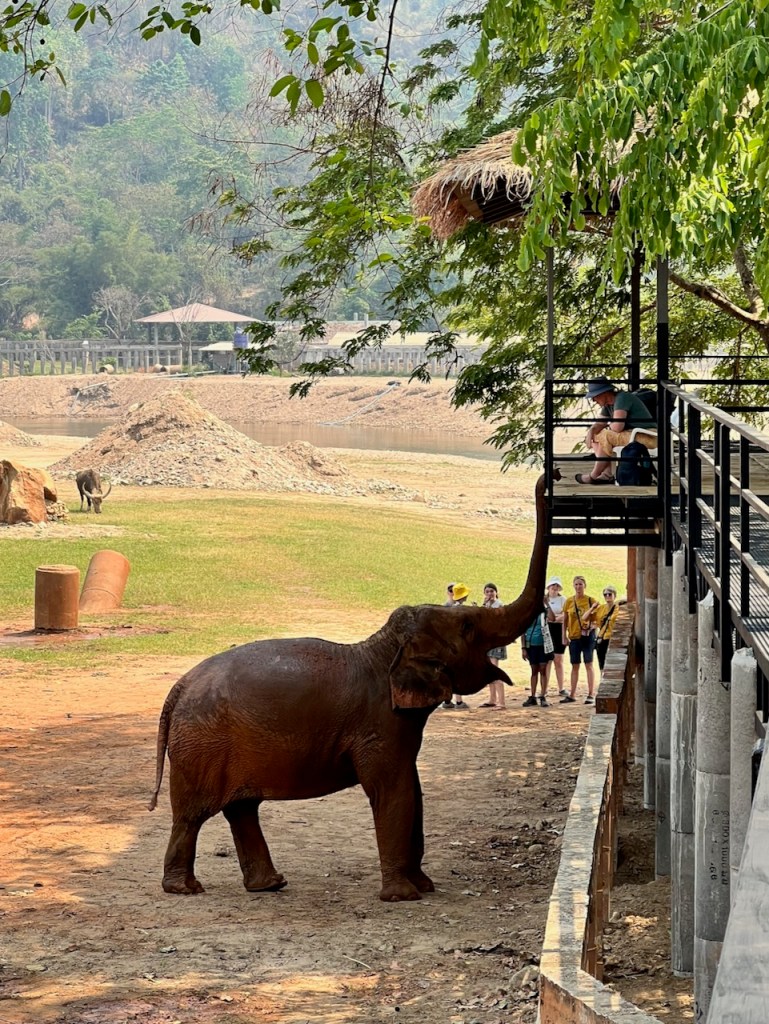
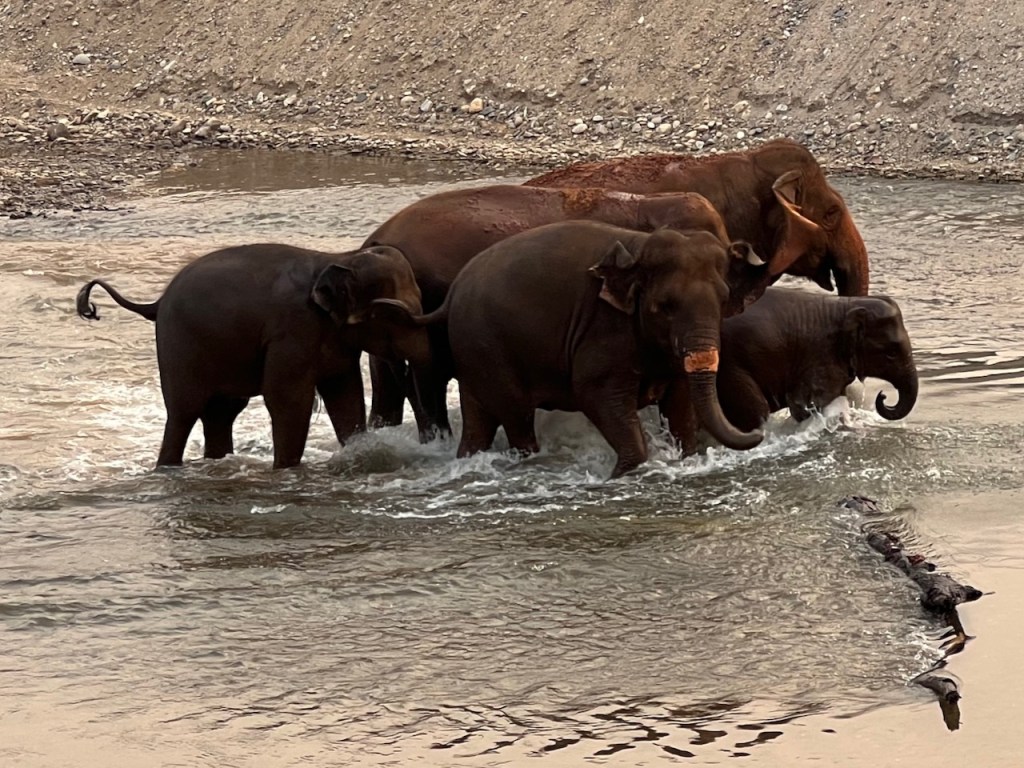
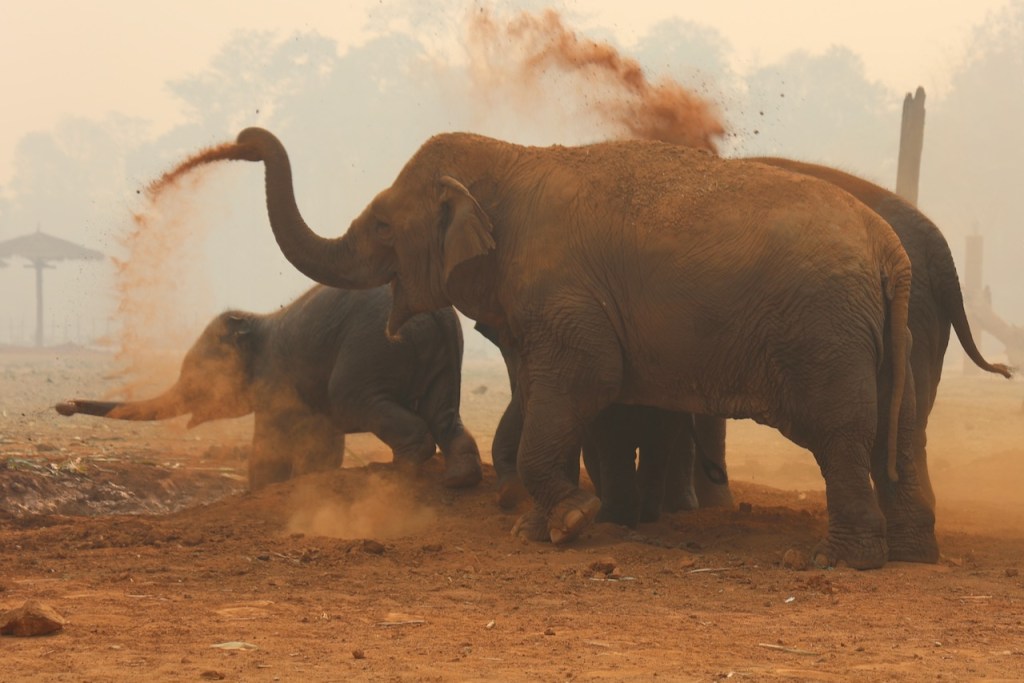
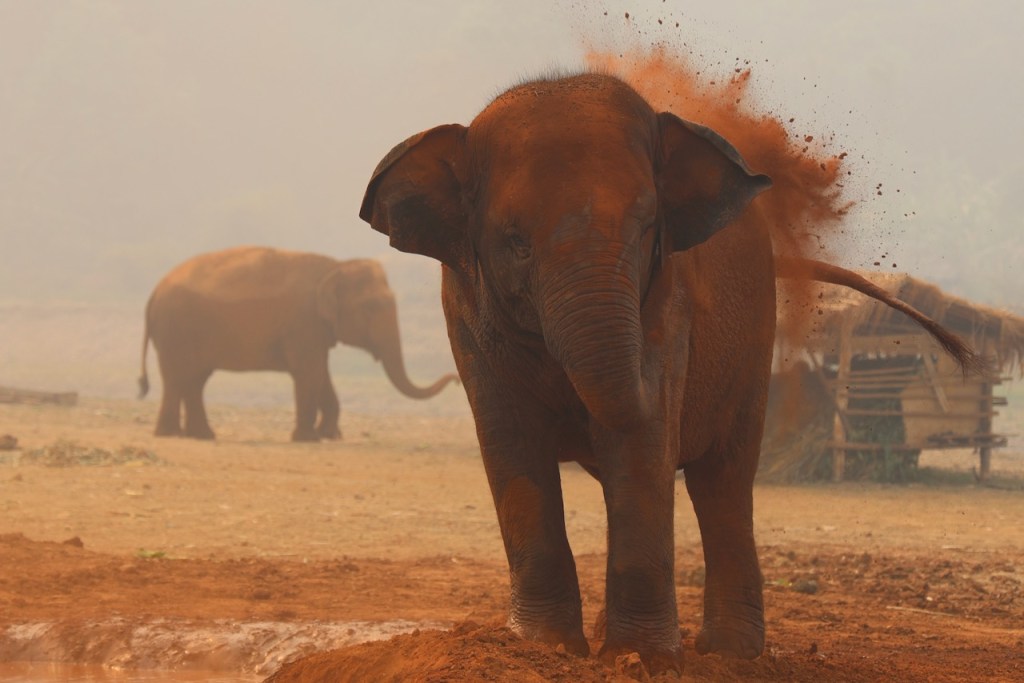
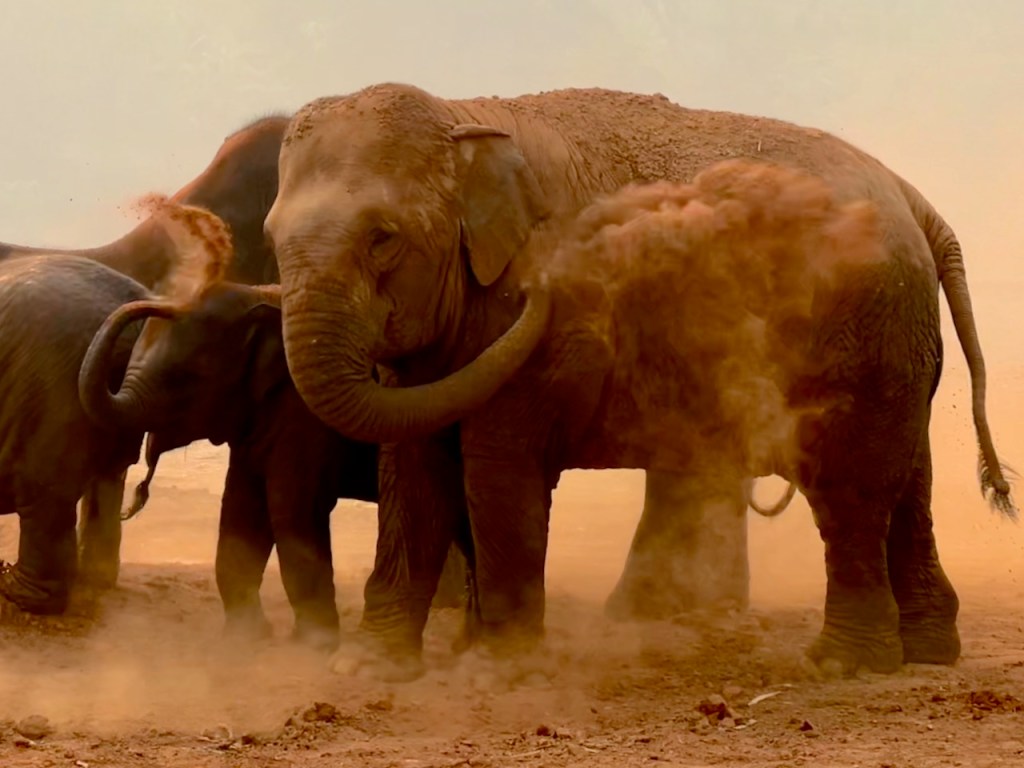
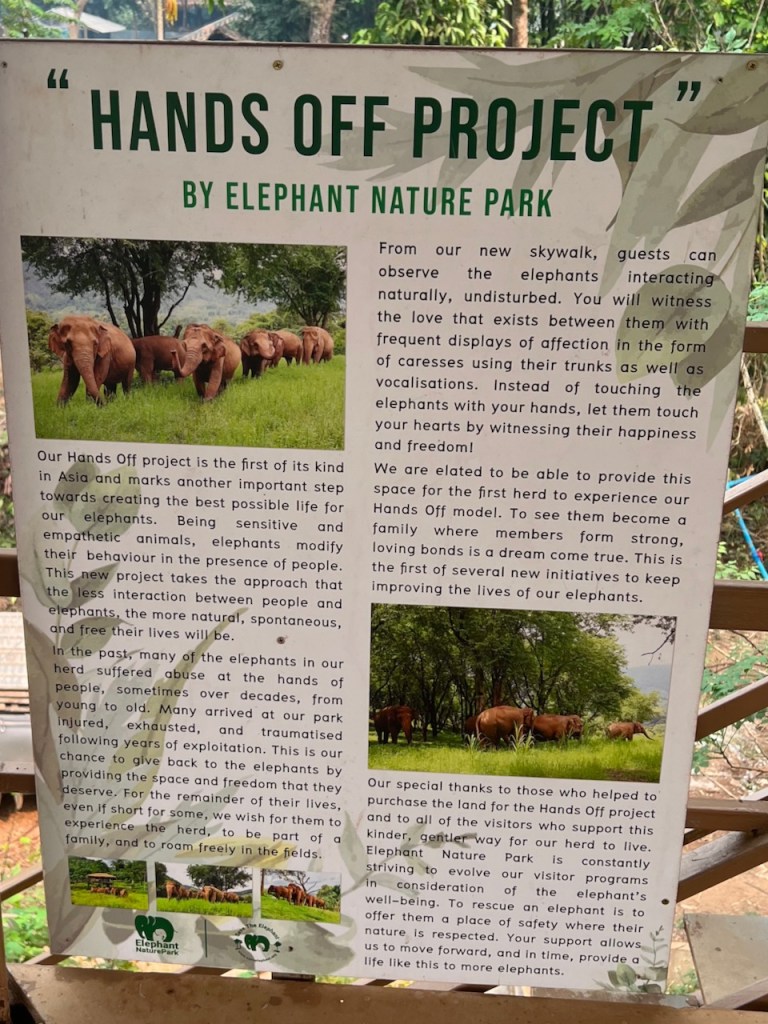
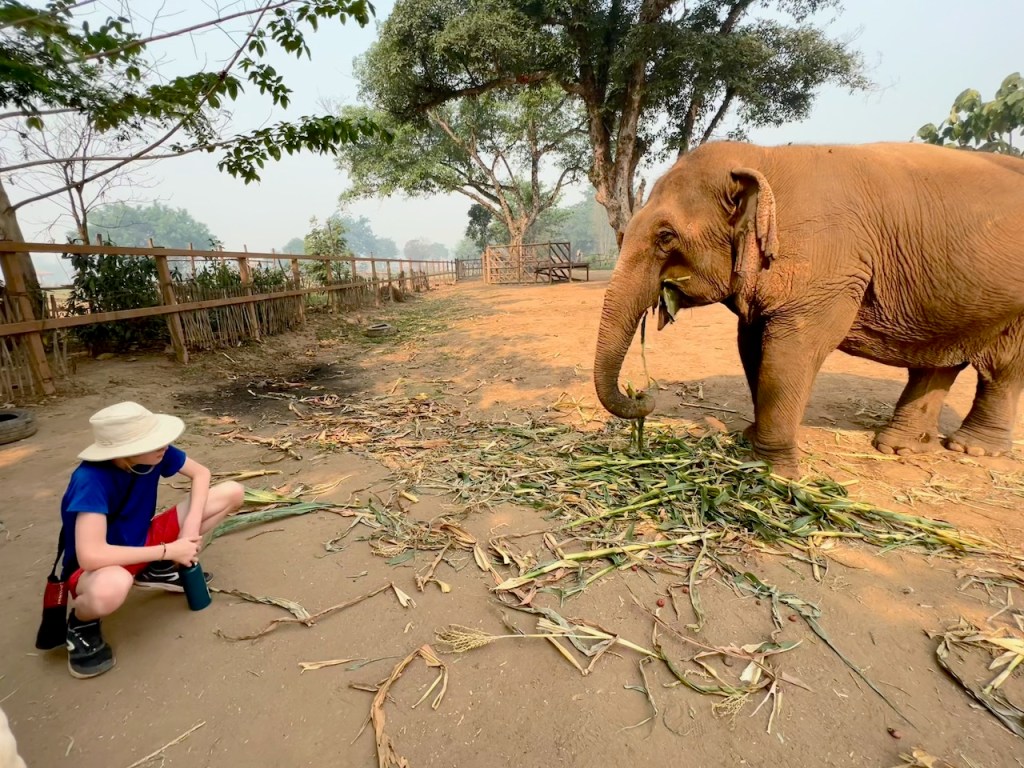
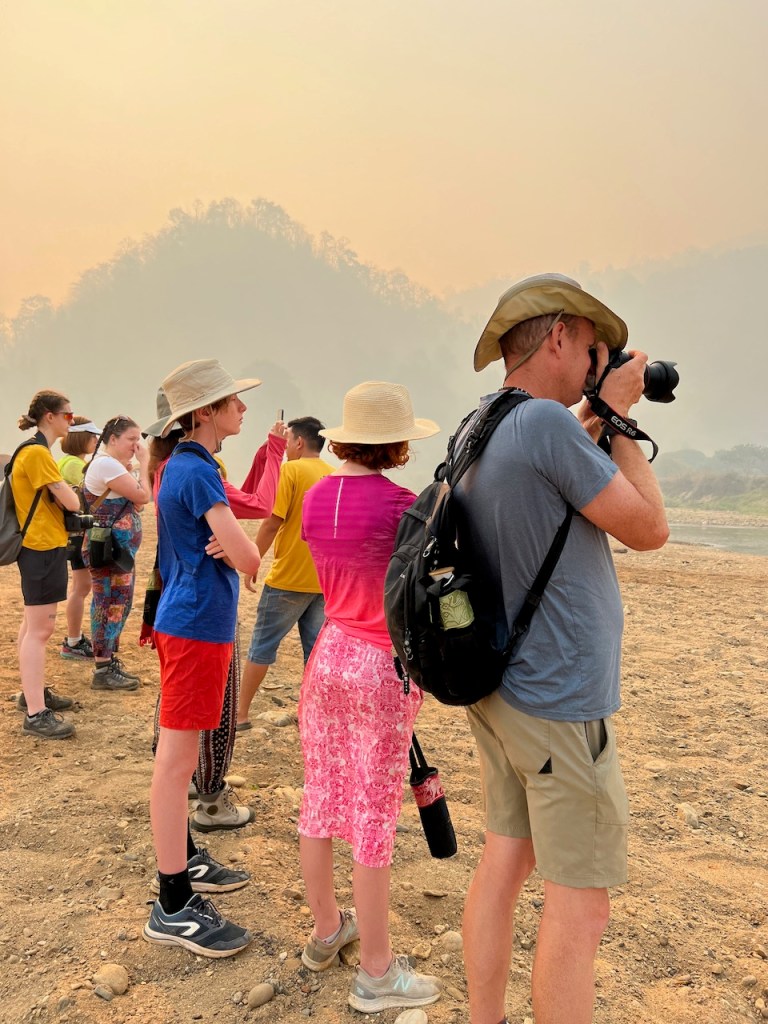
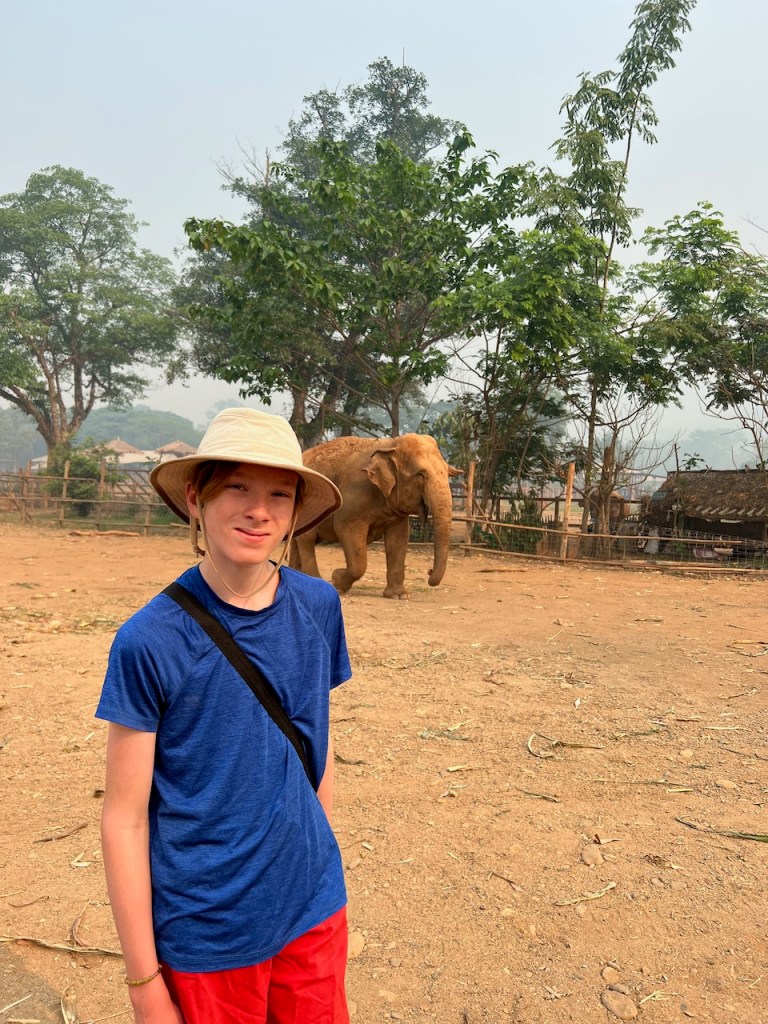
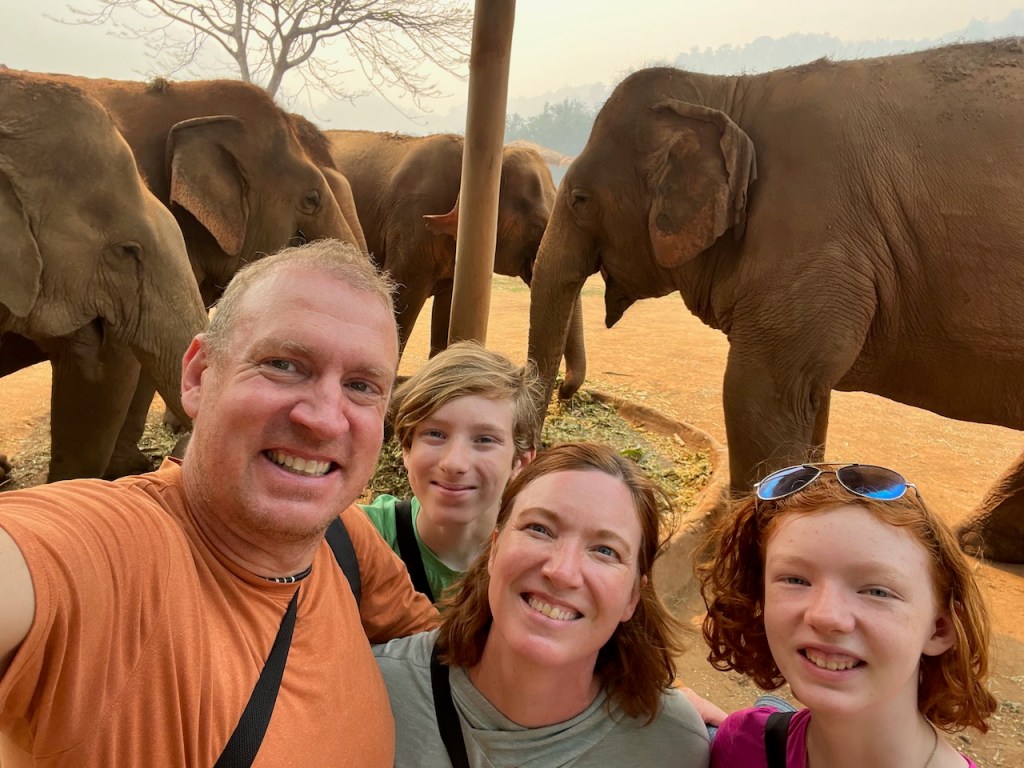
Elephant walks kept us moving as we explored the property with our guides, learning about the stories of the individual elephants and getting close enough to understand their personalities and see their emotions, but always far enough away to remain safe and respect the animals. Most of the rescued elephants have formed attachments to other elephants and a respectful bond with their caretaker. The females and babies roam as freely as possible during the day and return to their chain-free shelters at night, when the caretakers also go home. The more aggressive males live separately in huge enclosures to keep everyone safe (and baby-free), but future plans include a whole new sanctuary just for them. It’s not the wild, but it’s as close as a rescued elephant can get for now.

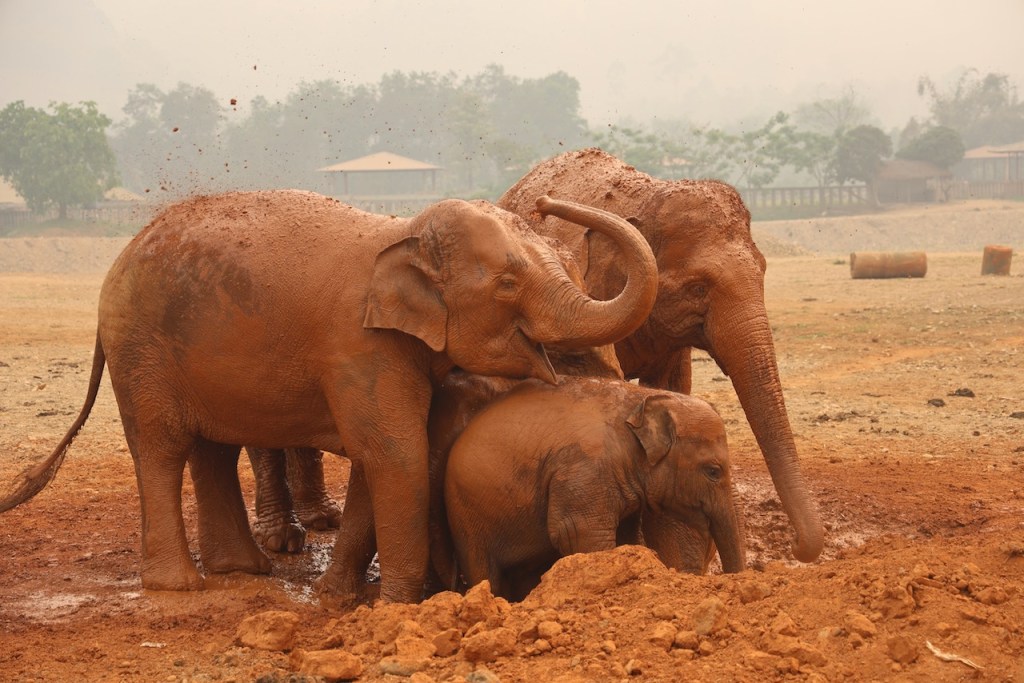

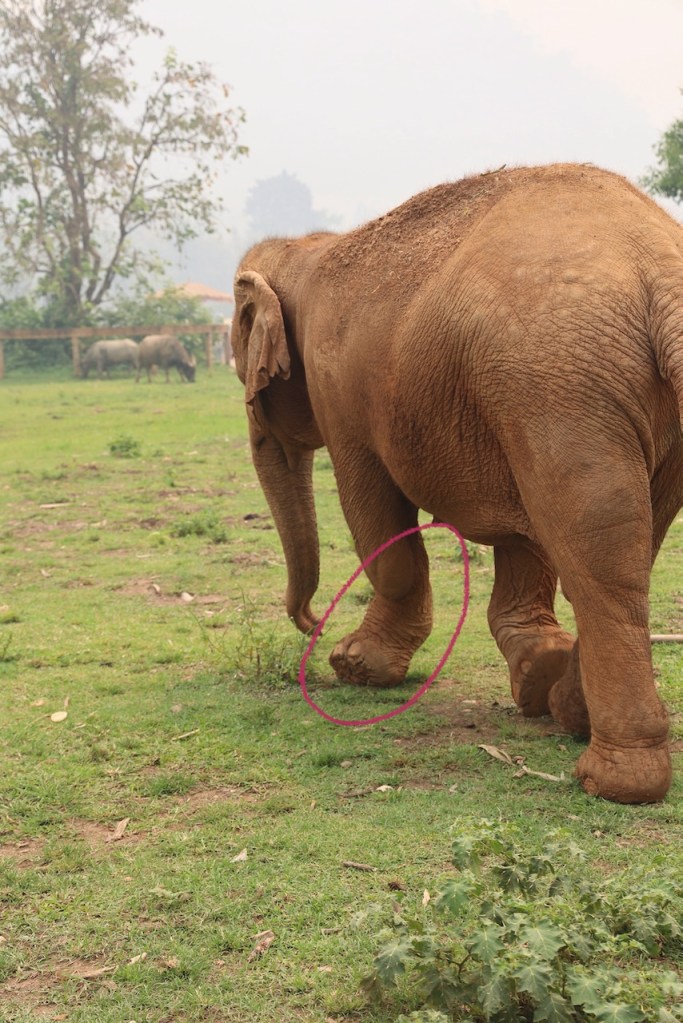
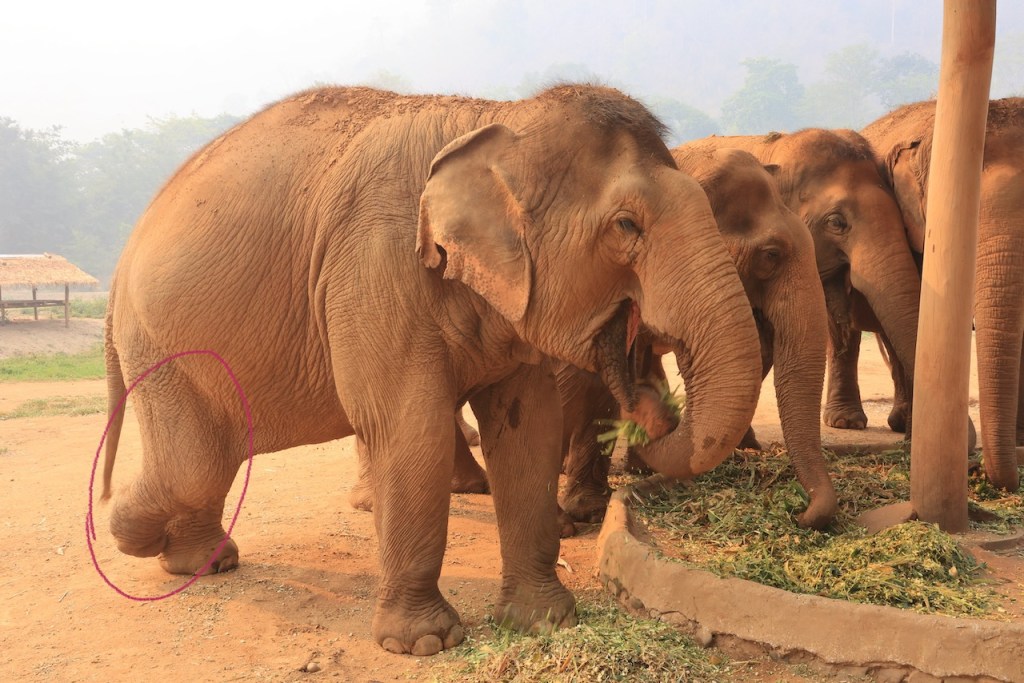
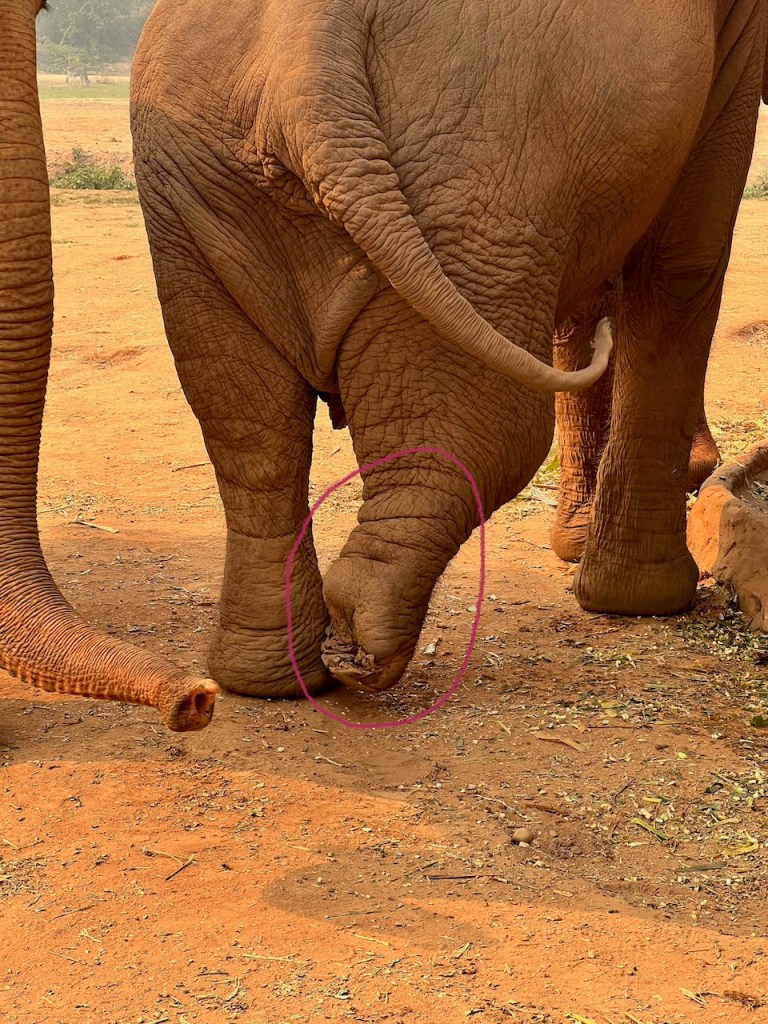
There is Medo, who walks slowly with a limp due to major trauma. One hind ankle was broken and never healed due to a logging accident, and her hip was dislocated by forced breeding when she was chained up and the bull mounted her. Every step brings her pain, but she slowly walks to the river where floating in the water provides her relief. She is loved by all and has best friends by her side as she lives her new life.
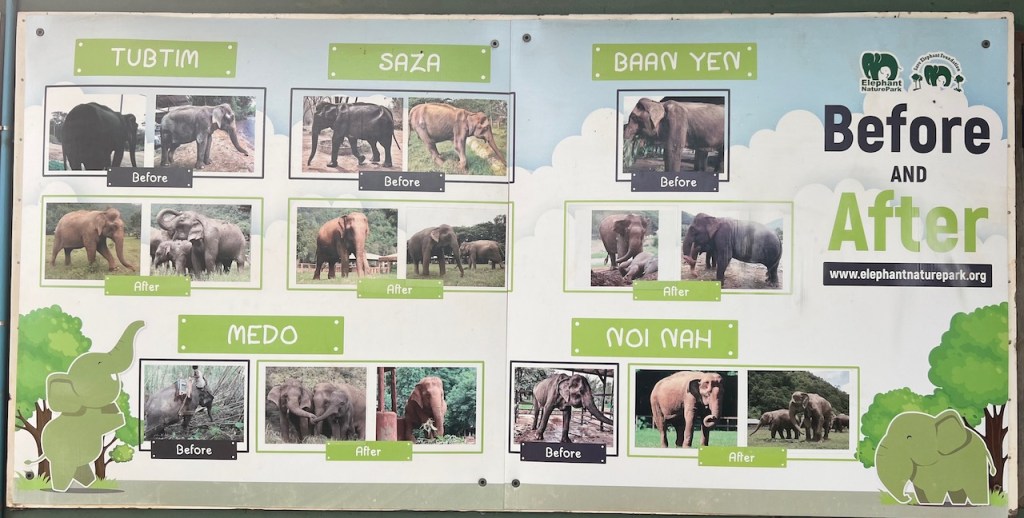
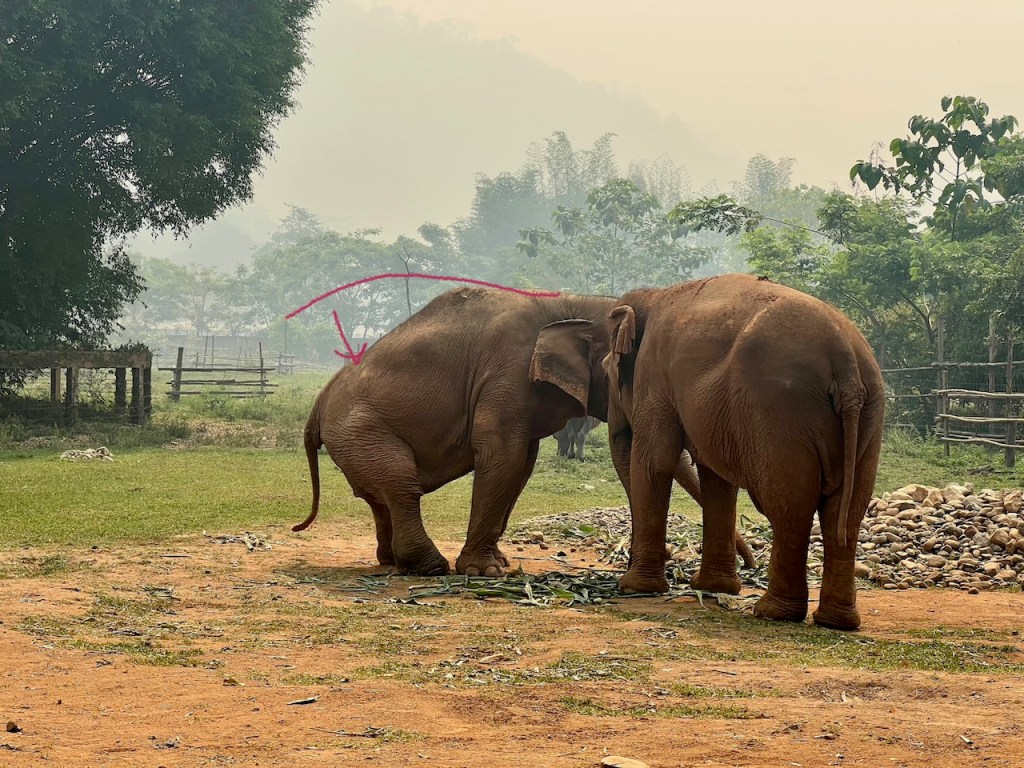
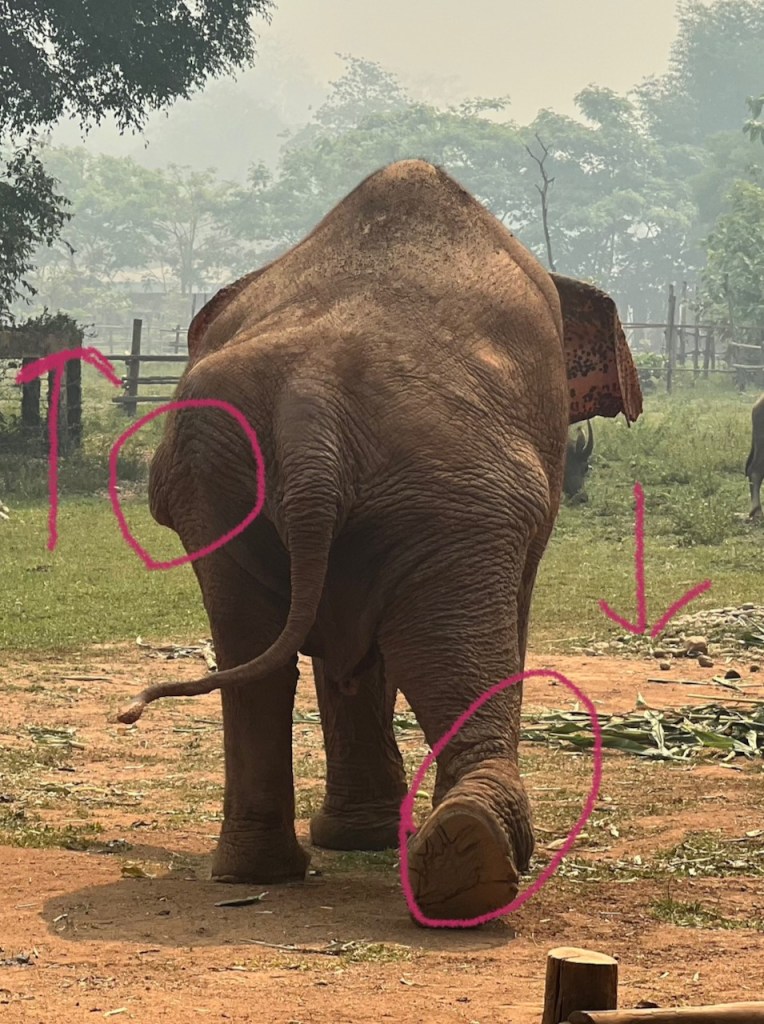
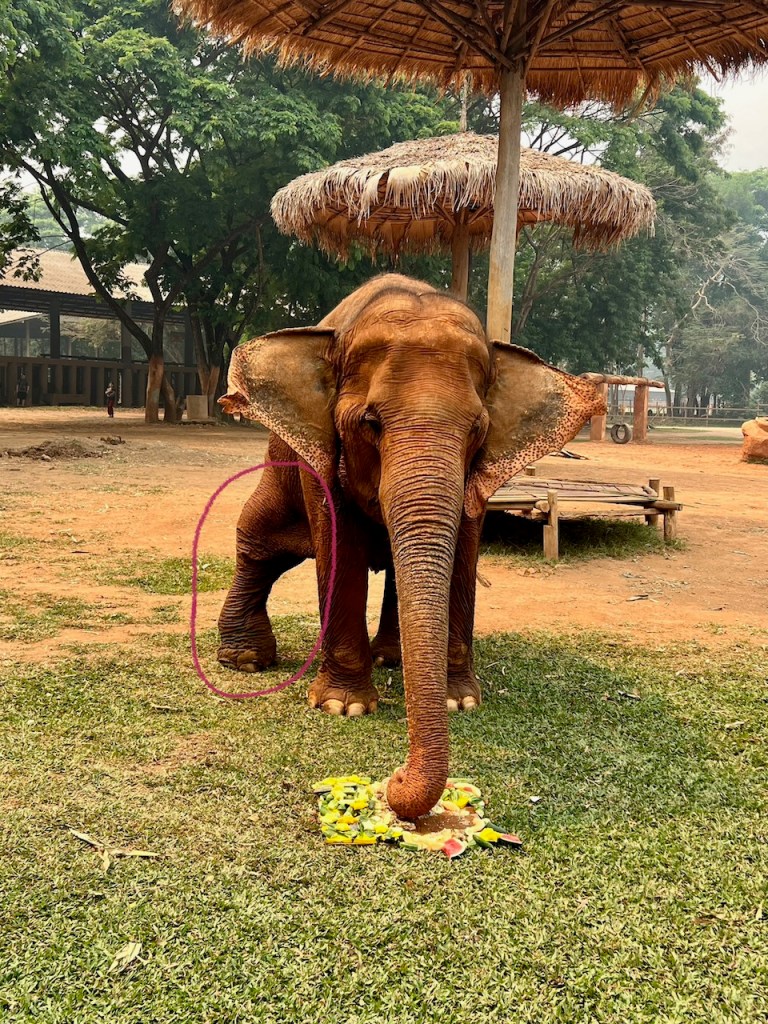
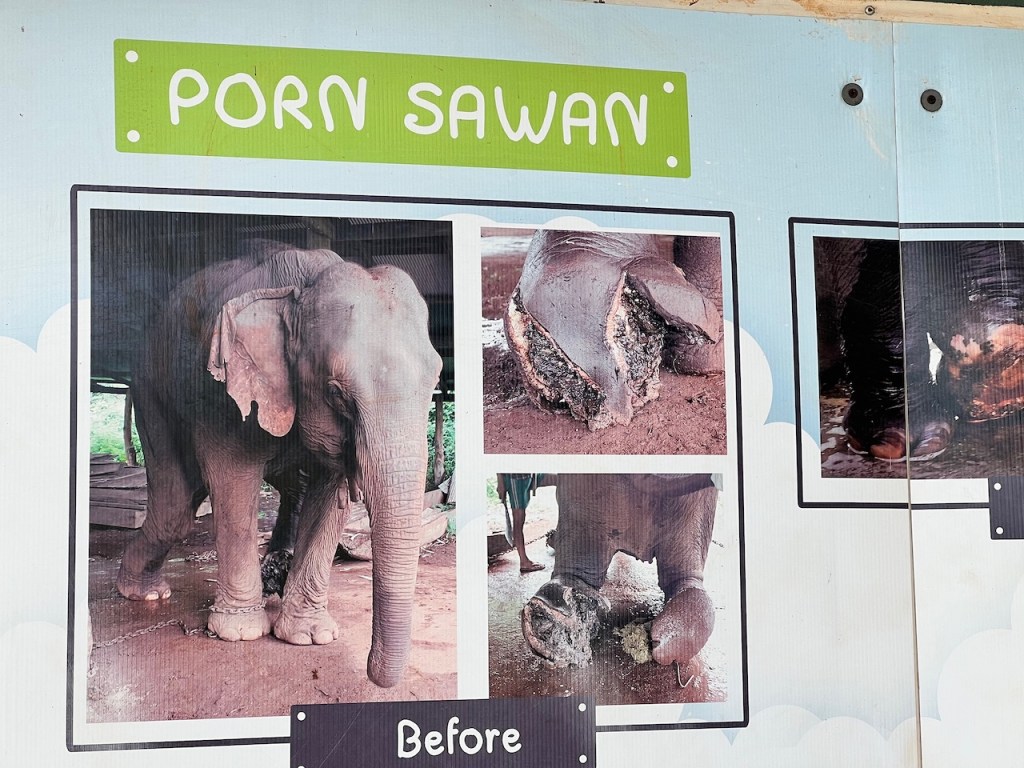
Sawan, a beautiful girl, also limps, but for her the injury is a result of a land mine. The land mine blasted open her hind foot and the owner never properly cared for it. She arrived at the sanctuary with a split open foot, shattered bones and massive infection. Through outstanding veterinary care, an improved diet and lots of TLC the infection and open wound healed, but the broken bones and deformity are life long. Some wounds are too deep to heal.
While some elephants have long lasting physical injuries, they all have mental scars from their previous lives. Poor Khamsang is so traumatized that she can’t be around other elephants or people for she lashes out in mental agony. Thankfully she has bonded with her mahout, who she has deep trust and love. While no one else can get near her, she completely trusts him and will follow his guidance. Why she has bonded with him, no one seems to know.
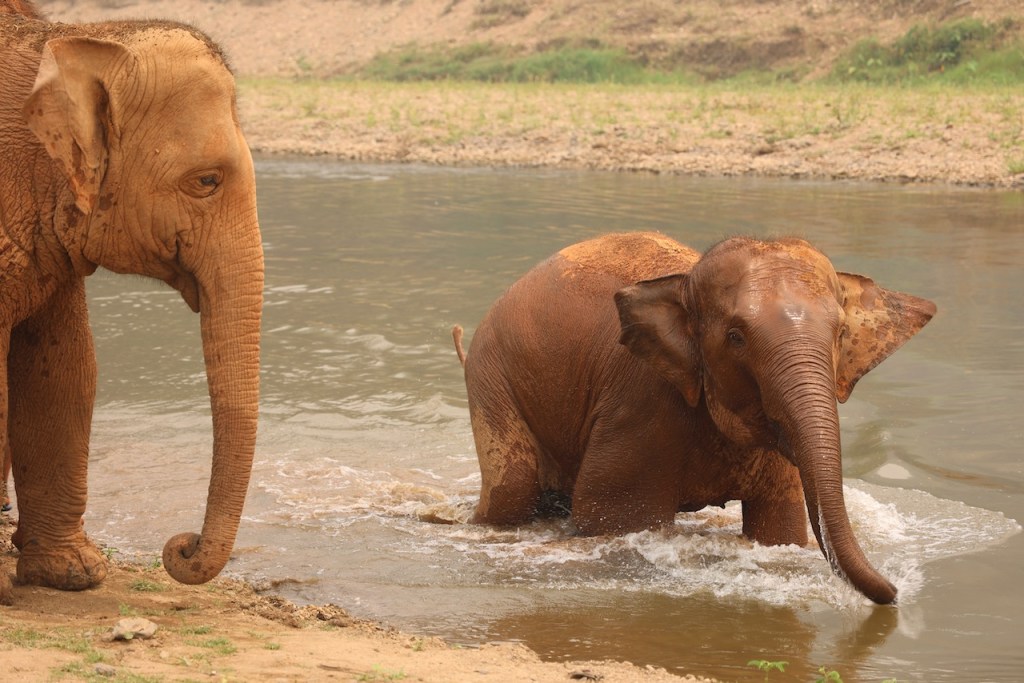
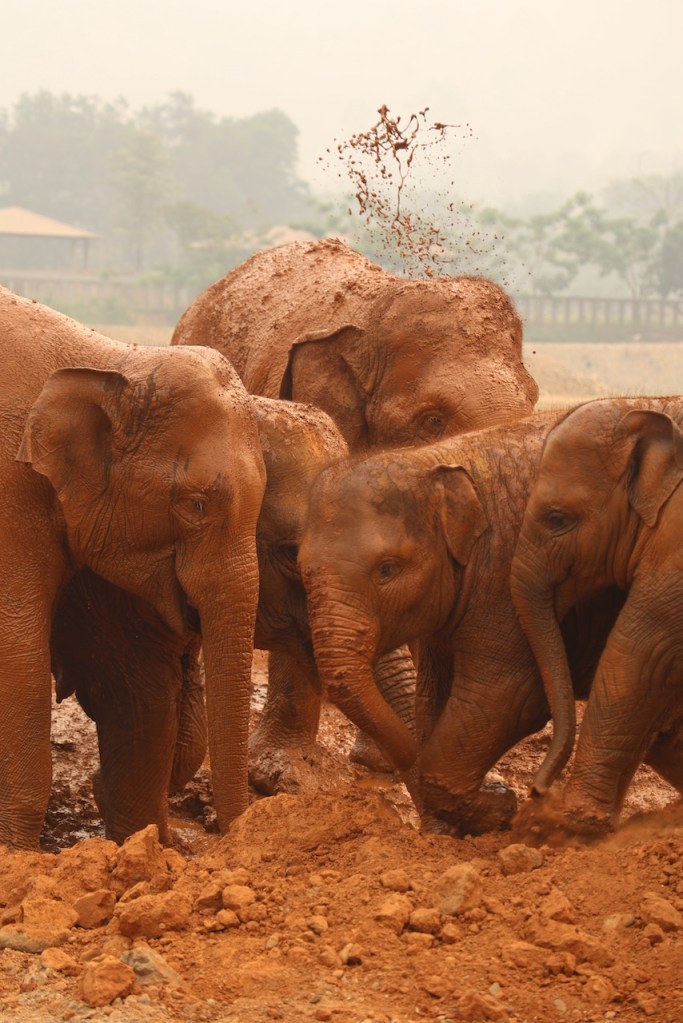
Then there are the babies. The park has been blessed with a few young ones who have never been broken; their joy and playfulness is infectious. They trumpet joys of happiness, they spray water all over the place, and they cause much mischief, much like human toddlers. The mahouts can’t really control these 600 pound wild youngsters as they have never had their spirits broken, thankfully the maternal instincts of their mothers and nannies keep them in line. The contrast between the rambunctious unbroken toddlers versus the heavy broken souls of the adults is a startling contrast, and highlights how human control has unnaturally shaped these brilliant beings.
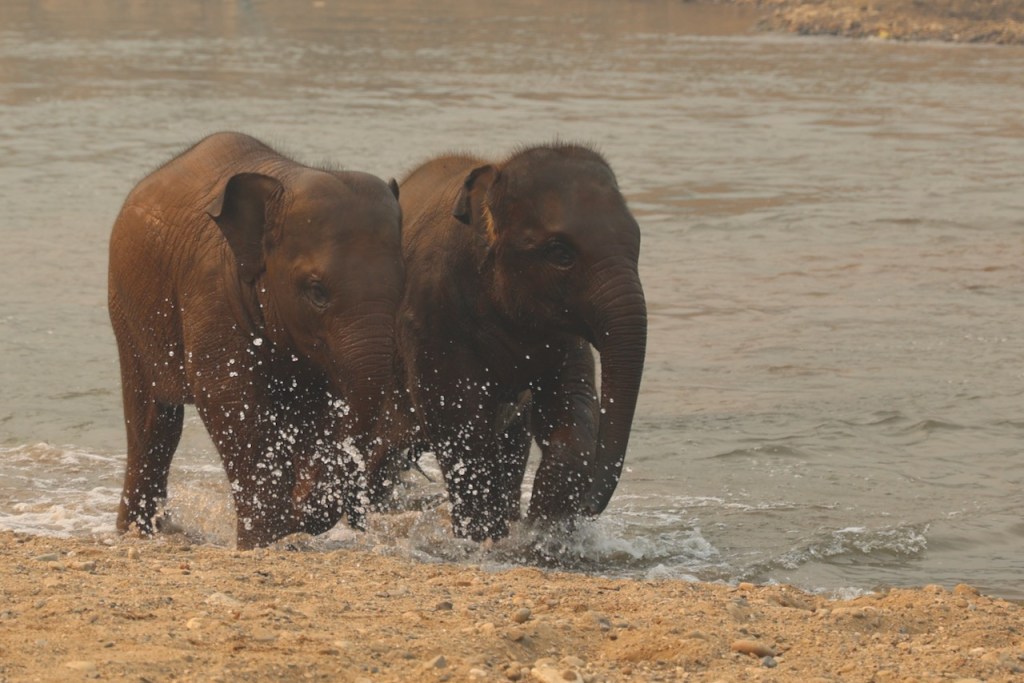
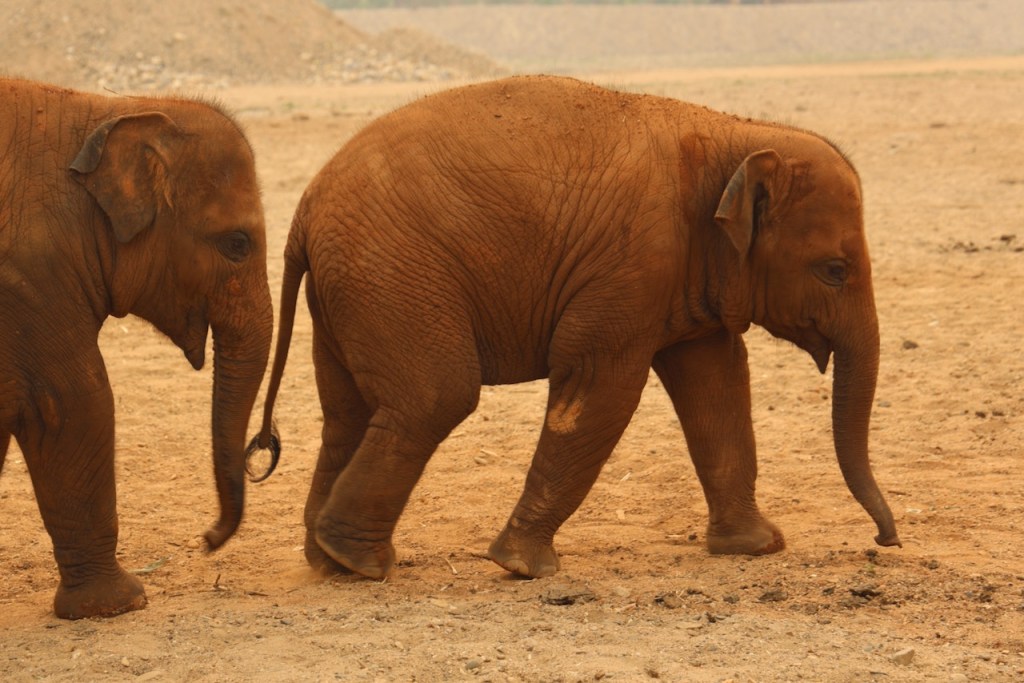
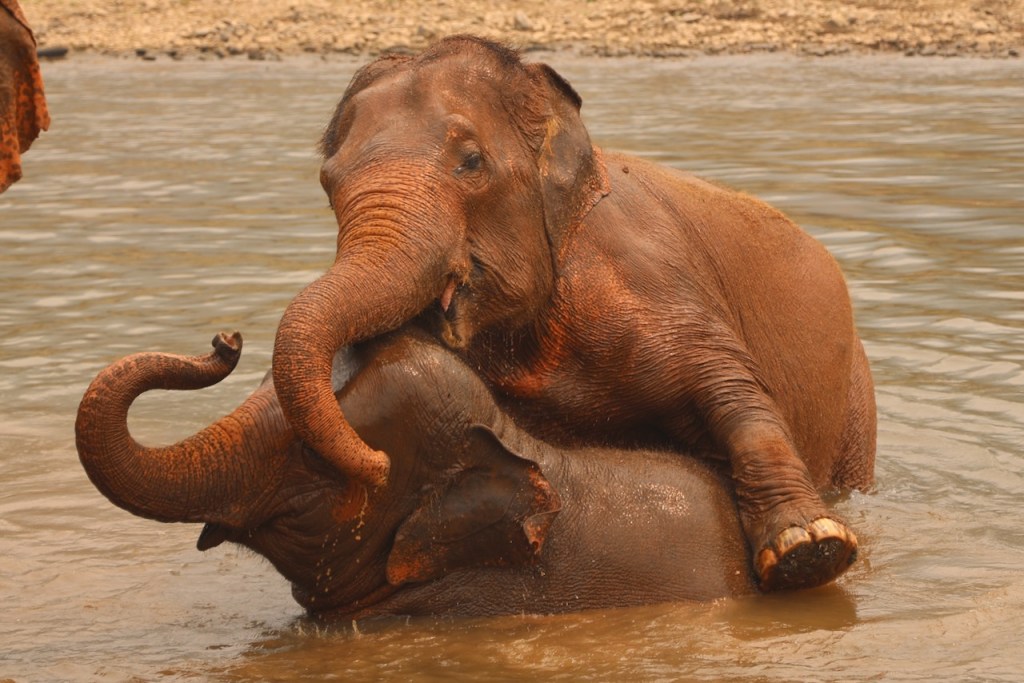
If there is a heaven on earth, it is the Elephant Nature Park, a place where all creatures, no matter how disabled, tortured, or injured, can find the peace, comfort and love they deserve. It is rare in our world to find a place where everyone, human or animal, is accepted for who they are and loved nonetheless. Whether you are an abandoned dog whose hind end doesn’t work, a mangy street cat whom no one loved, a cow sent off to slaughter, a horse who is past their prime, a human who has their own struggles (hidden or obvious), or an elephant who needs its burden lightened, this is a place where all are respected, sheltered, fed and nurtured.
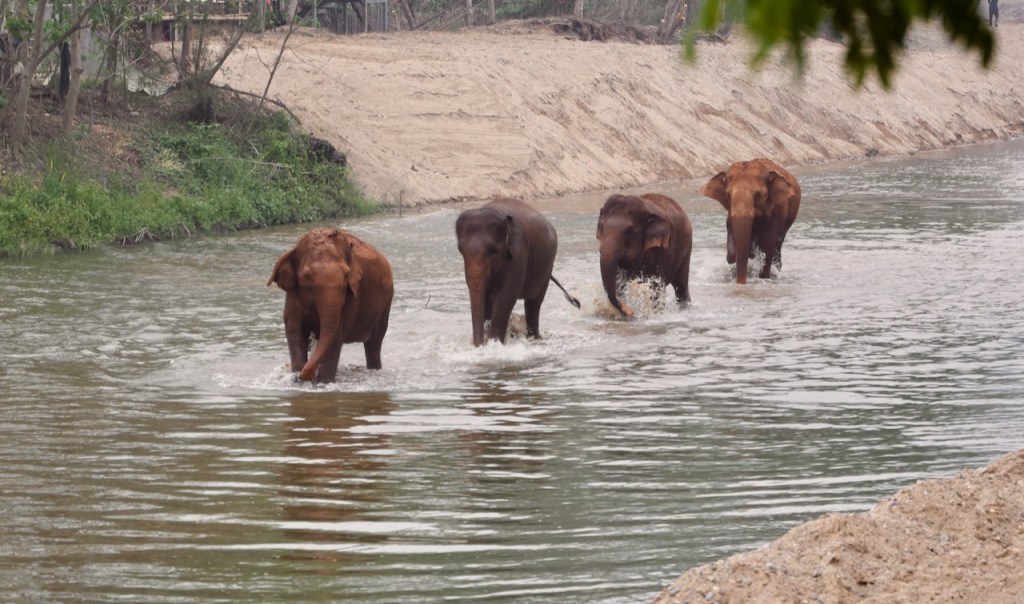
By the end of the week, our bodies and souls were overflowing with love, purpose, understanding and amazing vegan food (who knew?). While there hasn’t been a place on this trip I wouldn’t go back to, I also know that I will definitely be back to this elephant sanctuary for another week of volunteering, learning, and soul-filling love in the not so distant future.
How you can help
There’s so much potential good that can be done in the world if we look outside our local bubbles. There’s also so much to be done at home as well. If you feel moved to help, this is one topic where small changes and donations of all types and sizes can make huge differences.
- Learn more – Start here and then check out the links below to learn more about the plight of elephants worldwide. Consider watching Love and Bananas: An Elephant Story.
- Share the message – share this article or the links below on Facebook, TikTok, Instagram or whatever social media you use. Call me old fashioned, but there also is power in personal connection. Discuss the topic with your family and friends over a coffee or other beverage.
- Don’t give money to the problem – don’t ride elephants, don’t buy ivory or elephant goods, don’t see animals perform, don’t go to parks or sanctuaries where the animals are touched by tourists and don’t contribute to street begging. For more information and a list of elephant friendly venues, check out this link.
- Donate your time – give love to animals in local shelters or if you can, support the Elephant Nature Park by volunteering for a week and seeing firsthand how elephant tourism should be done. While the flight to Southeast Asia is expensive, a week at ENP only costs $300 per person and includes all food and lodging. I plan on going back in the next few years and hopefully others can join me, especially kids, for they are the ones that will change and inherit this world.
- Donate money (We don’t usually ask this, but maybe we should?) – Elephants eat a lot and that costs money, not to mention room to roam, mahouts to guard them, and staff to process all that food. If you are so inclined, donate to the Elephant Nature Park in Thailand through Save Elephant Foundation, the non-profit that supports their work in Southeast Asia. (US residents can donate via the Seregeti Foundation, and claim a 501(c) tax donation.) If you prefer to keep your dollars local, there is an animal sanctuary in the California foothills with similar goals, called PAWS, a link to their website is here.
At times the world seems broken. Wars, political infighting, global warming, drugs, violence and so much more, these things threaten and hurt our souls. But there is more good in the world than bad, and there are places where the light of heaven shines through the haze of our daily burdens. Elephant Nature Park is one of those places. A place where burdens melt away, souls are mended, and scars are healed. I’m glad we were able to be a small part of it, contributing to something much bigger than ourselves.
Thanks for reading to the end. Next up: Chiang Mai, Thailand! Don’t forget to check out our past stories and subscribe for future articles as well. Find us on Facebook and Instagram for bonus content! Please note that any links or business names provided are for information only, we did not receive any compensation for our opinions or recommendations. As always, if you are planning a trip to any location we visit we are happy to provide more details and opinions, so feel free to contact us!
 Vivid Travelers