by Pete Barba
Author’s note: Most of our photos of Cambodia were previously published in a separate post (click here). This is a more reflective post: a little circuitous, very personal, and hopefully a little contemplative. Kind of like the voices in my head. I hope you enjoy. – Pete
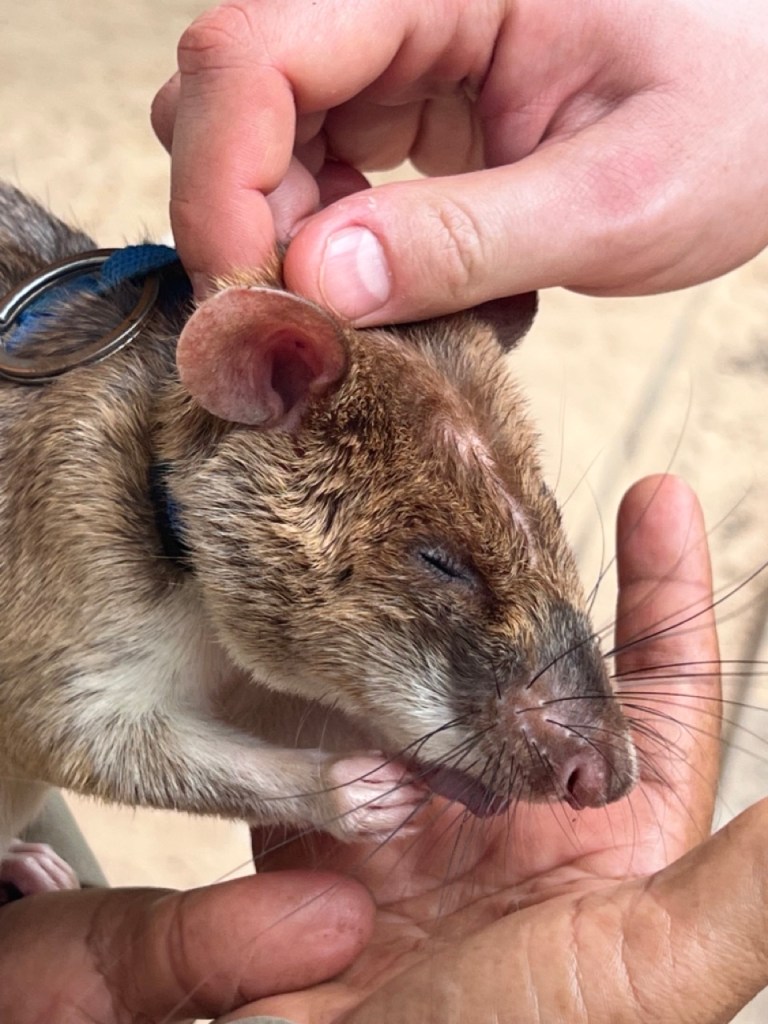
I’m thinking about rats. Big rats with furry bodies, scrawny tails, and long noses. Specifically African giant pouch rats all the way from Tanzania, where they use those noses to search out scarce food in their native land. Trained and brought all the way to Cambodia, the sniffer on these immigrant pouch rats helps them save lives. These rats are heroes.
Cambodia has been beat down, to put it bluntly. The Khmer Empire lasted 600 years, and at its peak in the 1100’s AD was a massive civilization that controlled much of Southeast Asia. Its mysterious decline was likely due to many factors, especially war and famine. Unfortunately, subsequent wars and colonialism have destroyed much of that civilization and hindered its development. In the last century this country was torn apart by conflict: the Vietnam-American war in the 1970’s that overflowed into Cambodia, the genocide carried out by the communist Khmer Rouge, and the subsequent Cambodian-Vietnamese War that lasted until the late 1990’s. Thankfully for the most recent generation, the last two and half decades have been peaceful and a time of rebuilding.
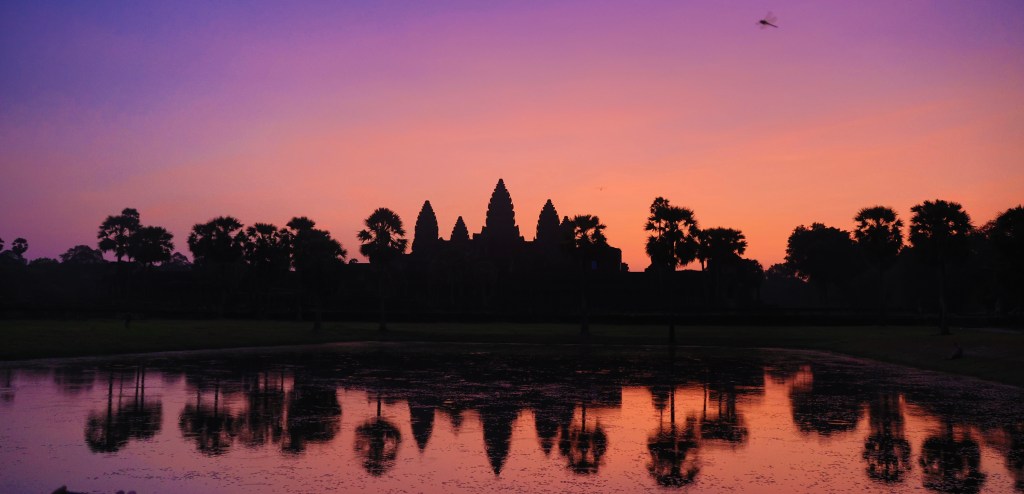
12th century Hindu temple, later converted to a Buddhist temple
Added to the recent memories of war, the scourge of 6 million landmines still haunt the countryside, killing and maiming far too many people per year. Just this past year 10 people have been killed and another 31 have been wounded, with children being over half of the victims. Throw on top of that massive poverty, with an annual household income of just $1,600 per year. To put that in context the median household income in the US is $71,000, meaning that the average Cambodian family gets by on 1/50th of what Americans make per year. About half of Americans make in a week what Cambodians make in a year. Snails, frogs and insects are a normal part of the diet because they are cheap; a motorbike is a luxury. Most of us have only an inkling of how good we have it.

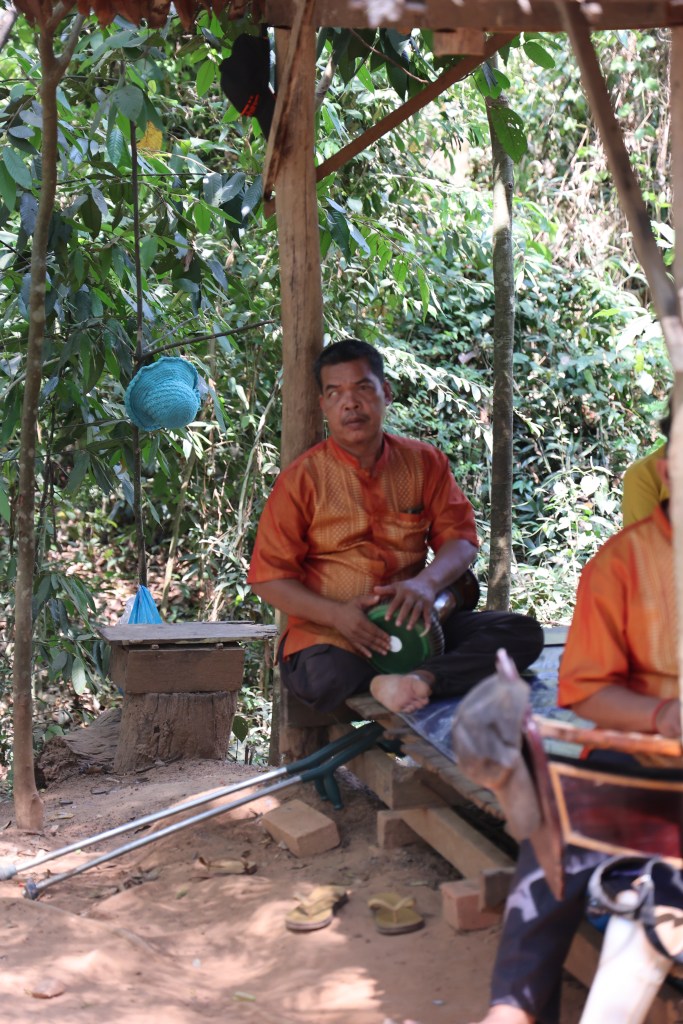
I say all this not to depress you, but to give context. Because what I’m about to say stands in stark contrast. In all our travels this year (27 countries and counting) and for the past 34 years since I first got the travel bug on an exchange program, I have never met nicer, happier, more gracious and hopeful people anywhere. Not by a long shot. Every person you meet in Cambodia has a smile on their face. I’m not talking about the smile that says “I smile at you because I want your business,” after all we are becoming experts at recognizing that smile a mile away. Rather they have a truly friendly smile that says “I’m happy and I want to share my joy with you”.
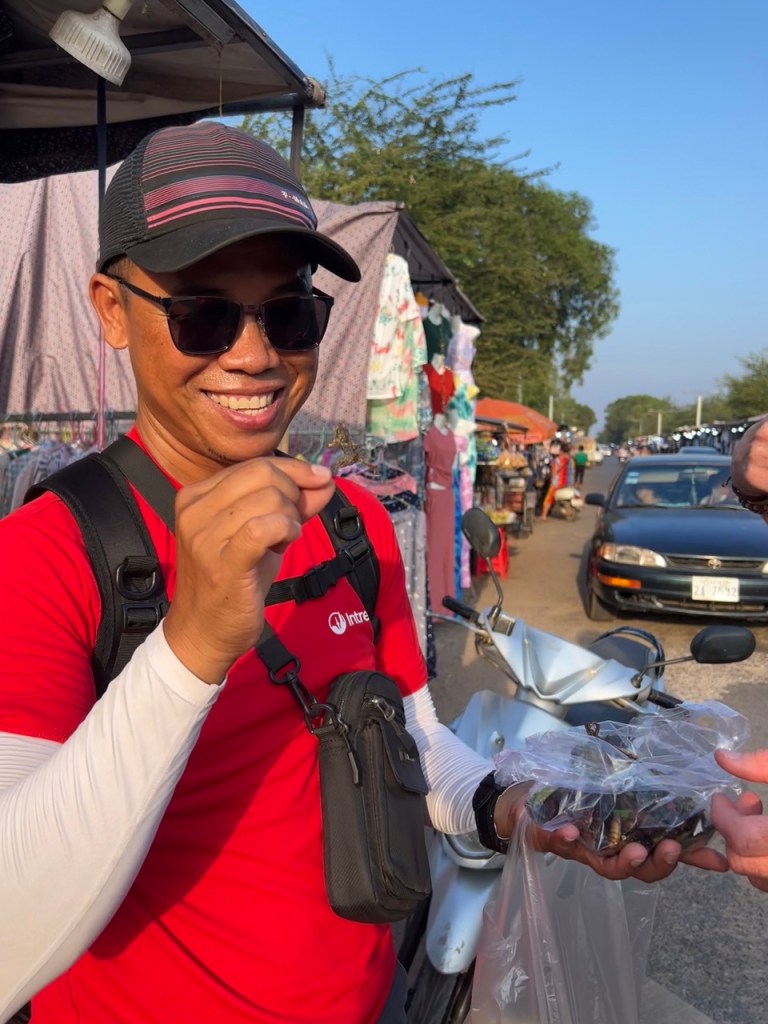
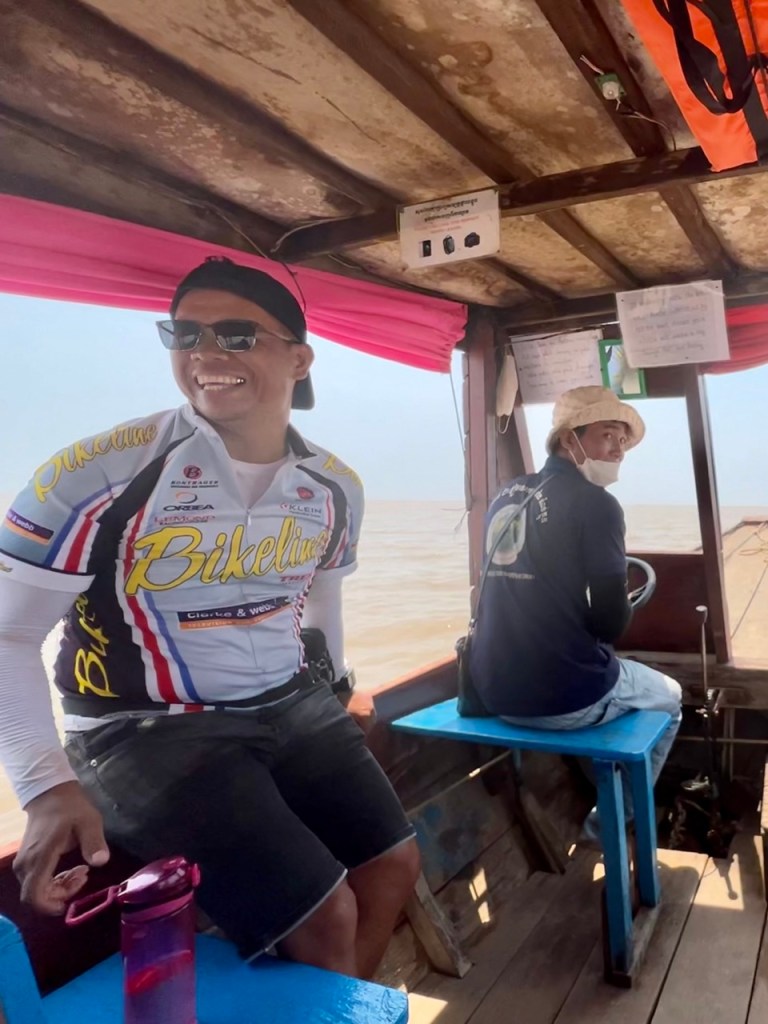
Vanny – WhatsApp +855 12 840 084
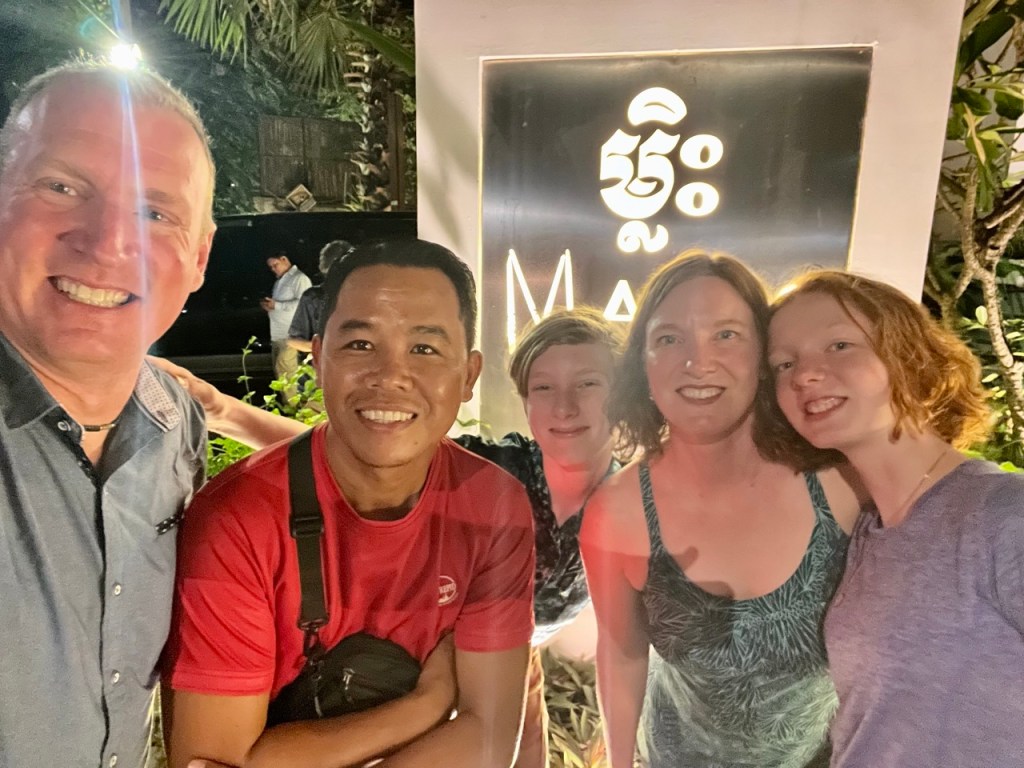
It’s not just smiles, it’s also words like being called “brother”, “friend”, or “papa”. It’s the text emoji 🙏 and 😄 after you part ways with your tuk tuk driver. It’s the simple but meaningful gestures like complete strangers volunteering to take your picture and expecting nothing in return. It’s the unexpected small gifts given throughout and at the end of your hotel stay. To say these people, who I now proudly call friends, are generous is a gross understatement. To give so freely when you yourself have next to nothing (by US standards) is saintly.
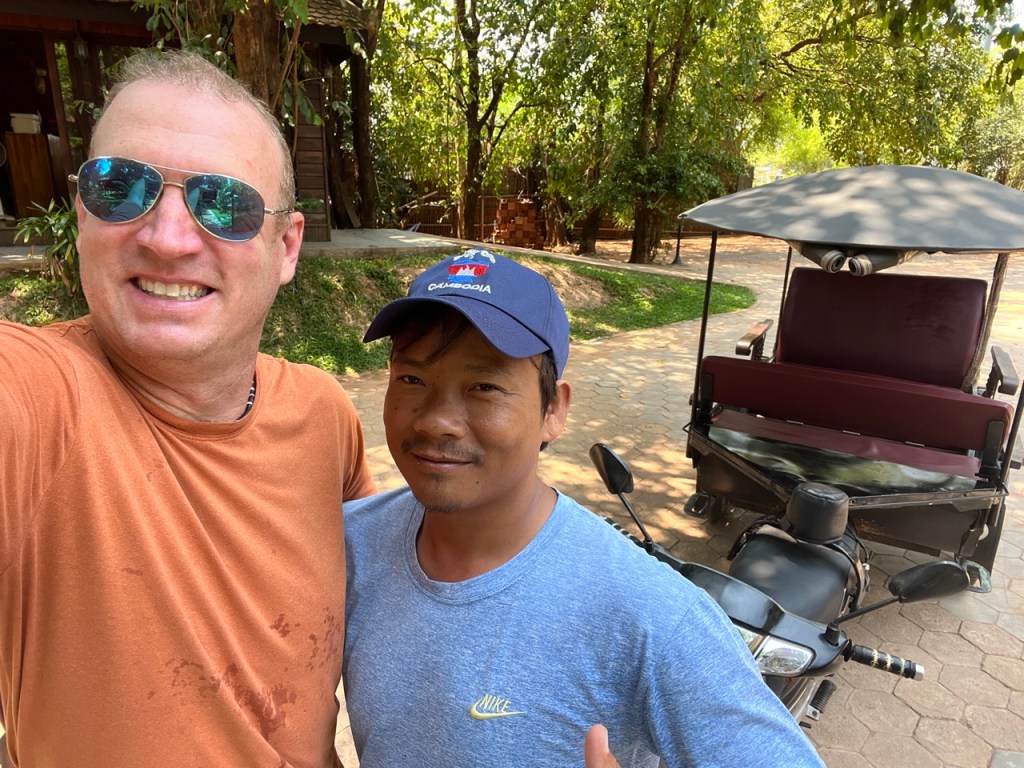

Local tuk tuk driver (left)- Ra Phen – WhatsApp +855 86 306 091
Van transfers and local tours (right)- Haeng – WhatsApp +855 15 311 646
Finally, there is the hope that one can’t describe but can be deeply felt. This is a country that has been torn apart by war, tortured by silent but pervasive landmines, and suffered genocide. Yet everywhere you go you feel a sense of hope that things are getting better, that life is improving, and that the future is going to be ok. Tourism accounts for 12.5% of GDP, and even after 3 years of mass unemployment due to pandemic travel closures, people are still hopeful. It’s palpable, it’s energizing, and it’s novel compared to everywhere else we have been.
Warning, this is about to get deep……
This got me thinking: why does most of the developed world seem to suffer? After all, we have more than we could ever need. We have roofs over our heads, food on the table, a comfortable bed, friends, family, iPhones, HDTV…. We have everything we need and more, but a lot of us feel hopeless, sad, anxious, and/or depressed. Here in Cambodia they have so little, yet deep down they have more than a lot of us. They have joy, hope and gratitude.
I heard a term recently that resonated with me, and probably applies to most of us. The “hedonic treadmill” is the constant struggle to accumulate gratuitous “stuff”, a goal that is encouraged, nay, even demanded by modern day society. It used to be called ‘keeping up with the Joneses”, but has become even more pervasive as technological and societal forces make us constantly seek more and more, never having time to enjoy what we have. We have to update our iPhone every few years, otherwise we are left with a slow brick that hardly works anymore. We need to get new appliances that perpetually get fancier, because the old ones don’t seem to last.
It’s not just material things. We are taught that to lead a fulfilled life we have to work hard, then take amazing vacations that exhaust us, and then return to working hard, and then maybe, just maybe we can retire, relax and enjoy life starting in our senior years. We are encouraged to always look forward, see the future potential, and strive for change all at the expense of enjoying the present. Even our core being is subjected to the same desire. The “experts” on Facebook and YouTube tell us we need to become calmer, happier, and wiser to become our best selves. Our hedonistic treadmill forces us to envy the beautiful, be jealous of the successful, desire the expensive, and consume far more than we need to sustain us. We are becoming obese, not just at our waistlines but also in our material possessions and desires.
The truly sad part is that this yearning to be better, richer, and happier only makes us more miserable. The thrill of our new phone wears off after a few weeks, only to be replaced by desire for the newer model. The dream job we spent decades studying for, the thousands of hours we invested to prove ourselves to our superiors, the years spent “serving our time” eventually become onerous. We crave something different, rather than enjoying the spoils of our success. It borders on madness, or maybe it IS madness.
Ok, it’s about to get very personal…..
I too, suffer from this affliction. For as long as I can remember, I have yearned for something different. When I was a kid, I would wait with bated breath for school to finish and to be a year older. In high school, I dreamed that college would be better. After med school, I hoped that moving to Colorado for residency would make me happier. When I had my own practice, I thought joining the hospital clinics would be easier. During the last 10 years, I longed for the day that we would leave on this adventure, for surely getting away from work would make me whole. The same drive that made me great at implementing change to improve breast cancer screening, that helped me dream up and build awesome tree forts, and that motivated me to spend a decade saving and planning a trip around the world is also an albatross that makes me never satisfied with the present. This in turn leads to my constant frustration, craving, and sometimes even depression that things aren’t as good as they should be. It isn’t always a happy place inside my head.
Which brings me back to this grand adventure around this little blue planet that we call home. The truth of the matter is this sabbatical hasn’t made me any more satisfied. The day to day stresses have been replaced by language barriers, the exhaustion of work has been replaced by the weariness brought on by airports and homeschooling, and the worry about saving for this adventure has been replaced by worry about the state of our budget as we near the end of this year. The wanting to escape my everyday life has been replaced by a lesson that the grass isn’t actually greener on sabbatical. During the first half of this trip I had the shocking revelation that even pyramids, safaris, ice hotels and hot air balloon rides don’t bring true sustainable happiness. Yet now I am markedly happier, and (dare I say?) for the first time in my life I’m content. How did this happen?
About three months ago, I wrote an email to colleagues that created a massive amount of hurt. It was probably one of the lowest points of my life. My frustration and anger at the state of healthcare in America reached an unhealthy level and it came out in the least constructive manner. My desire for things to get better caused pain not only to me, but also those I care about deeply. My affliction had grown to the point of emotionally injuring others. Something had to change and that something was me. It was that hard experience that taught me the most important lessons of my life.
My happiness will not come from a better future, an easier job, a sabbatical, a new car, more skiing or any one of the numerous desires that fills our minds. Happiness is not something that you earn, you work towards, is given, or dependent on any number of the factors that shape our lives. Rather it comes from enjoying this one moment in time without yearning for more, no matter your situation, place, or status. It’s about letting go of that hedonistic treadmill, those never ending desires for things to get better, because they are ok the way they are. And that is why I’m happy, maybe for the first time in my life; I’m content with this moment in time (which at this moment just happens to be on a very tight airline seat on AirAsia).
The full circle…
Which takes us back to Cambodia, the happiest and most hopeful place we’ve been. While things there are changing for the better, there also is a deep sense of satisfaction with where they are. From the tuk tuk driver happily laying in his hammock waiting for his next fare, to the hotel owner who smiles when you bow in thanks for their hard work, to the waiter who is glowing because they are truly enjoying their job, the people of Cambodia are content with themselves. They are happy for the sake of happiness, they are generous because it’s who they are, they are content because they have been through much worse and come out that much stronger. It’s quite the honor to be able to experience a culture that may not be financially wealthy, but is deeply wealthy in so many other ways. That is why I love Cambodia.
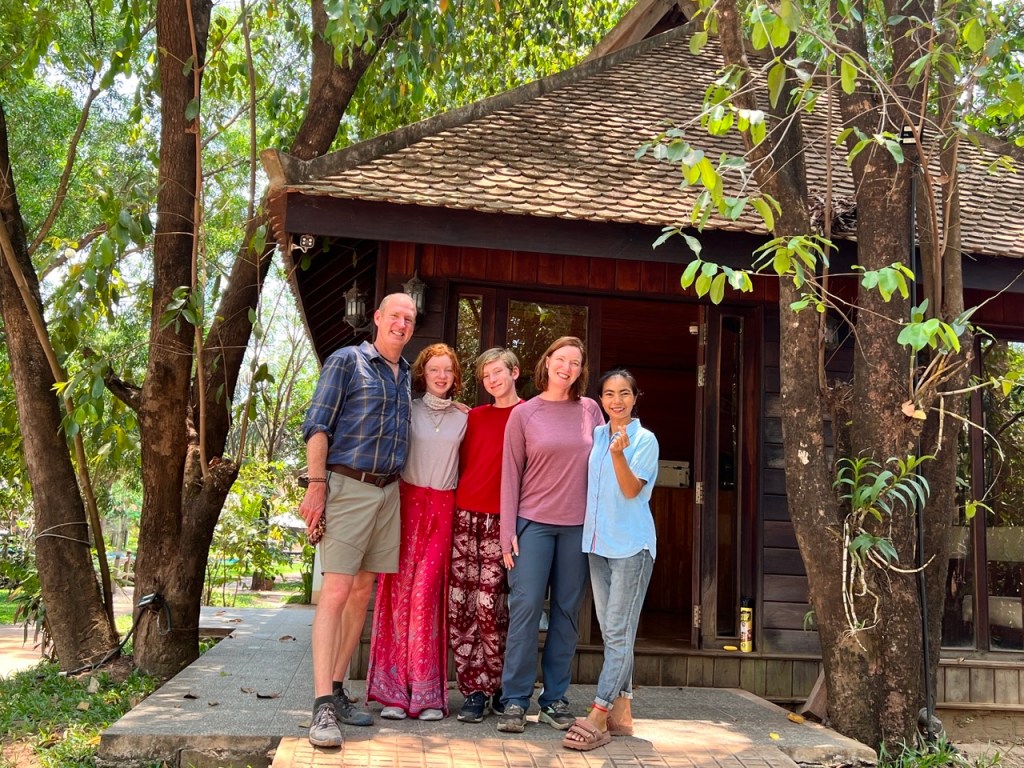
you should visit them when in Siem Reap!
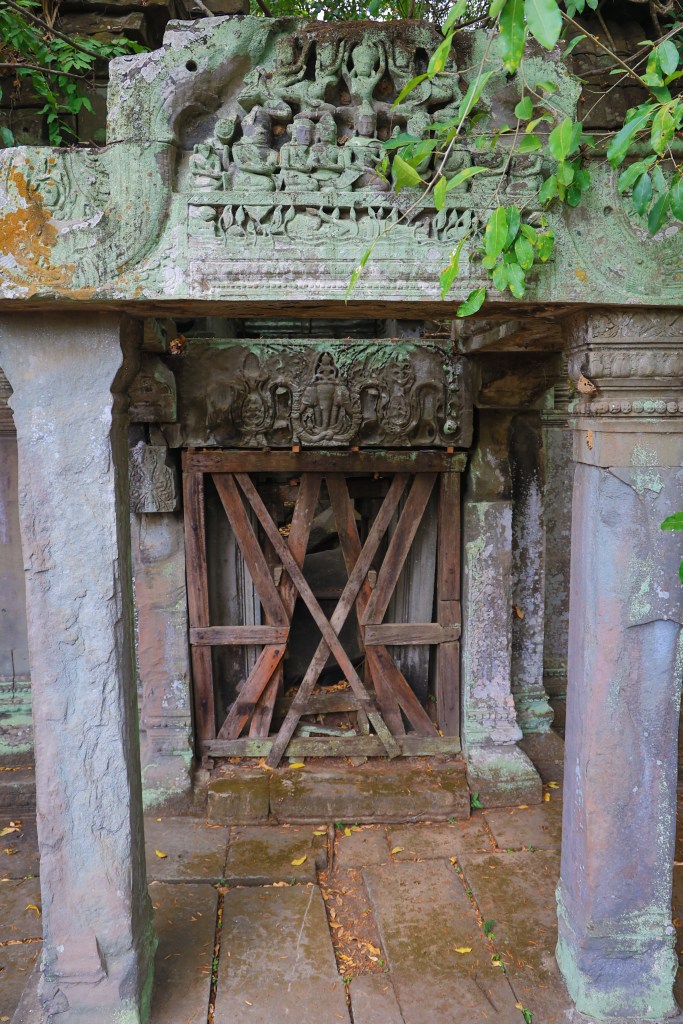
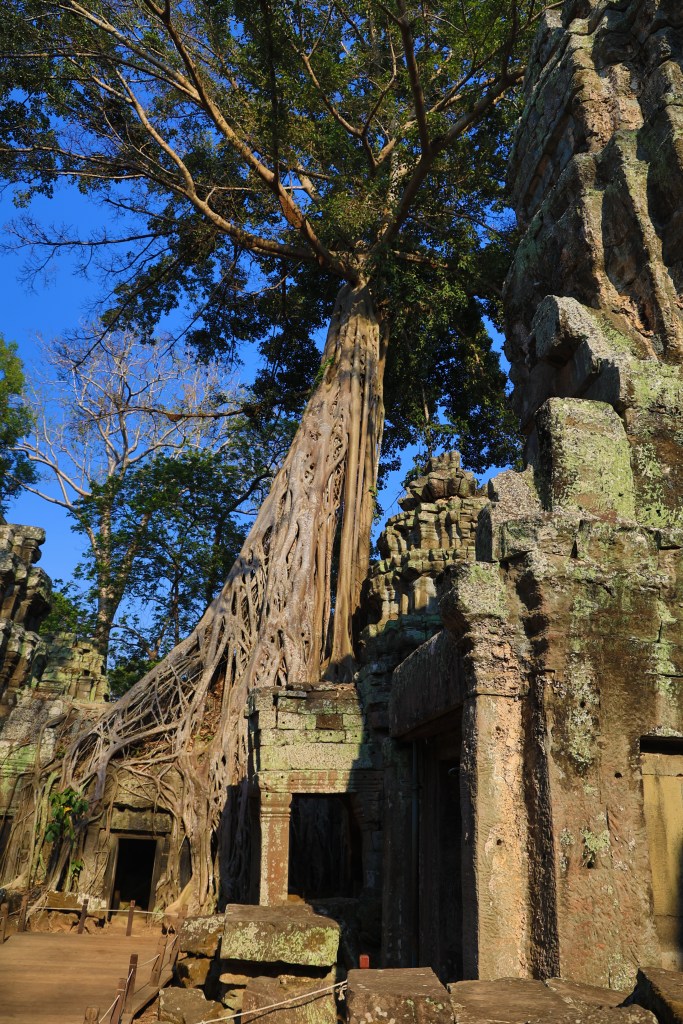
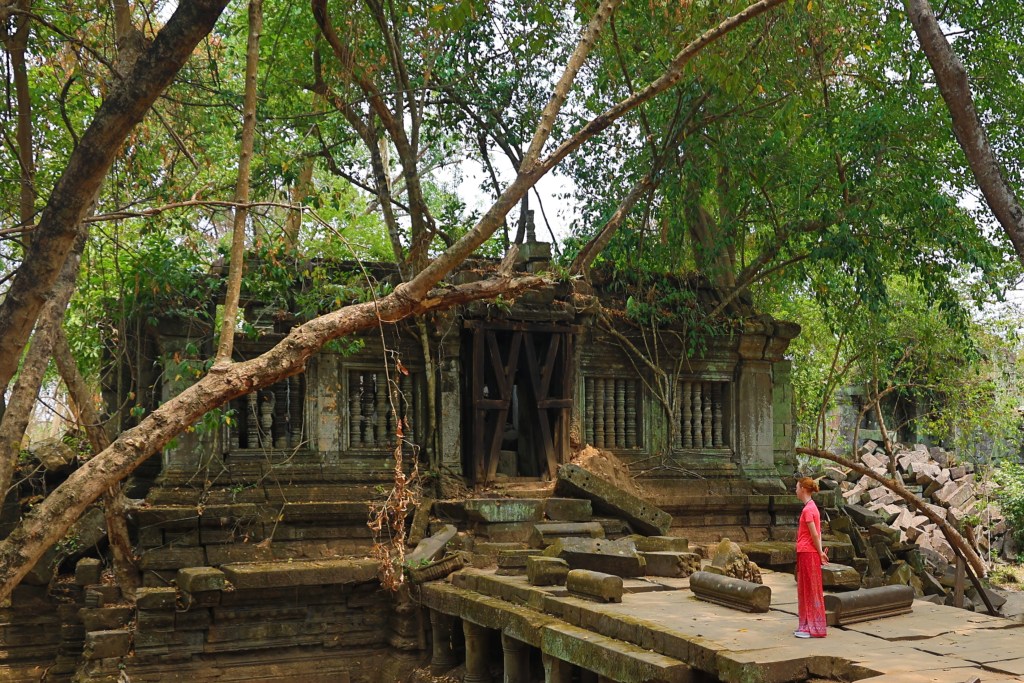
Of course, we saw some unbelievable temples in the Angkor complex, the largest city in the world during the Middle Ages, which was abandoned due to drought and lost to time for hundreds of years. Our favorite temples were the not-yet-restored ruins covered in vines and trees with roots that burrowed into the stones. Wandering these temples feels like you are Indiana Jones searching for a unique artifact or exploring a sacred place that no one has ever seen before. The sun was scorching, but we treasured exploring and photographing this Unesco World Heritage Site. (For more photos click here!)


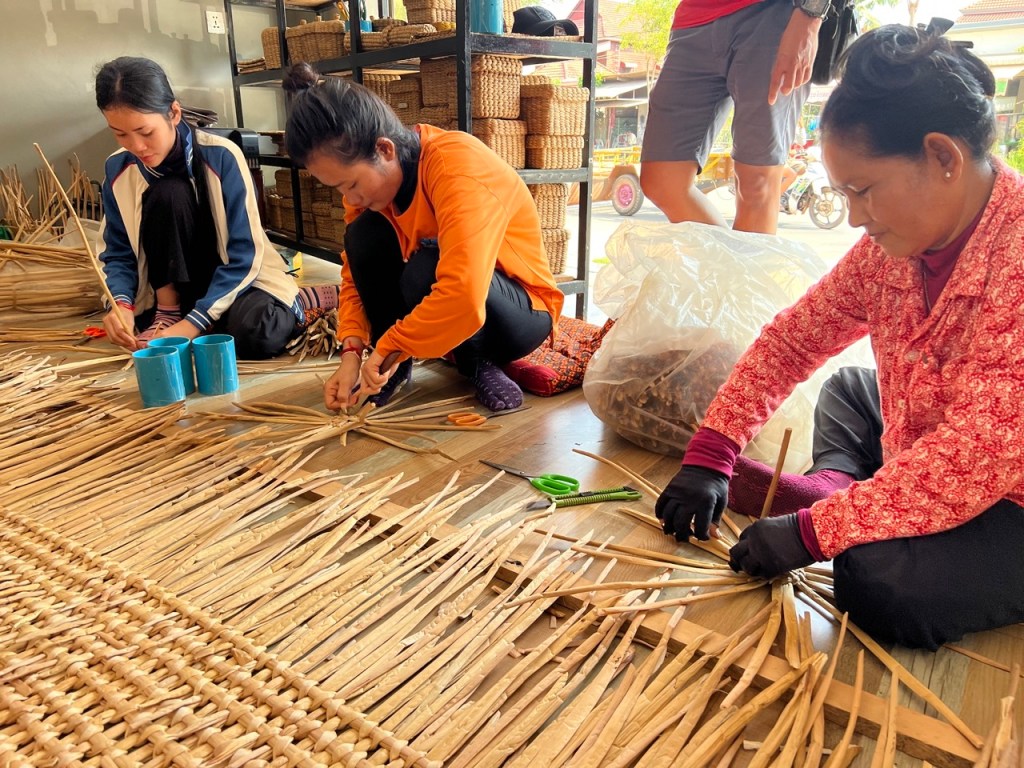
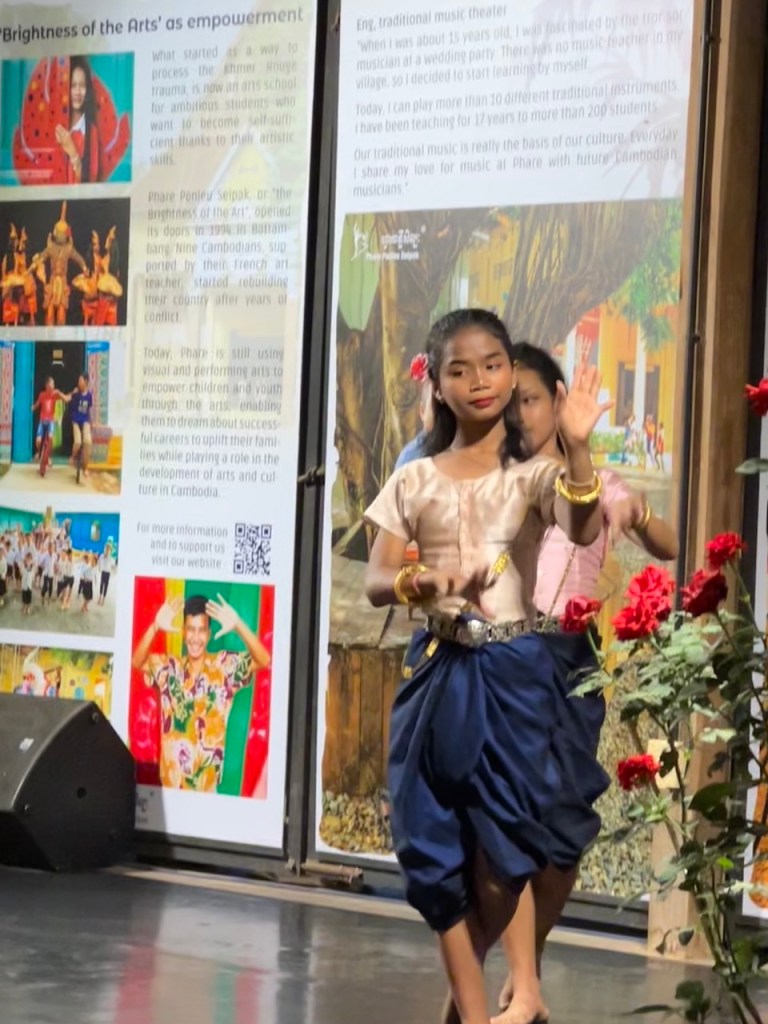
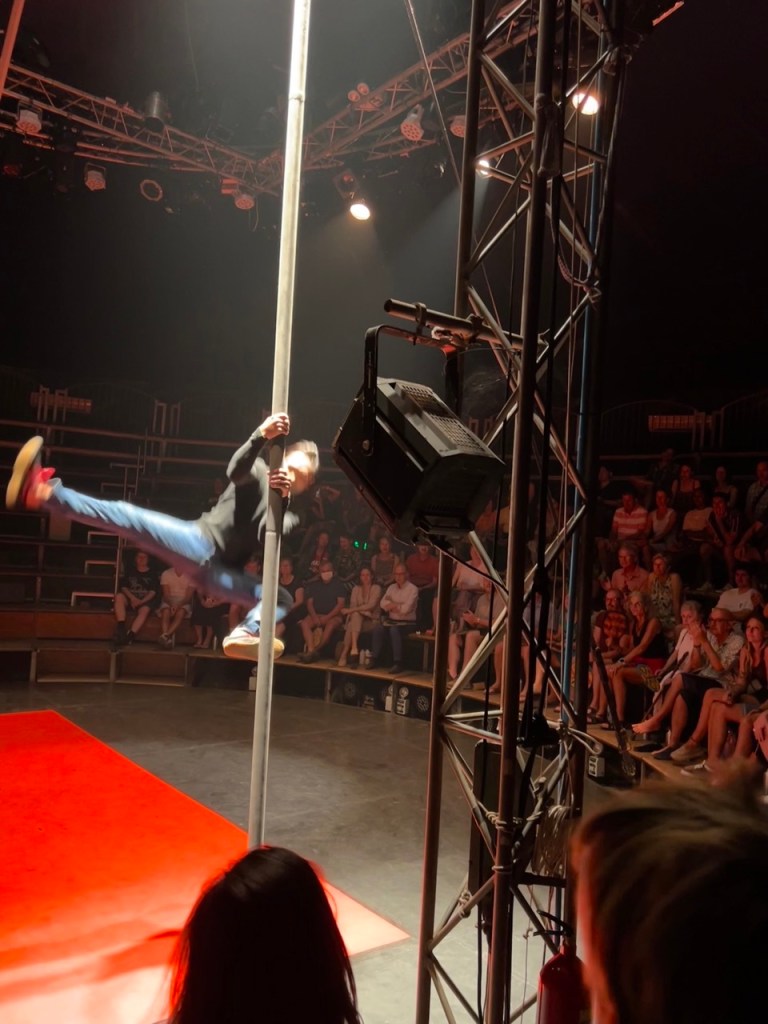
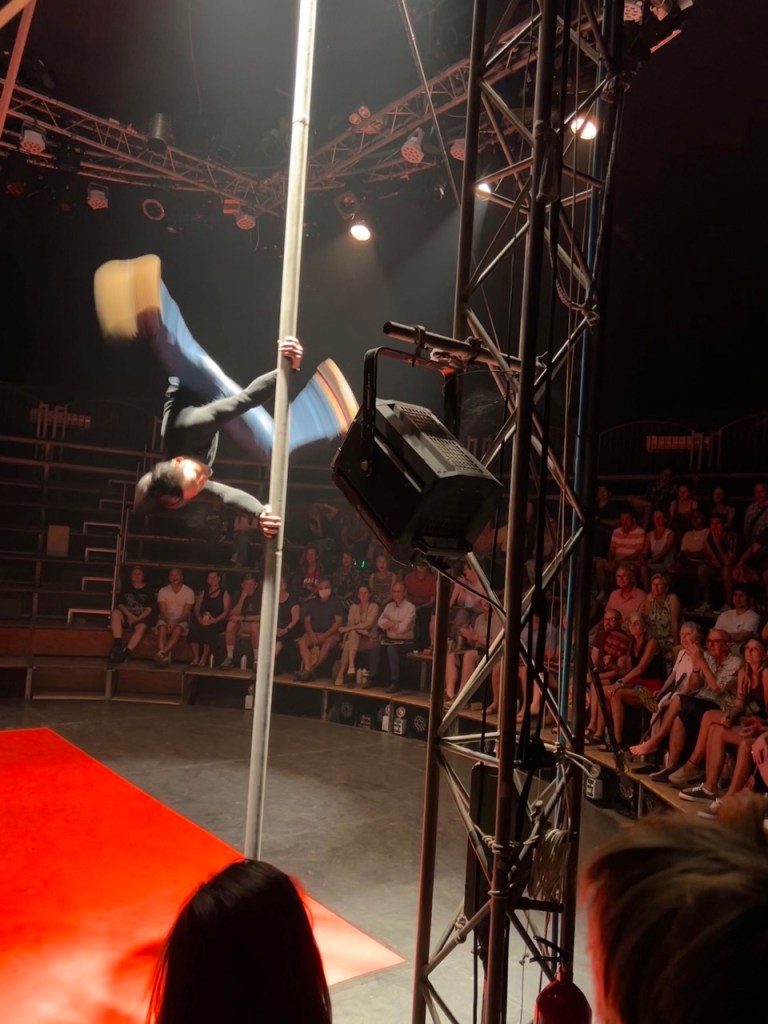
Cambodia seems to be full of NGOs in support of the people and heritage of Cambodia. We visited a butterfly farm, a golden silk workshop, and a water hyacinth weaving studio; all of these are charities that train women to add to their family income while preserving traditional culture. Our favorite was Rokhak where we learned to weave our own small baskets; it was truly a highlight of our visit! We ate at some amazing restaurants, many of which are also charities that educate young people and pay them an above average salary. Finally, we saw the jaw-dropping Phare Circus with high energy performers and a “Cirque du Soleil” style story with music weaving throughout. Their non-profit, Phare Ponleu Selpak, offers basic education, cultural classes, and training in Cambodian art forms to young people in nearby Battambang. (For more photos and links click here!)
These are all great reasons to visit this small country in Southeast Asia. But mostly go to Cambodia for the people. Stay for a week; you won’t be disappointed. It’s a place where people are truly happy and hopeful, your travel budget will go a long way, and most importantly your money will do a lot of good for these wonderful people.
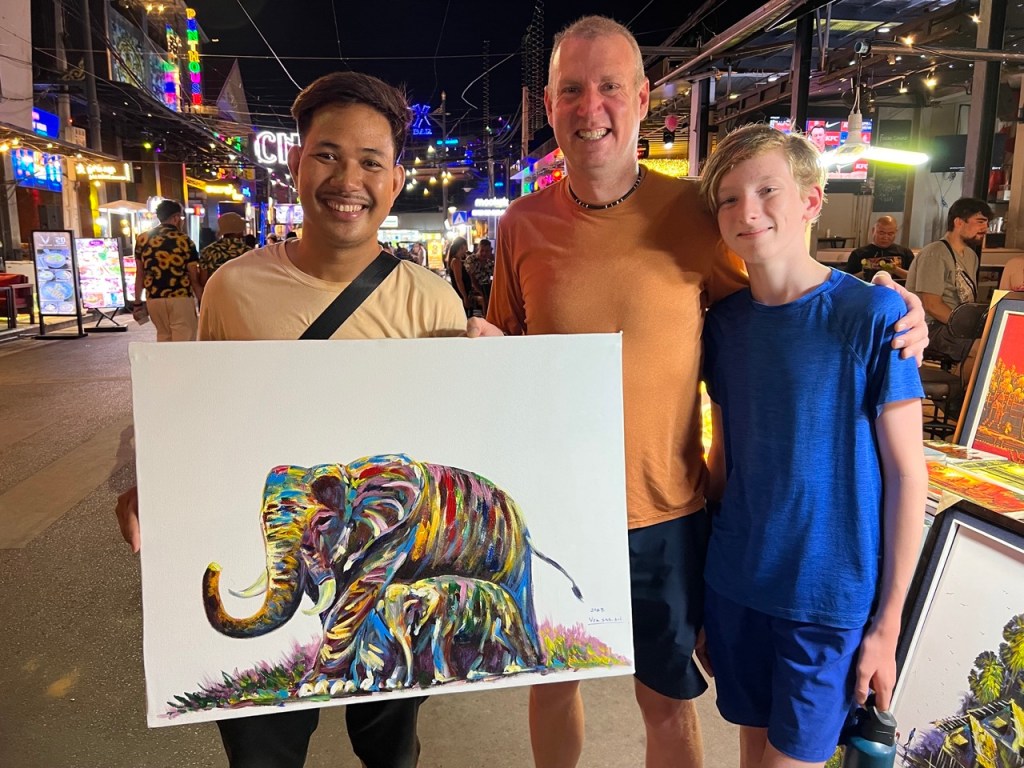
We are proud to own an original.
Hengveasna the artist – WhatsApp +855 17 595 944
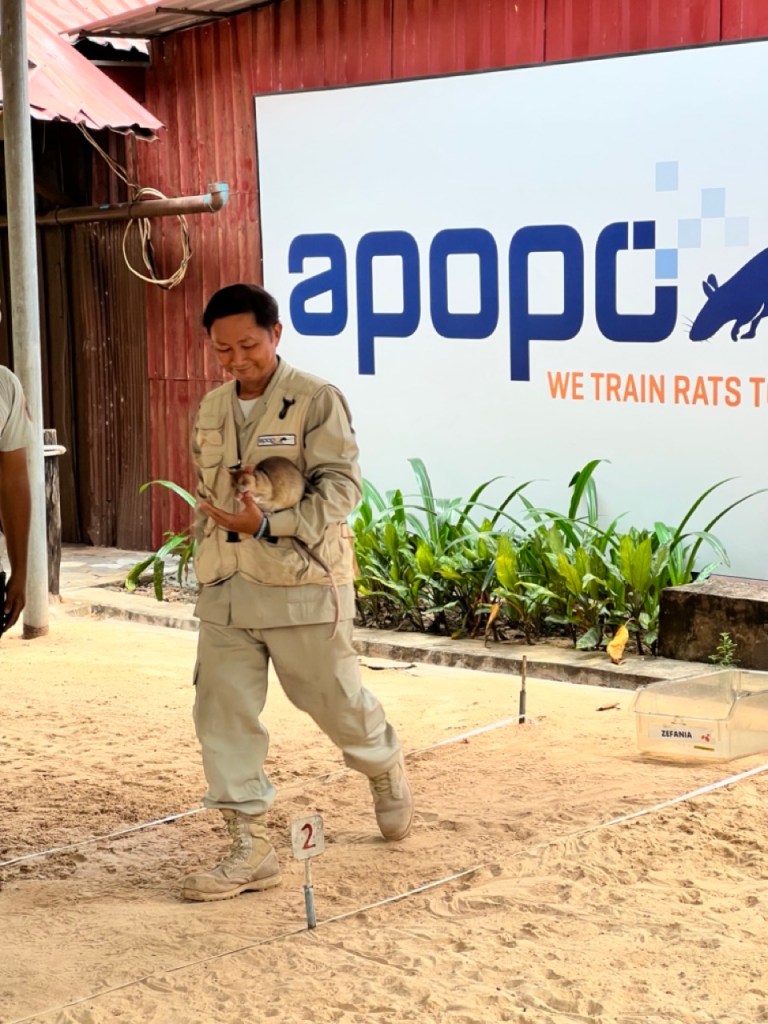
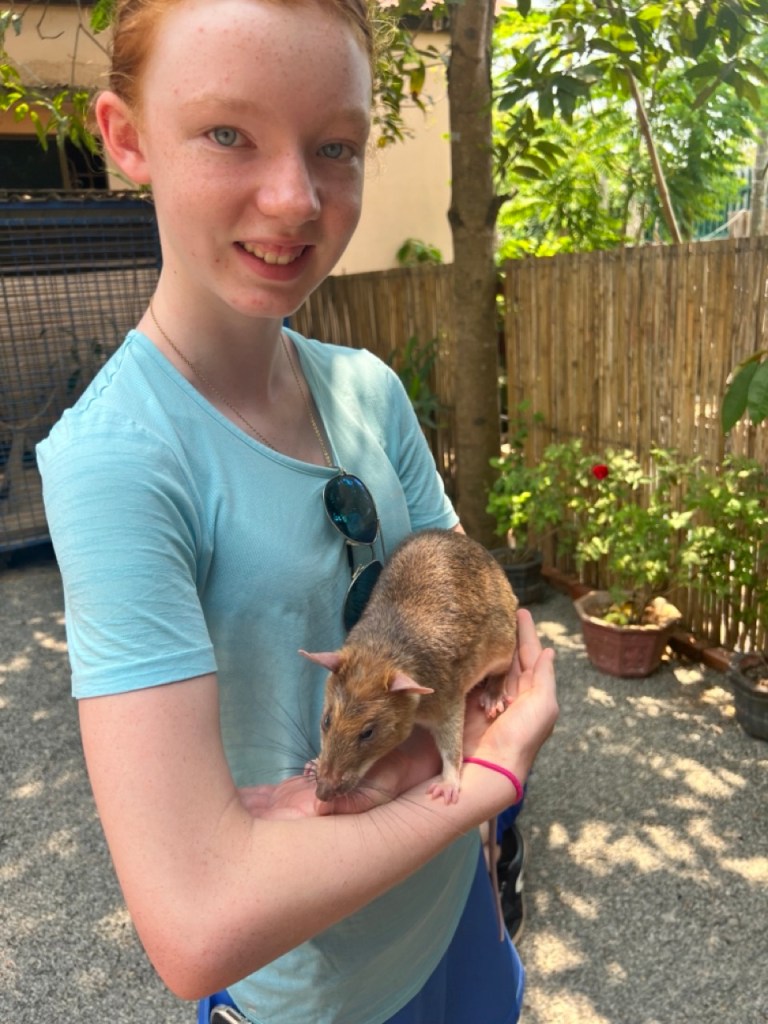
Back to those rats. Their long and specialized noses can detect one-trillionth of a gram of TNT buried 3 feet underground. That’s far better than our canine friends can do. Plus the rats are so light, they don’t set off landmines. These little guys have been trained to find landmines, so that the human members of the bomb disposal teams can clear fields and make the land safe for farming, building, and traveling again. In 2022, they cleared 10,785,564 sq meters of land and found 1,940 munitions and landmines, benefiting an estimated 250,000 people. All done by 61 rats. Who knew rats could be heroes?
Thanks for reading to the end. Next up: Elephants! Don’t forget to check out our past stories and subscribe for future articles as well. Find us on Facebook and Instagram for bonus content! Please note that any links or business names provided are for information only, we did not receive any compensation for our opinions or recommendations. As always, if you are planning a trip to any location we visit we are happy to provide more details and opinions, so feel free to contact us!
 Vivid Travelers
4 responses to “Cambodia in Words”
Wh
LikeLike
Oh Pete,
What a powerful piece.
I think these thoughts all the time.
Thank you for sharing.
I was hoping all of you would settle into reflection at some point.
Know that this desire for more and better and higher level concerns should not stop us from the day to day little things we do.
My study club is doing emerging health trends this year. My talk in May will focus on meditation practices… religious and other forms. Buddhism, Shinto, Christian etc.
I’d like your thoughts if you have formed any in your travels.
☀️🌲💕🦋 Mom
LikeLike
Really enjoyed hearing about your reflections, Pete 🙂
LikeLiked by 1 person
Thanks Cheryl!
LikeLike